Hiroshima - Japan
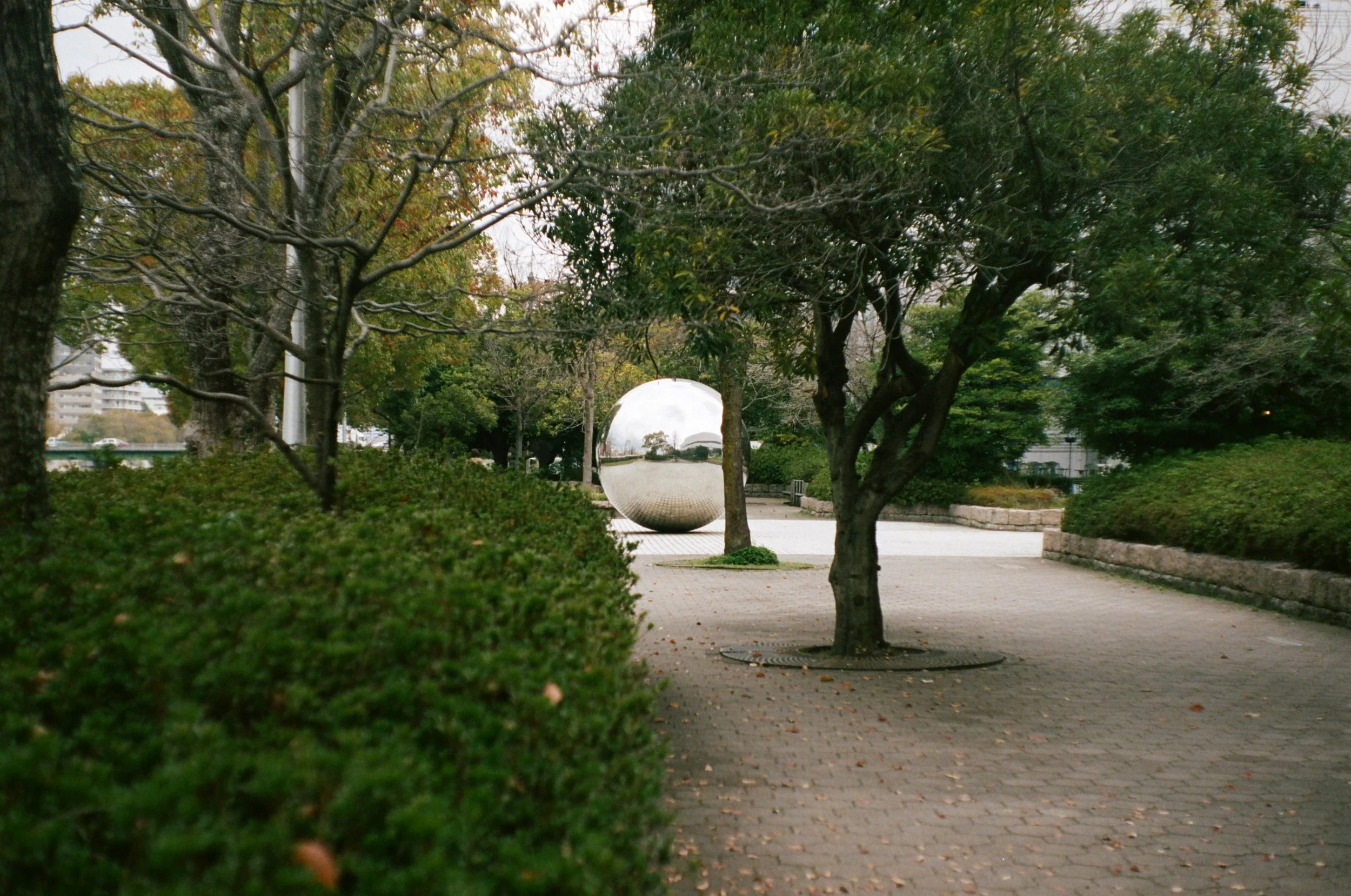
Orb in Hiroshima. Praktica LTL. 50mm Meyer-Optik Domiplan Lens, Kodak Portra 400
Humidity & Hope
Read Previous Part III: Koyasan, Japan →
After our serene visit to Koyasan, our group spent a night in Wakayama taking in the palm trees, ramen and huge public onsen, before boarding another train for our final destination, Hiroshima. It’s a name we’re all familiar with from history class, but what’s it like to visit today? Could a city with such a sad history enjoy a bright future?

Cycle commuter in Hiroshima, Praktica LTL. 50mm Meyer-Optik Domiplan Lens, Kodak Portra 400
Of course having done my research I knew that I’d find a vibrant city with a bustling economy, arts scene, food scene and everything else you’d expect of a major urban center. What amazed me was that being there, if you didn’t know when you arrived about the city’s terrible demise in the second world war, there’s not much to give away it ever happened.
Unlike the rest of the stops on our Japan trip, Hiroshima was already hot and humid in early spring. We were sweating within minutes of leaving our door in the morning. That, coupled with this being the tail end of our trip, made for a fairly relaxed pace and wandering more centered on “Where do we eat next?” than “What do we see next?”. Hiroshima is a treat for foodies (most of Japan is, really) so whether it was pastries at patisseries or katsu at a corner shop, this was the stop that was going to pack on the most weight for our crew. It’s a large city, but well served by a bus and trolley system that is easy to navigate. We rented an apartment just outside the city core, which was conveniently located on a trolley line that took us right where we’d want to go within minutes.
With the humidity came a thick layer of cloud and since I was committed to ISO400 I found myself having to shoot at fairly open apertures to allow for a quick-enough shutter speed to minimize blur. My film stock running low, I decided to focus more with my eyes and less with my lens but still grabbed the occasional snap as something caught my eye. Although I knew at this stage that film is readily available in Japan, limiting the number of shots I could take to the rolls I brought with me made for an interesting project and challenge. I was at times perhaps too stingy with my shooting, and other times I felt compelled to snap a photo of some okonomiyaki. In time I’d develop a rhythm (and tendency to overpack) to my shooting that freed me to shoot unencumbered by worry of running out out of film.

Outside our window. Praktica LTL. 50mm Meyer-Optik Domiplan Lens, Kodak Portra 400
““I was at times perhaps too stingy with my shooting, and other times I felt compelled to snap a photo of some okonomiyaki.””

Hiroshima’s Famous Okonomyaki on the way. Praktica LTL. 50mm Meyer-Optik Domiplan Lens, Kodak Portra 400

Playing with bokeh, Praktica LTL. 50mm Meyer-Optik Domiplan Lens, Kodak Portra 400
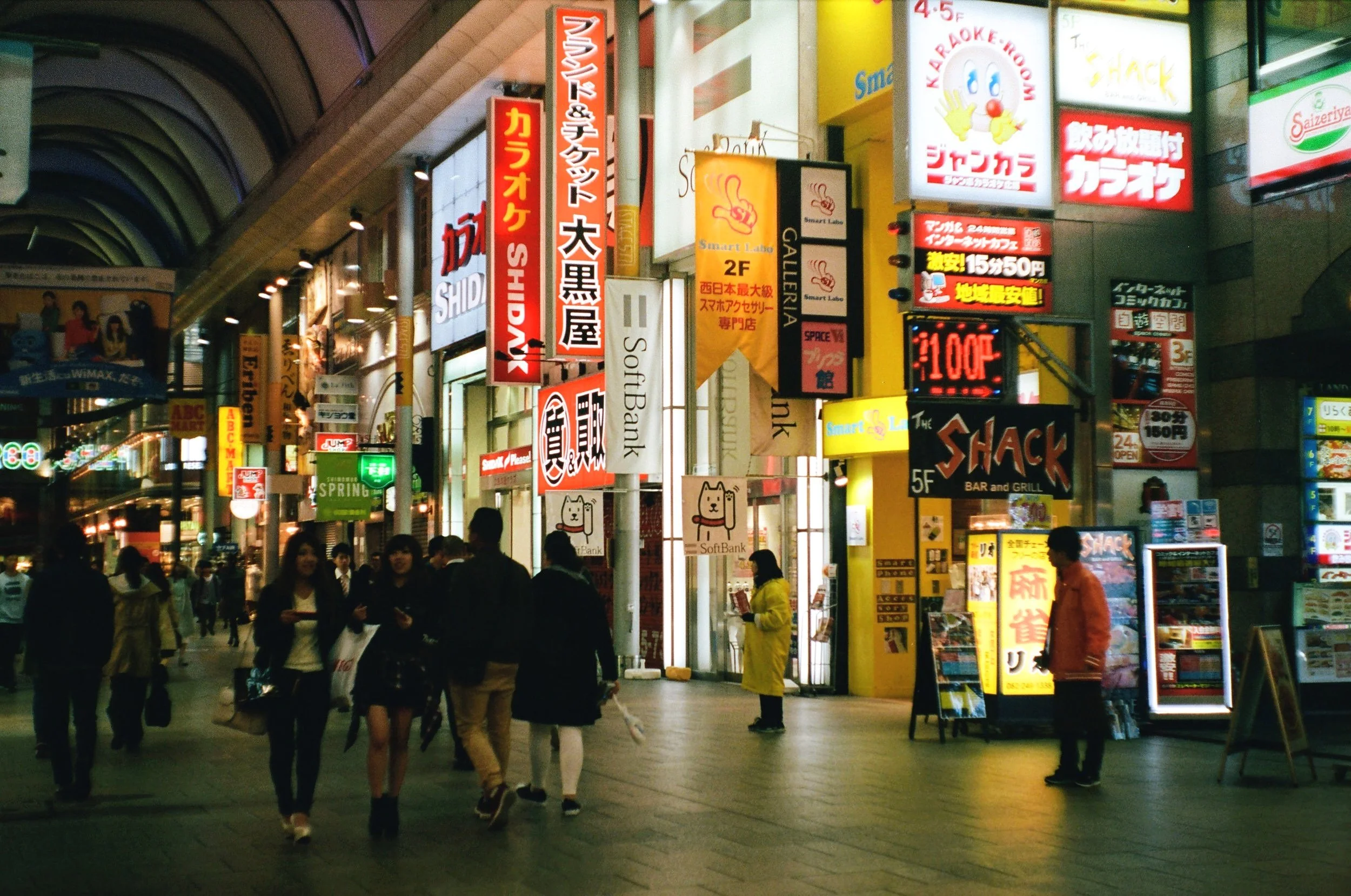
Trying to keep the camera steady while shooting at relatively low ISO and manually focusing. Praktica LTL. 50mm Meyer-Optik Domiplan Lens, Kodak Portra 400
The Bomb
I suppose one can’t really visit Hiroshima without speaking about it’s history with “the bomb”, and perhaps it would be rude not to. The recovery of this city from utter devastation at the end of the second world war is remarkable. It gives me hope that even after the darkest of times humanity can still flourish. One of my main objectives in visiting Hiroshima was to tour the Hiroshima Memorial Peace Museum. Walking through its maze of halls and galleries with detailed dioramas, relics, audio clips and video interviews of survivors, your mind is assaulted by a single thought; why does our species keep doing this? The answers aren’t here, but the opportunity for observation and reflection this atmosphere fosters is more than worth the price of admission. It’s things you’ve learned in books brought closer to life, to reality. Things you are cognizant of but likely haven’t felt (if you are lucky, as I am, to live in a place far from war) until you’ve experienced it in this thoughtfully curated immersion. If you can make it out of the building without shedding tears, you’re made of sterner stuff than I.
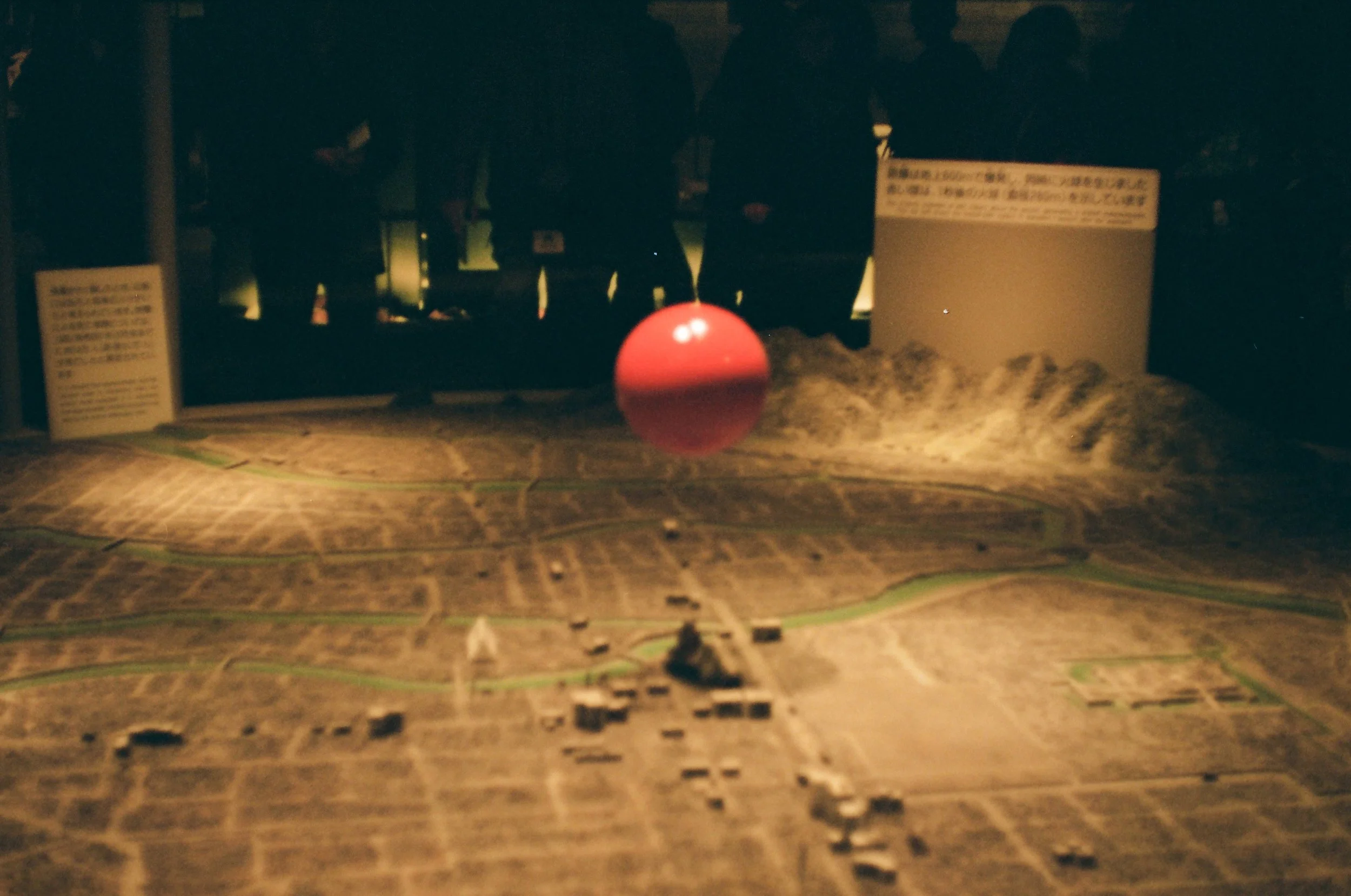
The Bomb, one of many dioramas at the museum. Praktica LTL. 50mm Meyer-Optik Domiplan Lens, Kodak Portra 400

Hiroshima Memorial Peace Museum, Praktica LTL. 50mm Meyer-Optik Domiplan Lens, Kodak Portra 400
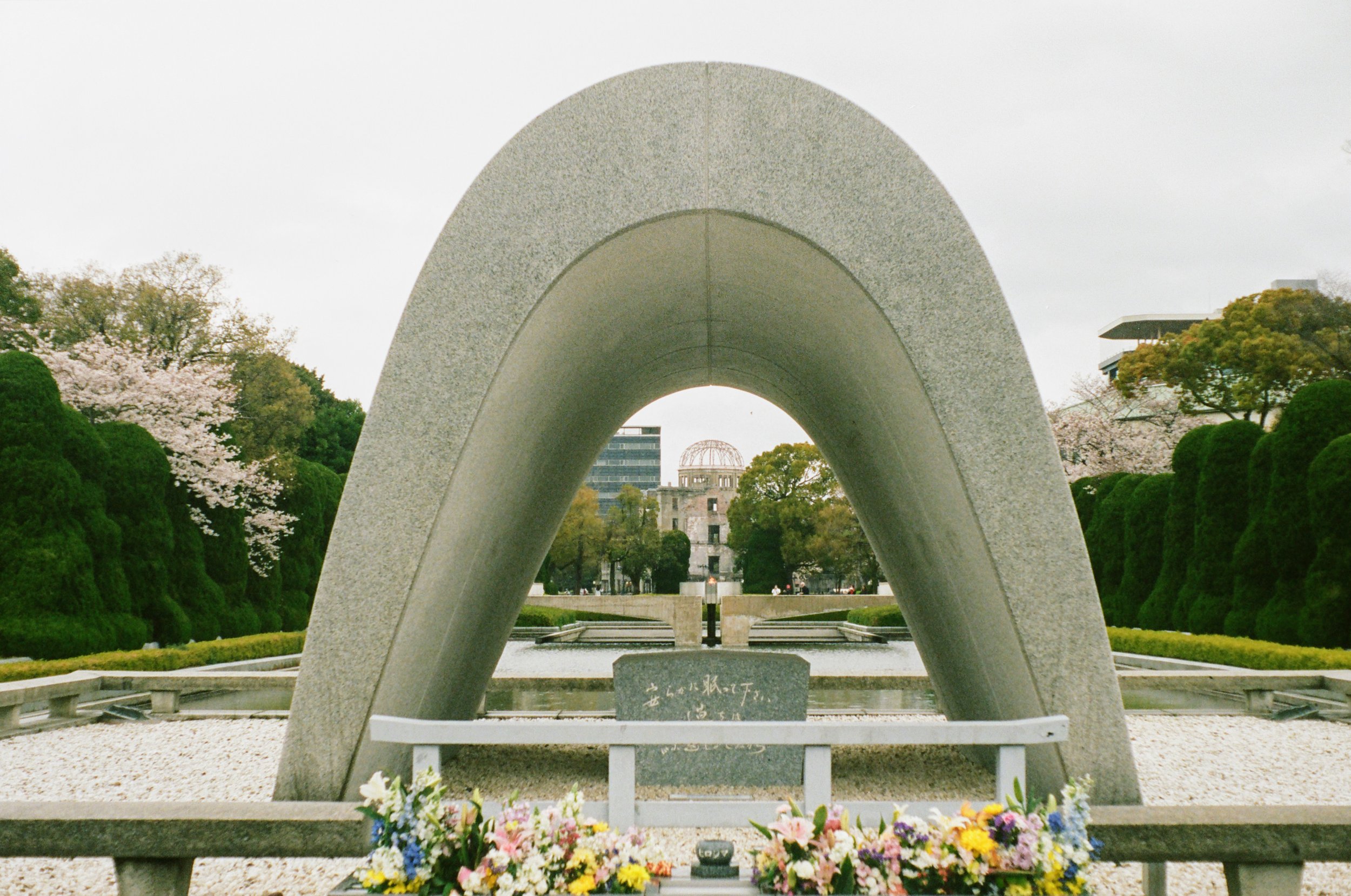
Looking towards the epicenter from the grounds of the Hiroshima Memorial Peace Museum, Praktica LTL. 50mm Meyer-Optik Domiplan Lens, Kodak Portra 400
It Followed Me Home
The visit to Hiroshima went by in a blur. Before we knew it, it was back to Tokyo by high speed rail for a short overnight stay before flying home to Vancouver. At this stage of the trip I’d realized I’d done almost no shopping and thought to grab a few mementos of this visit other than the photos I was hoping would turn out. A quick stop at Lemonsha in Ginza and I found myself a like-new condition Yashica Electro GSN. Ok, I thought it was quick stop, but nearly missed my train as a result of a high degree of indecisiveness. This led to my first opportunity to sprint down a train platform, just like in the movies. The Yashica? A joy to look at, if not a powerhouse of photographic potential. That, along with a new-old-stock Seiko SKX007 that I found in a tiny clock shop in Koyasan, and my printed photobooks, are all tangible reminders that immediately elicit memories of this wonderful country that I will undoubtedly visit again.
It was a couple of years later that I decided to actually write up a story on this trip. Looking through my photographs while doing so, I was amazed by how quickly my memories of the experience sharpened. I guess that’s the beauty of travel photography. Its ability to transport you back in time and across the world to relive moments that otherwise might just be lost in the back-catalog of our minds. Even more special in this instance perhaps, is the memories of taking the shots themselves; composing, adjusting, fretting, forgetting, and as is the case when shooting film, hoping. Hoping the shots turn out, trusting your equipment, your film and your skill adds a bit of uncertainty to the experience that -for me- augments the adventure you’re on.

Yashica Electro GSN from Lemonsha, using a Huawei Smartphone with integrated Leica Summilux-H 27mm f1.8 ASPH

Seiko SKX007, arguably one of Seiko’s most loved pieces, found in a tiny clock repair shop in Koyasan. Shot on a Samsung S20 FE.
Stay tuned for my Japan series follow-up post where I’ll share some lessons learned on this first film-photography-only experience abroad. I learned a lot, and while I’ve shared some tips and thoughts throughout these articles, I look forward to preparing a summary of some of these key learnings for those of you contemplating a similar project.
Continue to the Epilogue: Japan - Travelling with Film Photography →