
Blog
From cobblestoned Portuguese alleys navigated one-handed with a stroller to reef dives in Fiji, this is where the trips live. Told through words and whatever camera happened to be with me.
I shoot film and digital and travel with family in tow. These posts are part travel journal, part photography log, and part love letter to the places that made an impression. I hope they make you want to go see them for yourself.
Latest Articles




The Insta360 Ace Pro2 as a Travel Camera
Could the Insta360 Ace Pro 2 really work as a travel camera? After two weeks shooting with it across Athens, Sifnos and Milos, I came away impressed by its versatility—and increasingly aware of where a dedicated stills camera still wins.
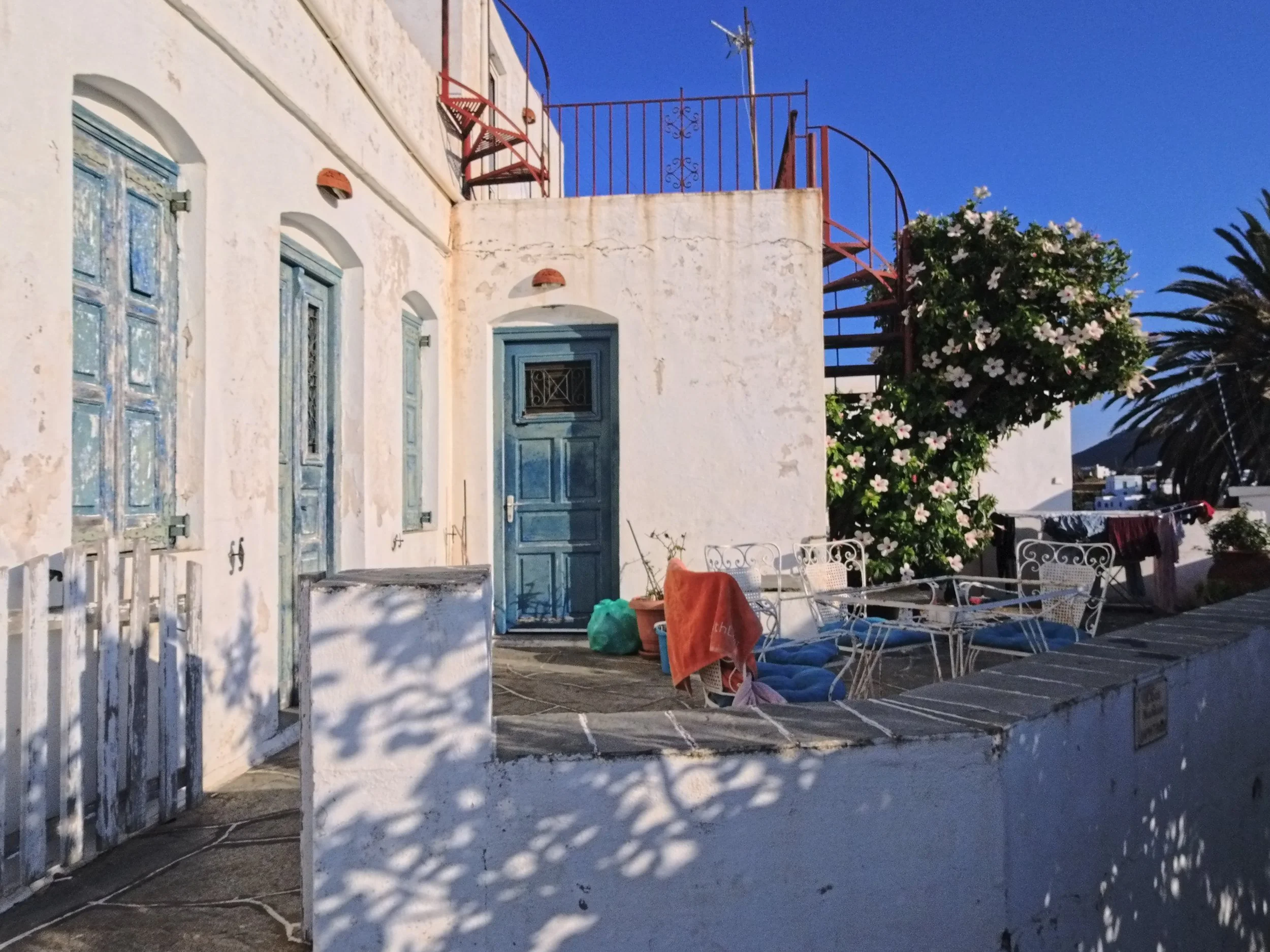
Characterful home in Ano Petali, Leica Natural, Sifnos, Greece, Insta360 Ace Pro2
Vintage Camera Vibes in an Action Cam?
My initial impressions review of the Insta360 Ace Pro 2 as a stills camera has become the most-read article on Yarko On The Go this year. That first test left me intrigued: the Ace Pro 2 was fun, versatile and capable of surprisingly characterful photos, but its shutter lag, ergonomics and image-quality quirks kept it from truly replacing a dedicated point-and-shoot.
Several months, a few firmware updates and a few plane tickets later, I took the Ace Pro 2 to Greece for a more demanding test: could it actually work as a travel camera for two weeks abroad?
I brought backup. The Ace Pro 2 shared my camera bag with a Leica M10-R and Ricoh GR III while travelling through Athens, Sifnos and Milos. That gave me the chance to use it for street photography, landscapes, family snapshots, video and eventually scuba diving—and, more importantly, to see which camera I actually reached for when a photograph presented itself.
So, can the Insta360 Ace Pro 2 replace a traditional travel camera? Not quite. But after two weeks with it, I think its strengths as a compact hybrid travel camera are considerably more interesting than I first gave it credit for.
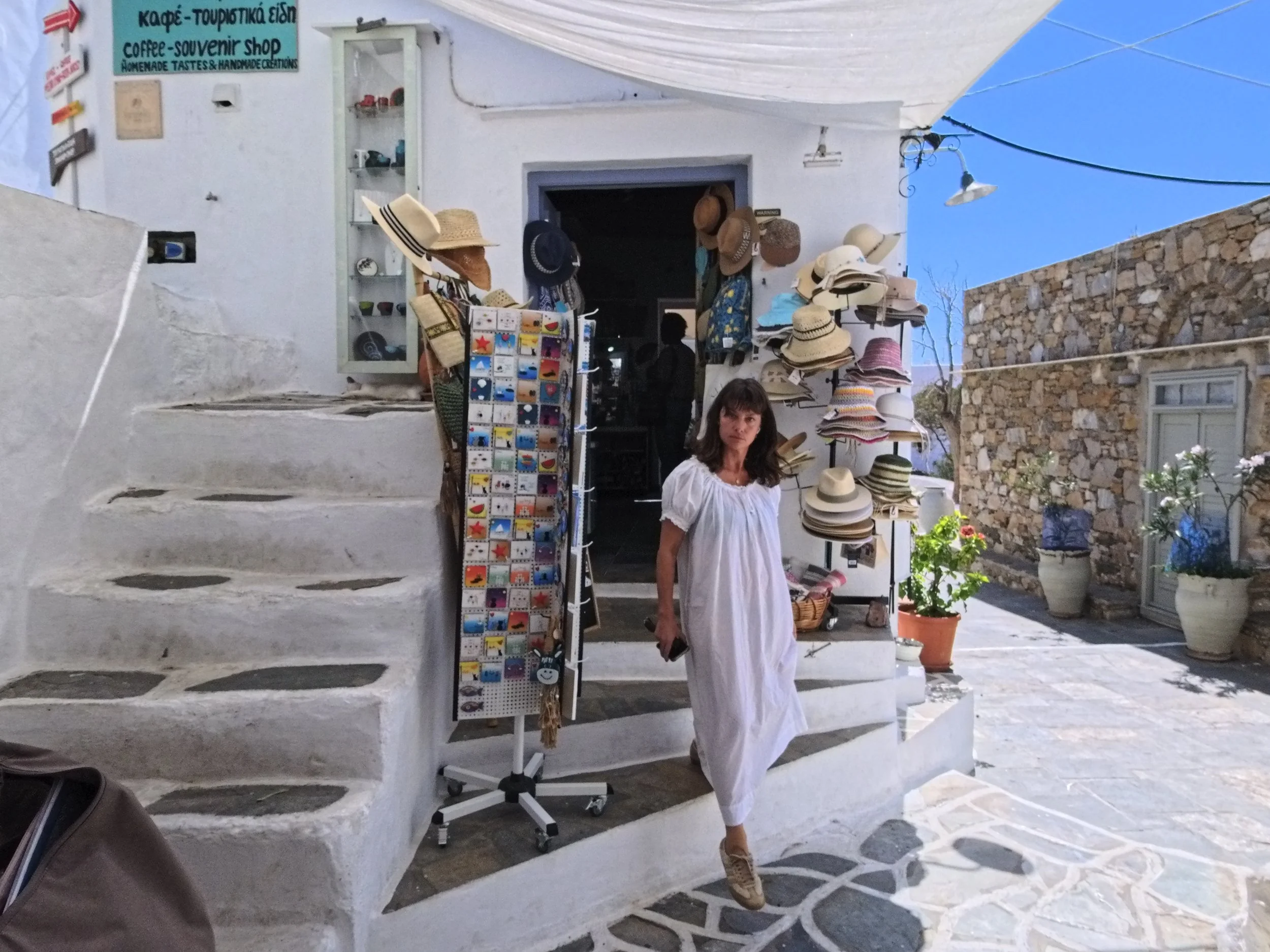
Guess I wasn’t that subtle. Woman exits a cafe, Kastro, Sifnos, Greece, Insta360 Ace Pro 2
Ace Pro 2 as a Travel Camera: At a Glance
| Travel-camera consideration | My experience |
|---|---|
| Daylight stills | Good, especially for social and web use |
| Leica JPEG profiles | Characterful; Leica Natural was my preferred travel profile |
| Battery life | Excellent with the Xplorer Grip Pro |
| Portability | Great in a sling; a little bulky in a shorts pocket |
| Shutter response | Still slower than a dedicated compact camera |
| Low-light stills | A clear weakness |
| Video | One of the strongest reasons to carry it |
| Water and rugged use | A major advantage over my traditional cameras |
| Replace a GR III? | No—but it makes an excellent secondary travel camera. |
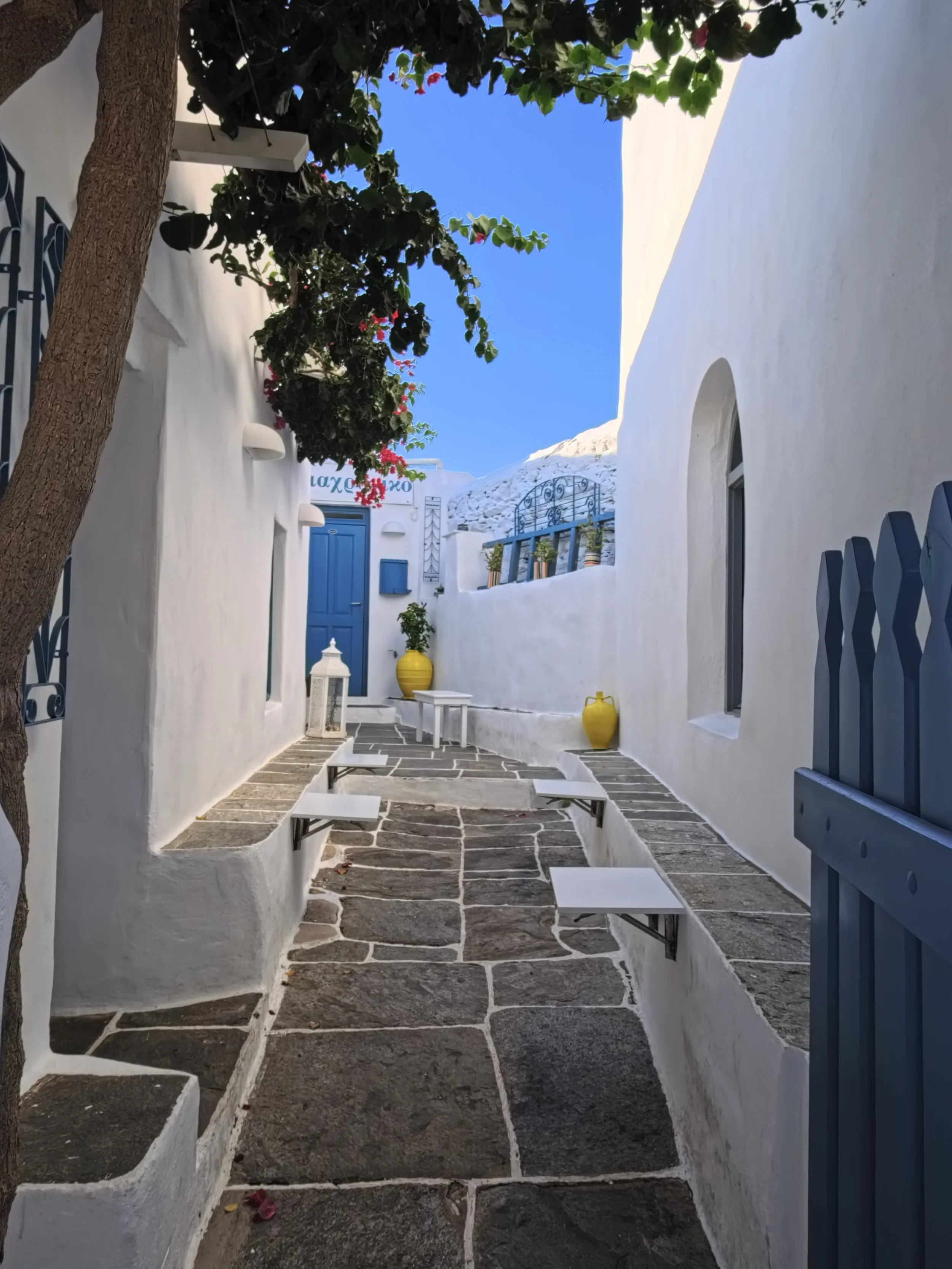
Still Life in an alley, Ano Petali, Sifnos, Greece, Insta360 Ace Pro 2
Cameras, cameras everywhere
One of the first things I noticed on this trip to Europe was the cameras and in particular -point-and-shoots. The hype is plentiful online regarding the resurgence of the camera (vs the smartphone) for photography, but it was quite reassuring to see the shift playing out before my eyes. Of course the Fuji X100Vi was prevalent, but with it other Ricohs, Canons, and more including the fresh out-of-the-box Leica D-Lux8 in my wife’s hands. (A birthday present received just a week before we flew). They weren’t all new either, some of the little digital cameras I saw were 10+ years old and others were shooting film. Cool!
It makes sense then that Insta360 would find it attractive to market one of their flagship action cams as an entrant in the burgeoning renaissance of dedicated cameras, but does it belong in that pack, or is it a pretender in point-and-shoot clothing? What follows is a distilled perspective of the strengths and weaknesses of the Ace Pro 2 for shooting stills on vacation.
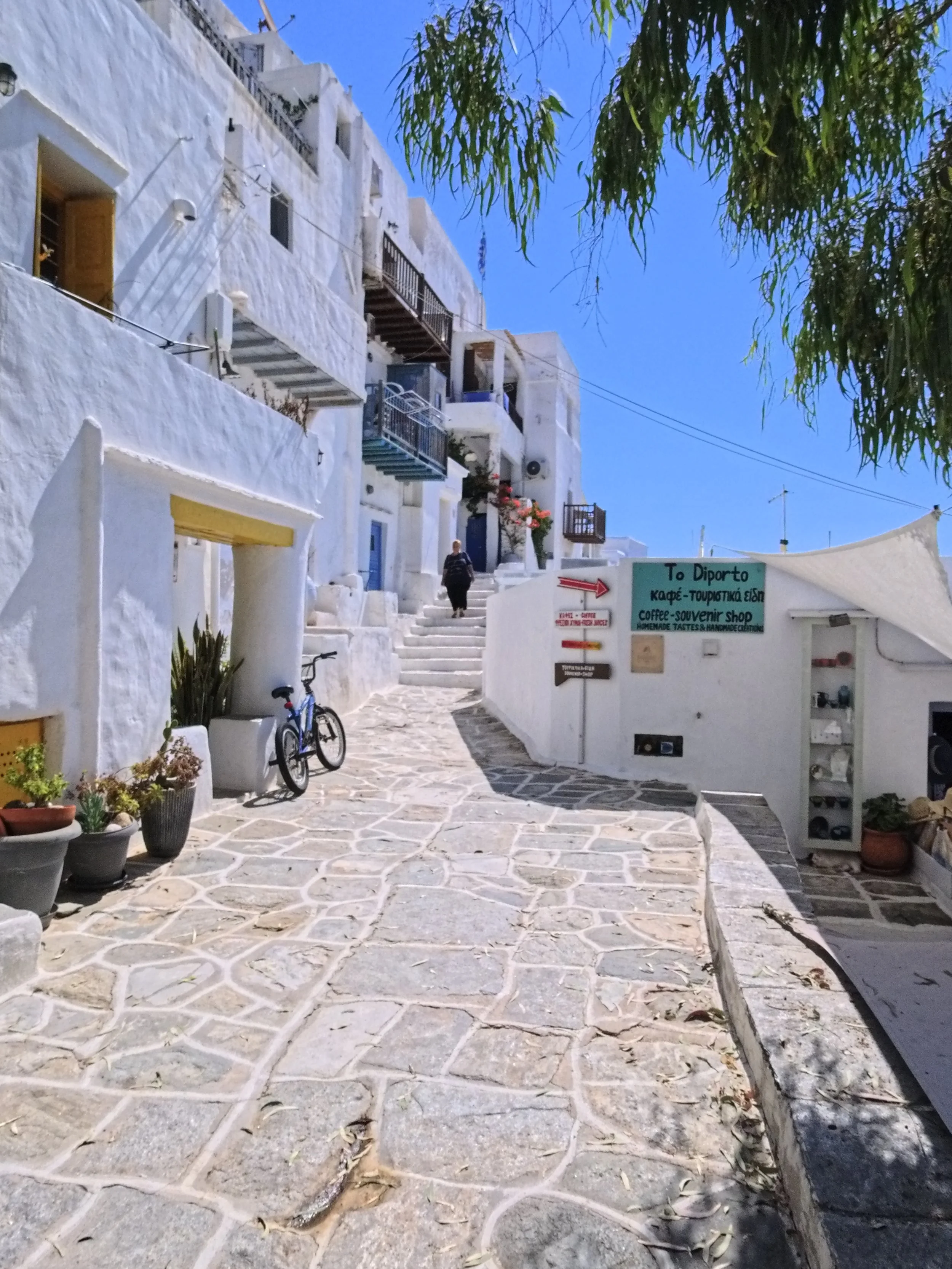
Woman descends the stairs, Kastro, Sifnos, Greece, Insta360 Ace Pro 2
Where the Ace Pro 2 Shines as a Travel Camera
Size and Travel Portability
For the first time in my travels, I decided to bring a sling bag to pair with a backpack on this trip. The Bellroy Lite Sling was the pouch of choice along with the Bellroy Lite Travel Pack 30L on my back. The Ace Pro 2 with Xplore Grip Pro easily fit in the sling along with my usual every day carry items including the Ricoh GRiii, giving me an opportunity to easily choose which camera to shoot with. (At times I even had my Leica on my neck strap as well, but frankly things started to get heavy and unwieldy at that point.) The Ace Pro 2 was easy to take in and out of the bag quickly, though the lack of cover for the lens protector occasionally made me nervous about scratches. My solution? - A wrist sweat-band I brought along and stretched over the camera when in the pouch. Not an elegant solution perhaps, but an effective one it turned out. To be fair, the flimsy automatic lens protector on the Ricoh doesn’t inspire a ton of confidence that it’ll survive bumping along in a pouch with other items either.
In a pocket however; the Ace Pro 2 does feel a bit bulky, particularly in the pockets of a light pair of shorts, which is what I wore the entire trip as it was 36 degrees C every single day! (Packing pants was a waste of space, it turned out). There are some other challenges with pocket-ability that I touch on later in the article.
Battery Life with the Xplorer Grip Pro
On the days I focused on the Ace Pro 2 for photography, I rarely had a situation where power got low enough to need a battery swap. With the Xplorer Pro Grip fully charged, there’s plenty of juice to take me through a day of still shooting even with some video thrown in as well. In stark contrast, I typically bring 3 spare batteries for my Ricoh GRiii for a dedicated day of photography. So, top points for battery life from me.
Ease of Use
Power it on and shoot! This is what the point & shoot ethos is all about and when travelling it just makes so much sense. One doesn’t always have a free-hand for manual focus or even to balance a larger camera to help compose a shot, for that matter. The Ace Pro 2 is easy to shoot horizontally and vertically, and I found myself doing the latter more often than you might expect given the availability of wide crop options. it also looks enough like a “regular camera” that nobody really bats an eye at it as you snap away throughout the day. Switching off the front panel indicator light and display aids in increasing the subtlety of the camera -particularly as daylight begins to fade.
Textures catching my eye outside a shop in Kastro, Sifnos, Greece, Insta360 Ace Pro2
Leica JPEG Profiles for Travel Photography
For the purpose of this trip, I focused almost entirely on the Leica Natural profile for my Ace Pro 2 JPEGs. On the camera screen, the images display a slightly nostalgic saturated colour palette with decent sharpness and dynamic range. These generally, but not always, coincided with what I’d see when I sent the images to my phone, though on the laptop, or Mac Studio sized screen, the limitations of the image quality begin to show themselves. If you’re sharing your photos mostly on socials, the output is often adequate and needed minimal editing if any to get to a point I was happy with. To me, these JPEGs remind me of some old film stocks I shot in the past, such as Agfa Vista, although the tonal contrast and gradient here seems a bit less refined, almost cartoonish at times, but with some sense of charm.
Colourful fishing boat homes in Milos, Insta 360 Ace Pro 2
Zoom and Field of View
While prime lenses are my weapon of choice, there’s something to be said for being able to zoom in on a subject or scene. I didn’t always remember the function was there (as neither of my other cameras offer this feature), but if I was mindful of it I think I would have made more use of it. (The toggle is on the front of the shutter button mount)
There are multiple fields of view as well from De-Warp to Linear to Megaview and more. I generally tried to stick to the FOV that gave me the least distortion, which best suits my style of photography. That said, there’s a lot of fun and creativity to explore with the other settings depending on your surroundings.
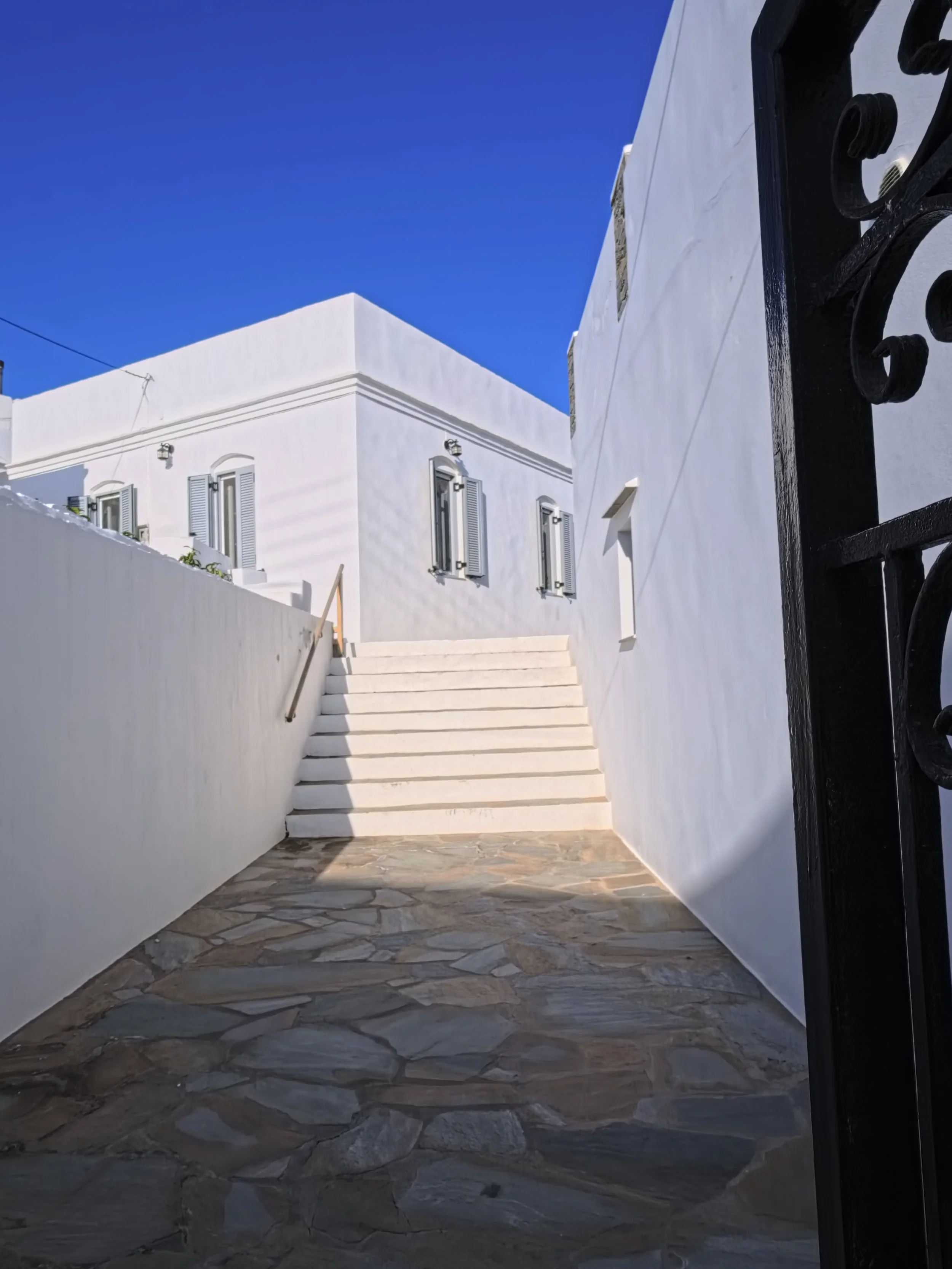
Why the Ace Pro 2 Works as a Hybrid Travel Camera
Decent stills and video in the same compact yet robust package? The thesis sort of writes itself for travel use, doesn’t it. It may not be the absolute best at both, but it’s not bad either. It’s durable enough that you’re not too stressed taking it to the beach, on a boat, or even for a swim -but not with the grip mounted! On that last note, a follow-up article from this trip on the Ace Pro 2 as a scuba-diving camera is coming soon! I’m definitely not doing that with the other two cameras…
Vespas and blue-domed Churches, must be Greece, Insta 360 Ace Pro 2
Church of the Seven Martyrs, Kastro, Sifnos, Greece, Insta360 Ace Pro 2
Home with a view, Kastro, Sifnos, Greece, Insta 360 Ace Pro 2
“If you’re sharing your photos mostly on socials, the output is often adequate and needed minimal editing if any to get to a point I was happy with.”
Where the Ace Pro 2 Struggles for Travel Photography
Image Quality: Resolution, Fringing and Blooming
This camera is not for the pixel-peepers, but is it fair to call that a struggle? In the occasional arms-race that is camera specs, it can dissuade some people, and if you like to print your photos, or look at them on larger screens, then this camera is not going to astound you. That doesn’t mean the images can’t be characterful, or “good”, but if low grain a lack of fringing and high sharpness are of key importance, this isn’t the tool you’re looking for.
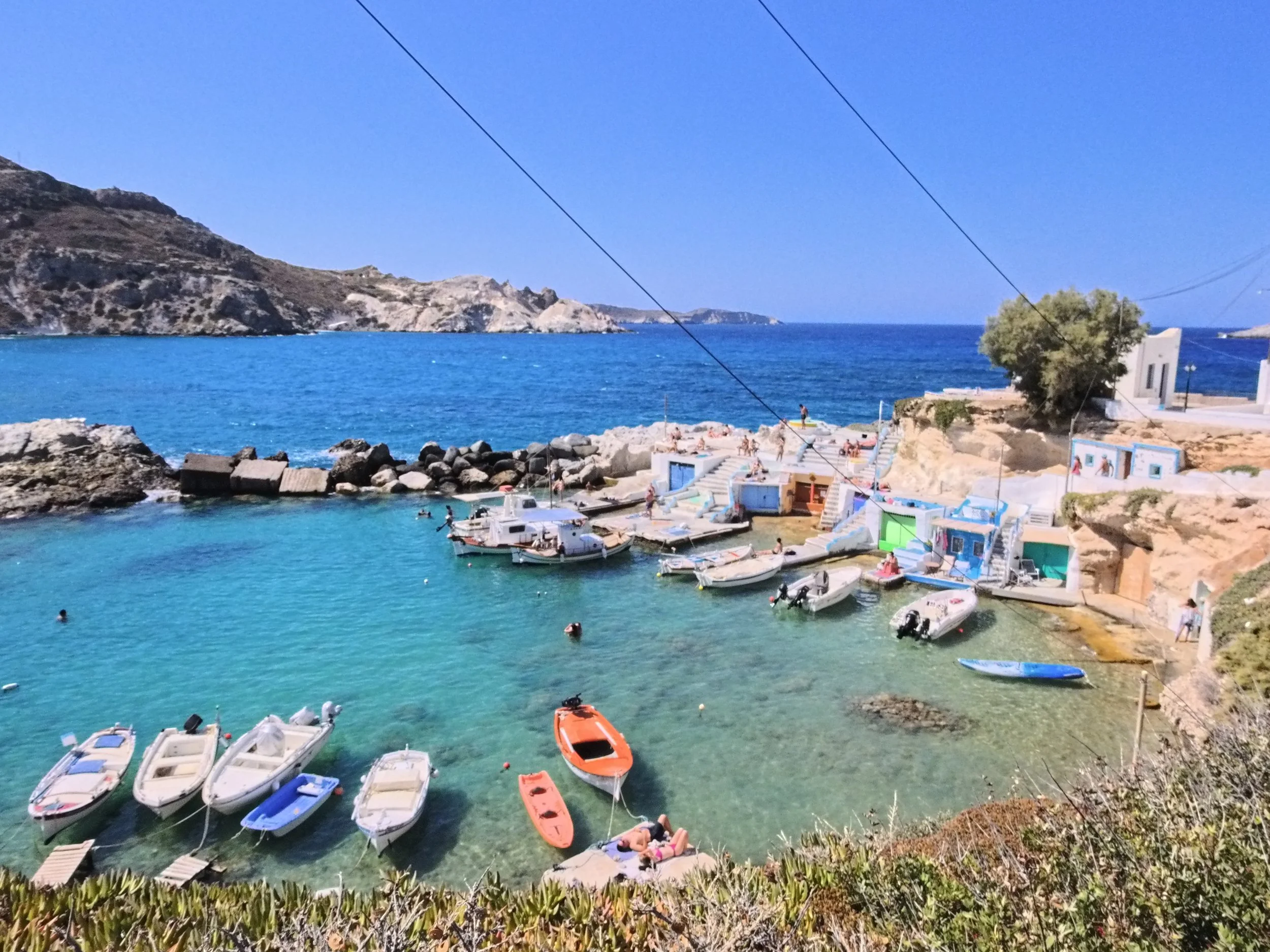
This water was surprisingly dirty, Milos, Greece, Insta360 Ace Pro 2
Lens Flare
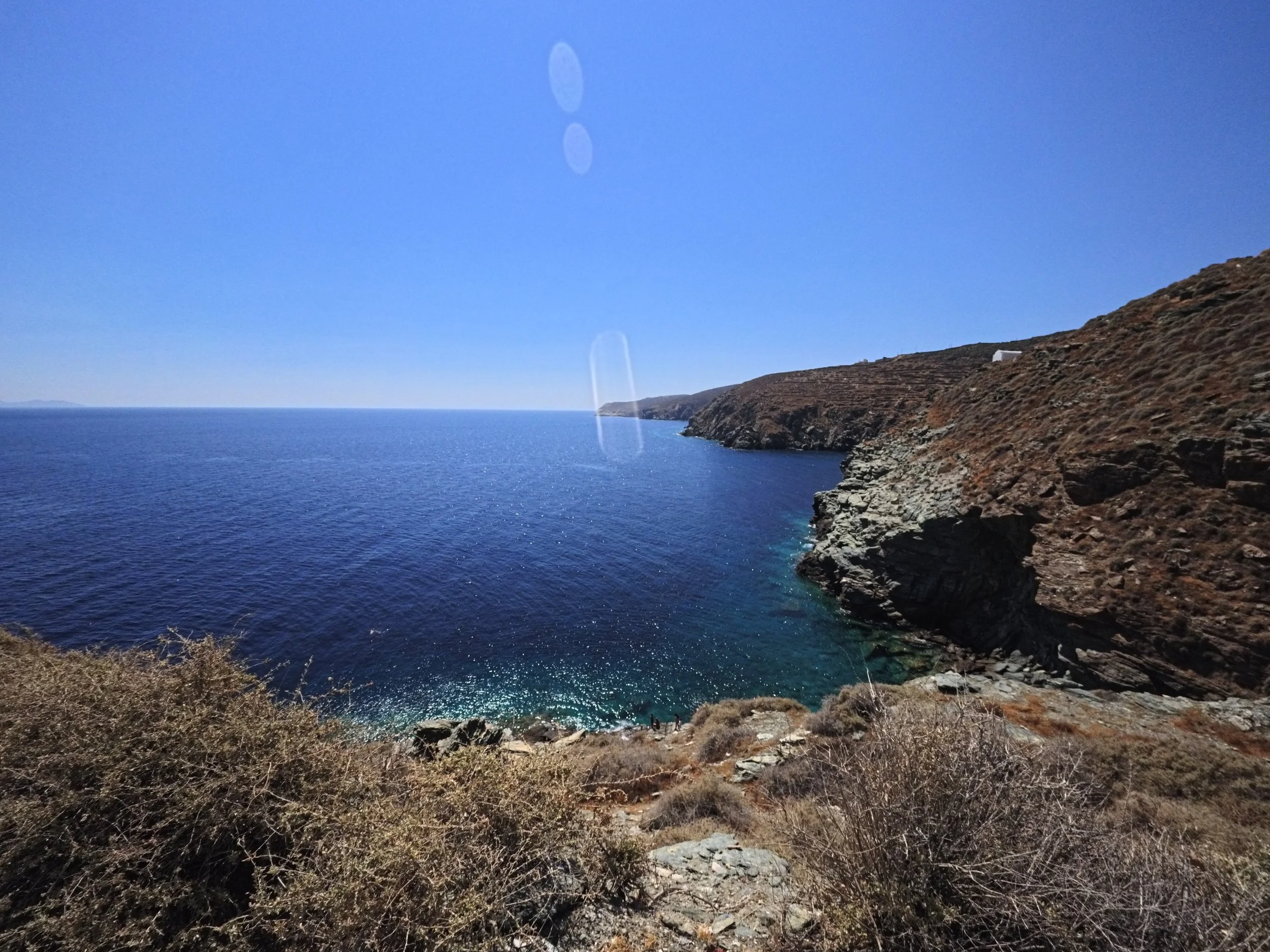
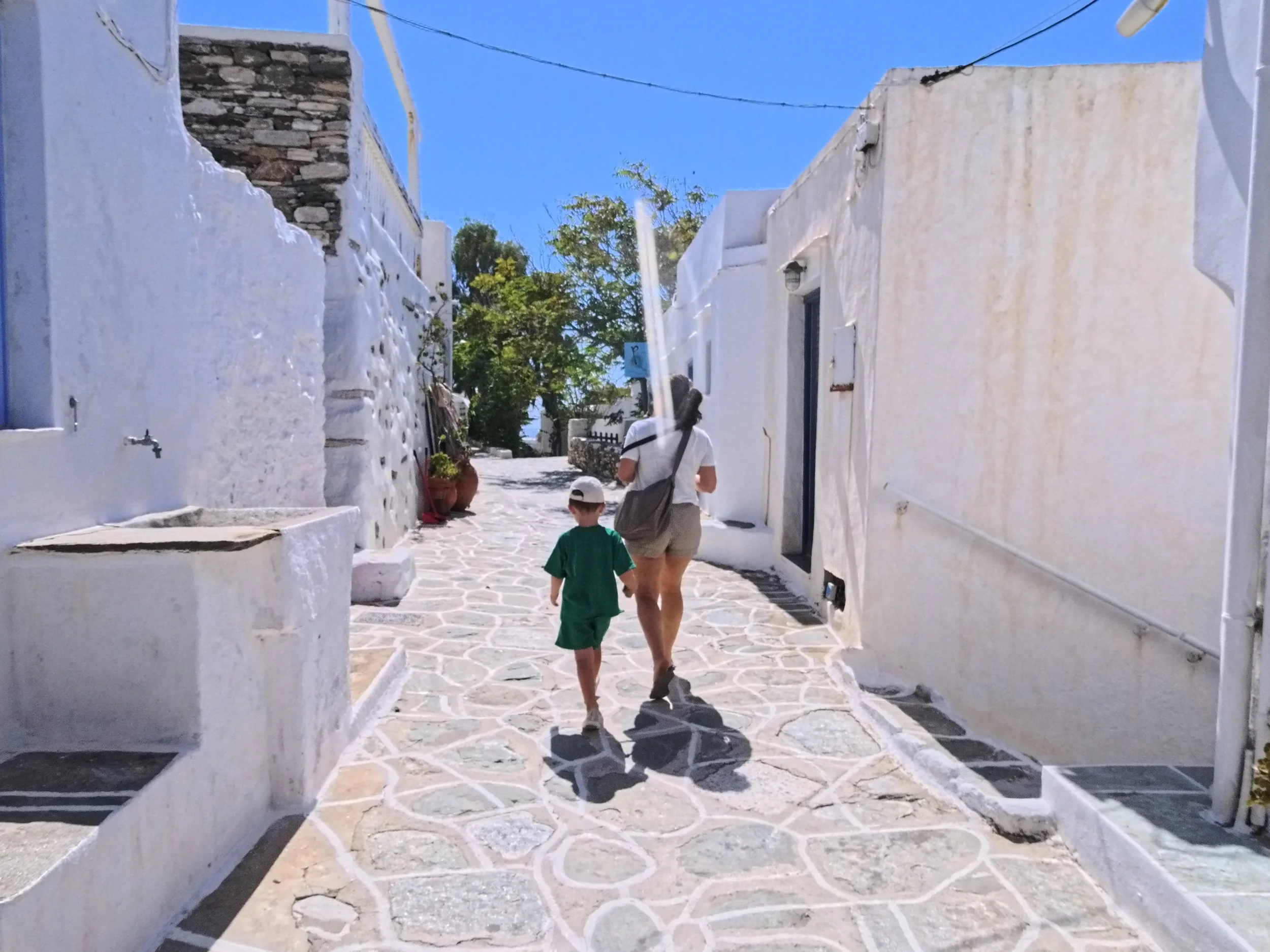
Occasionally, lens flare (where bright light enters a camera lens and reflects internally off glass, coatings, sensors etc. creating streaks or circles of light) can be used with great artistic effect, but in general most folks attempt to avoid it in their images. With the Ace Pro 2, particularly facing the sun (of course), it would occasionally create blocky or blobby unattractive streaks in the image. My guess is this is the fault of the protective lens cover rather than the lens, but it’s not the easiest component to remove/install and so once it’s on it’s generally left alone. Be mindful of your angles shooting in the direction of a bright light source and you’ll be fine, though it’s not always easy to spot it as you’re composing on your screen in bright surroundings.
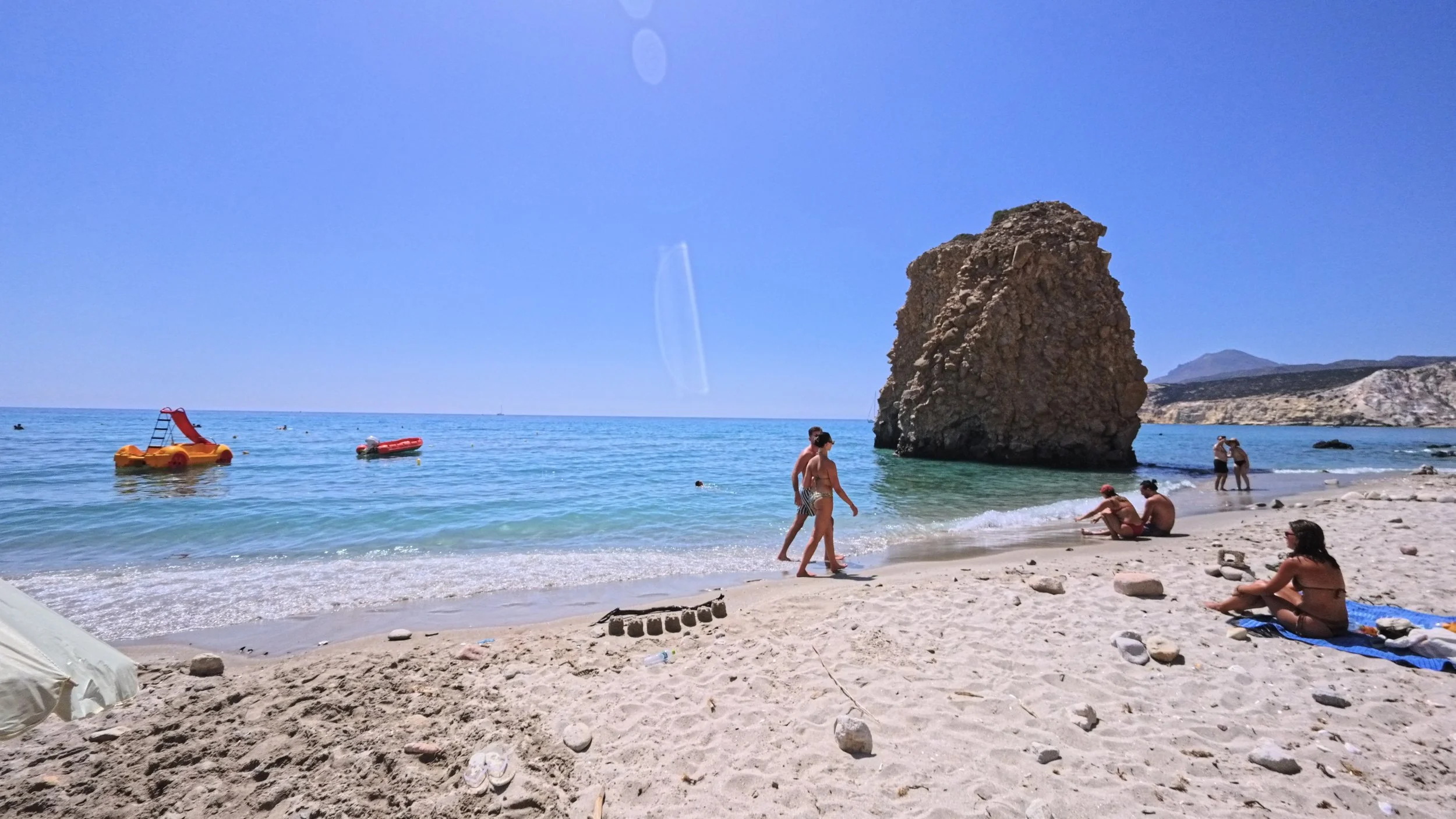
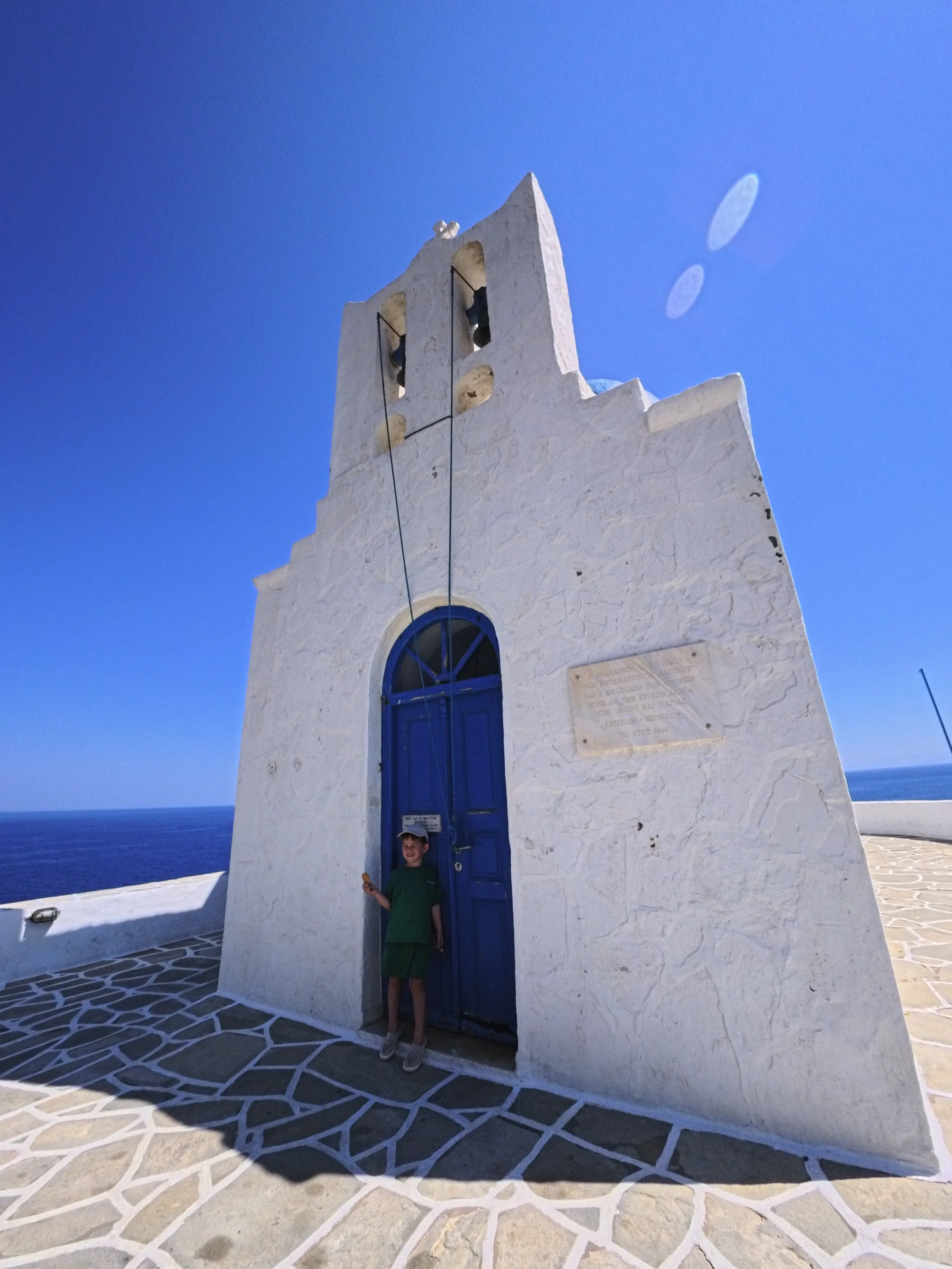
Heat!
This camera gets hot! Leaving it on (as one does) while walking around allows the camera to begin building up quite a bit of heat which is felt primarily on the back where the screen is. It was enough that it was uncomfortable to put the camera in my shorts pocket after shooting for a while, and when I did, that leg got sweaty immediately. I suspect the culprit, at least partly, is the Xplorer Grip Pro which charges the camera as you go -a setting that can be switched off if you remember to do so. It’s not going to burn you, but at a few points it got warm enough as to be a bit alarming. This was certainly exacerbated by the high ambient temperatures typical in August in Greece of course, so perhaps not an issue for a vacation to the arctic circle? The camera itself (without the grip attached) is waterproof enough to swim with, so maybe an occasional dip to cool it off is in order. But, that means you need to pack along and reinstall the tiny USB port cover-door that you remove when attaching the grip. That is a piece that one can very easily loose given it’s tiny size, and something I stressed about occasionally on the trip.
Shutter Lag and Street Photography
Admittedly I’m getting used to it now, and in the context of capturing largely still scenes (buildings, textures, vistas), it’s a non-issue. But, a part of travel photography is capturing living moments around you, and to do so well you need to be in synch with your tools. The shutter button still lags, and the buffering is still slower than I’d like, but after a few months with the camera it’s something I’ve generally begun to naturally adapt my style for when using it. Still, if Insta360 is reading this, speeding it up would do wonders!
Low-Light and Night Photography
Things get a bit weird with Ace Pro 2 image quality shooting stills after dark. Zoom in and images get a bit muddy with sharpness falling off dramatically all over and highlights occasionally producing strange artifacts. Images begin to take on an almost cartoonish quality in some instances. It took me quite a bit of sifting through my shots to choose a few to share here, which I think is telling. Certainly, shooting in dark conditions will challenge any camera, but it felt particularly inappropriate to try too hard with this one. I eventually stopped taking it with me in the evening, unless I wanted to shoot some video, where it dramatically outperforms it’s low light still capability, and certainly the other cameras in my bag.
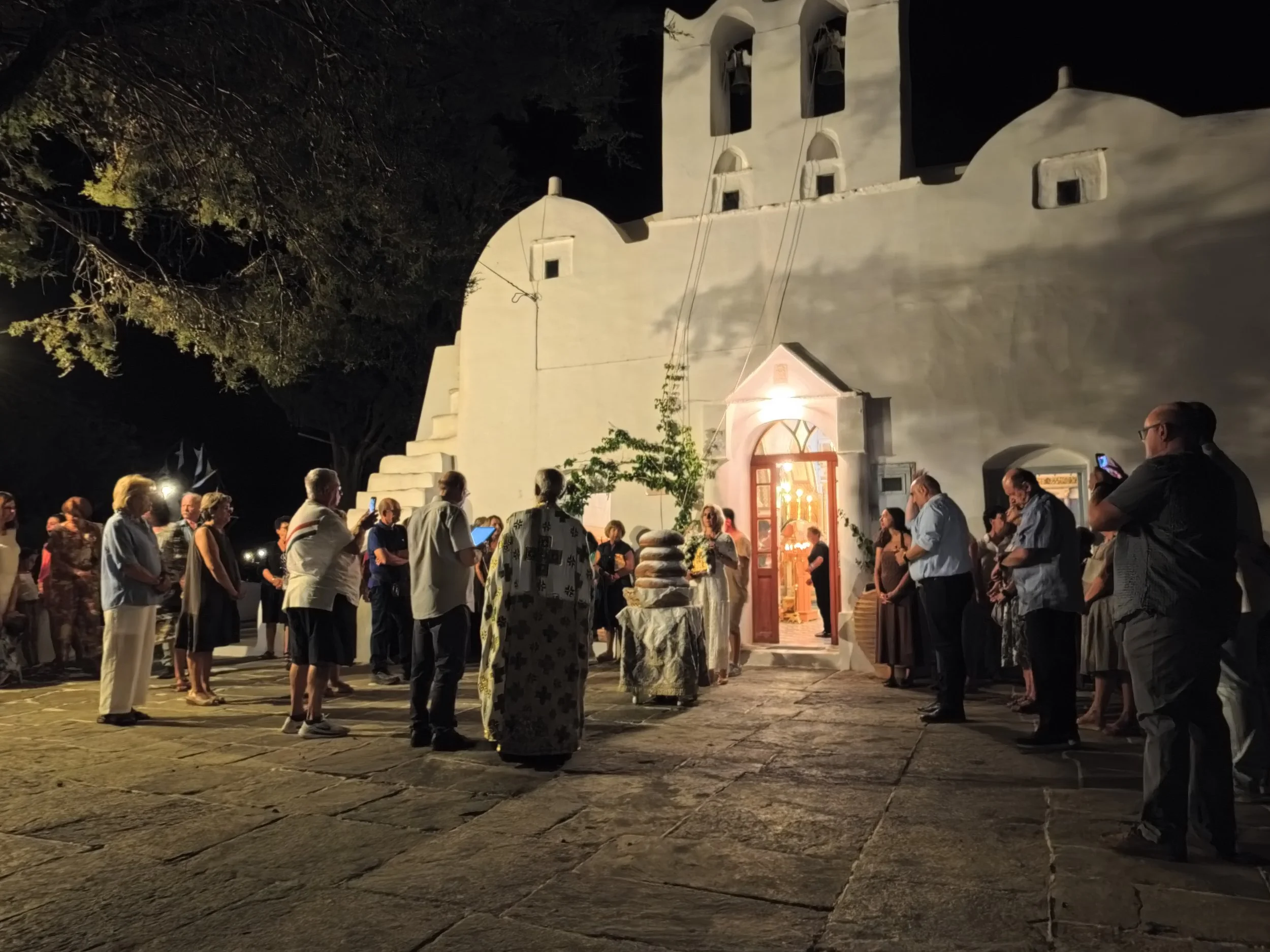
Everybody hold still please.
Foreground objects are decent, but what’s going on with the people walking on the right?
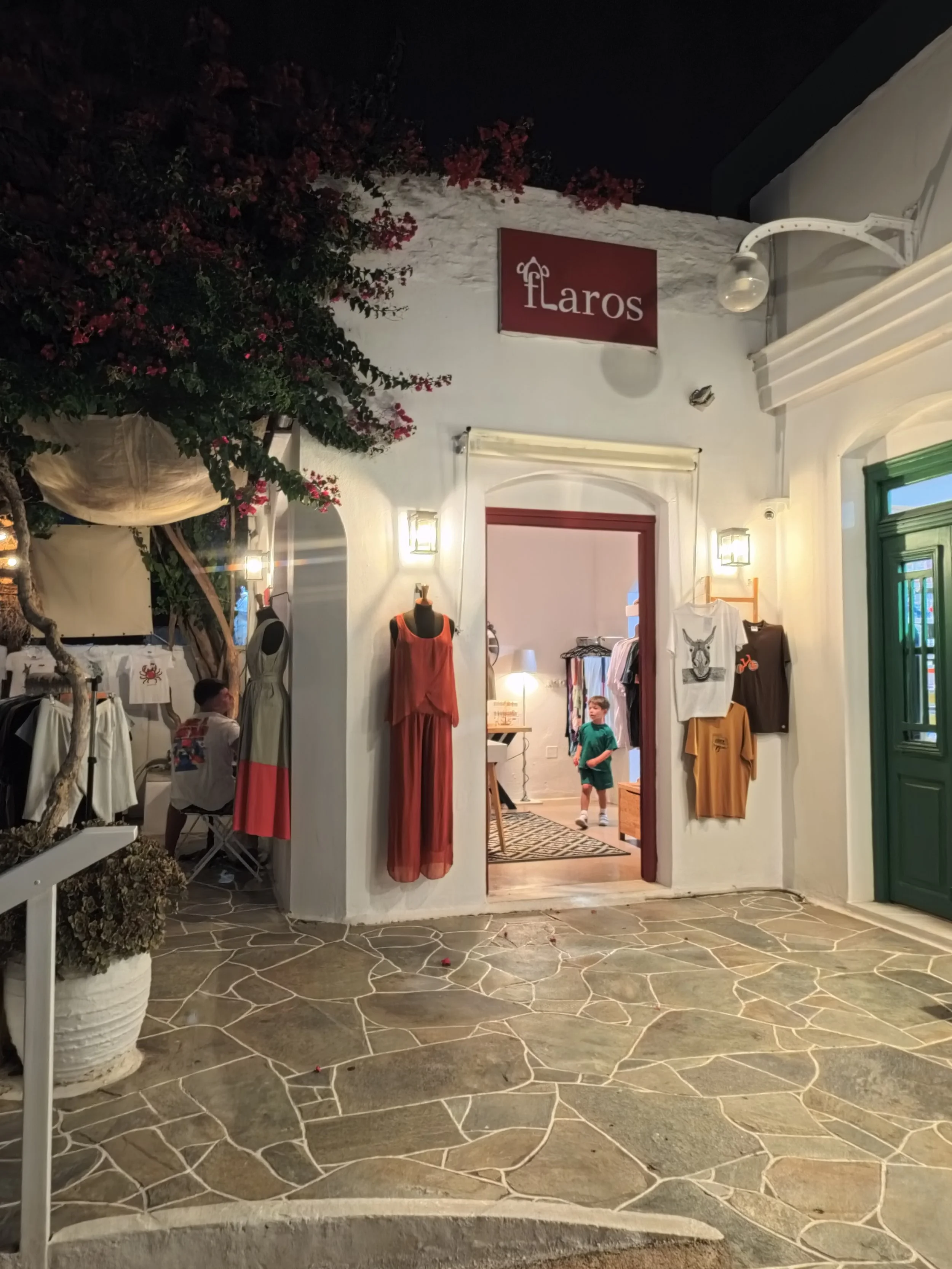
Enough light to sharpen things up, but there’s some lens flare again.
Is the Insta360 Ace Pro 2 a Good Travel Camera?
Would I travel with the Ace Pro 2 again? Absolutely. Would I travel with only the Ace Pro 2 if photography mattered? No. As a videography neophyte, the approachable nature of the Insta360 Ace Pro 2 when it comes to video makes for a compelling case to pack it along for the next adventure. It would undoubtedly always be paired, however; with a dedicated stills camera to capture the type of photos that resonate most with me. Saying that, and looking at this next image below, I can imagine a project or two that leverages the grainy, saturated, nostalgic quality that this little camera can produce. The thing about quirks is, once you get to know them, you can figure out how to leverage them. If you can do so reliably, then perhaps it becomes a tool with a very specific stylistic purpose (remembering of course, that there are other Leica JPEG profiles built-in to the camera to explore that aren't featured here ).
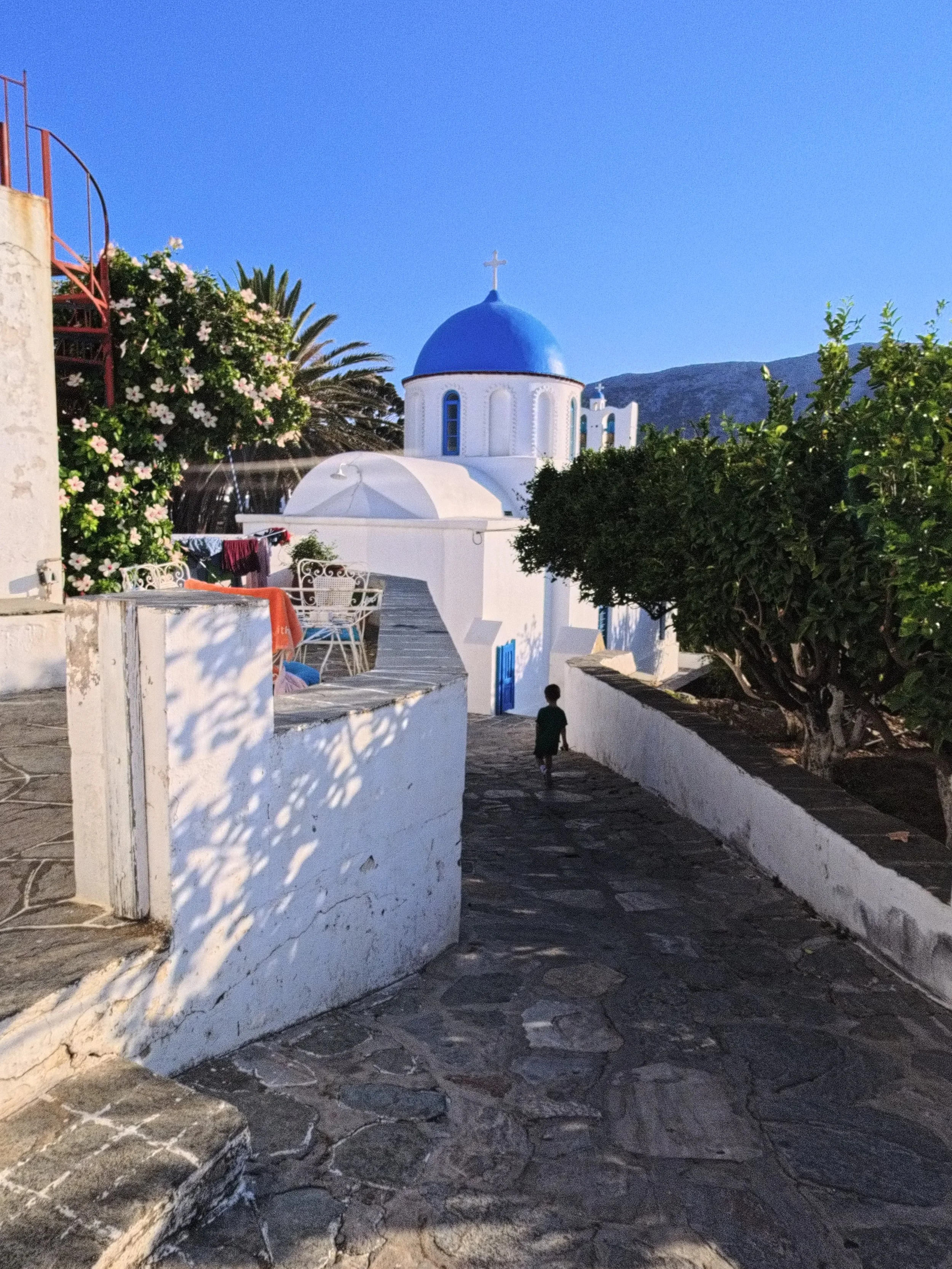
Quirky and Characterful (the camera and the kid), Ano Petali, Sifnos, Greece, Insta 360 Ace Pro 2
The Ace Pro 2 continues to grow on me, despite its limitations as a stills camera. The more you use it the more you begin to understand when to use it, and when to leave it in the hotel room.
Reflecting on it’s use during this trip:
It’s not going to win any image quality awards, but it will occasionally produce images you keep coming back to, pictures with a bit of emotion built-in that perhaps you’ll even print (in a small format)
It’s easy-to-use and non-”pro” nature encourages the silly shots, the texture shots, the photos you may not otherwise think to take but for a notion: “I wonder how this might look if…”
It’s not the only camera you bring, but you may miss it if you don’t
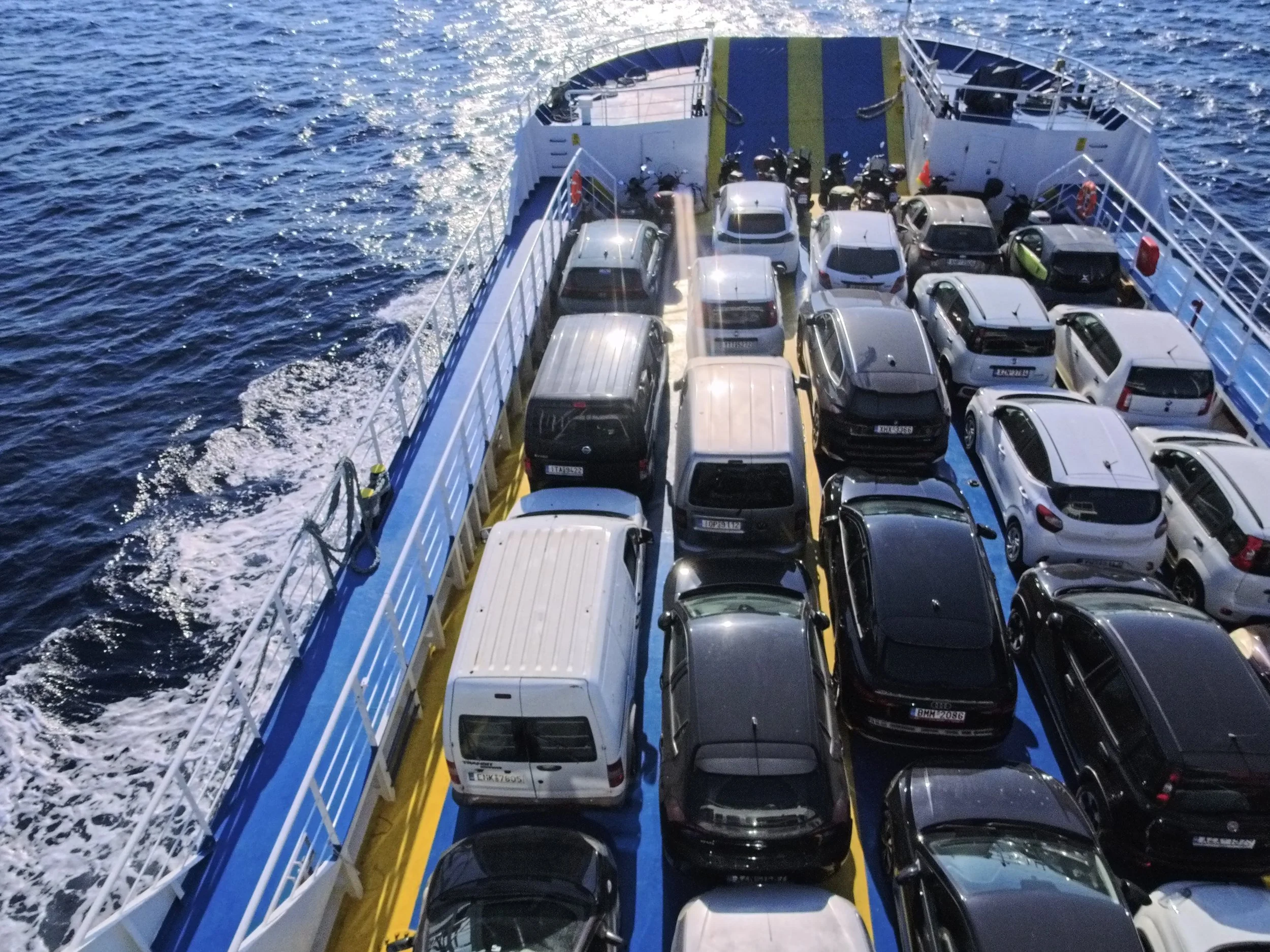
Packed in like sardines on the Ferry, Insta 360 Ace Pro 2
Taking in the life in Kastro, Sifnos, Insta 360 Ace Pro 2
A moment of calm at Sarakinikos, Milos, Greece, Insta360 Ace Pro2
IWC Pilot’s Watch UTC - Why Don’t More Watch Brands do This?
For me, the question is not simply whether a piece of gear is good, but whether it earns its place on the journey. With compact proportions, an intuitive home-time display and an attainable pre-owned price, the overlooked IWC Pilot’s Watch UTC makes a compelling case as a true travel companion.
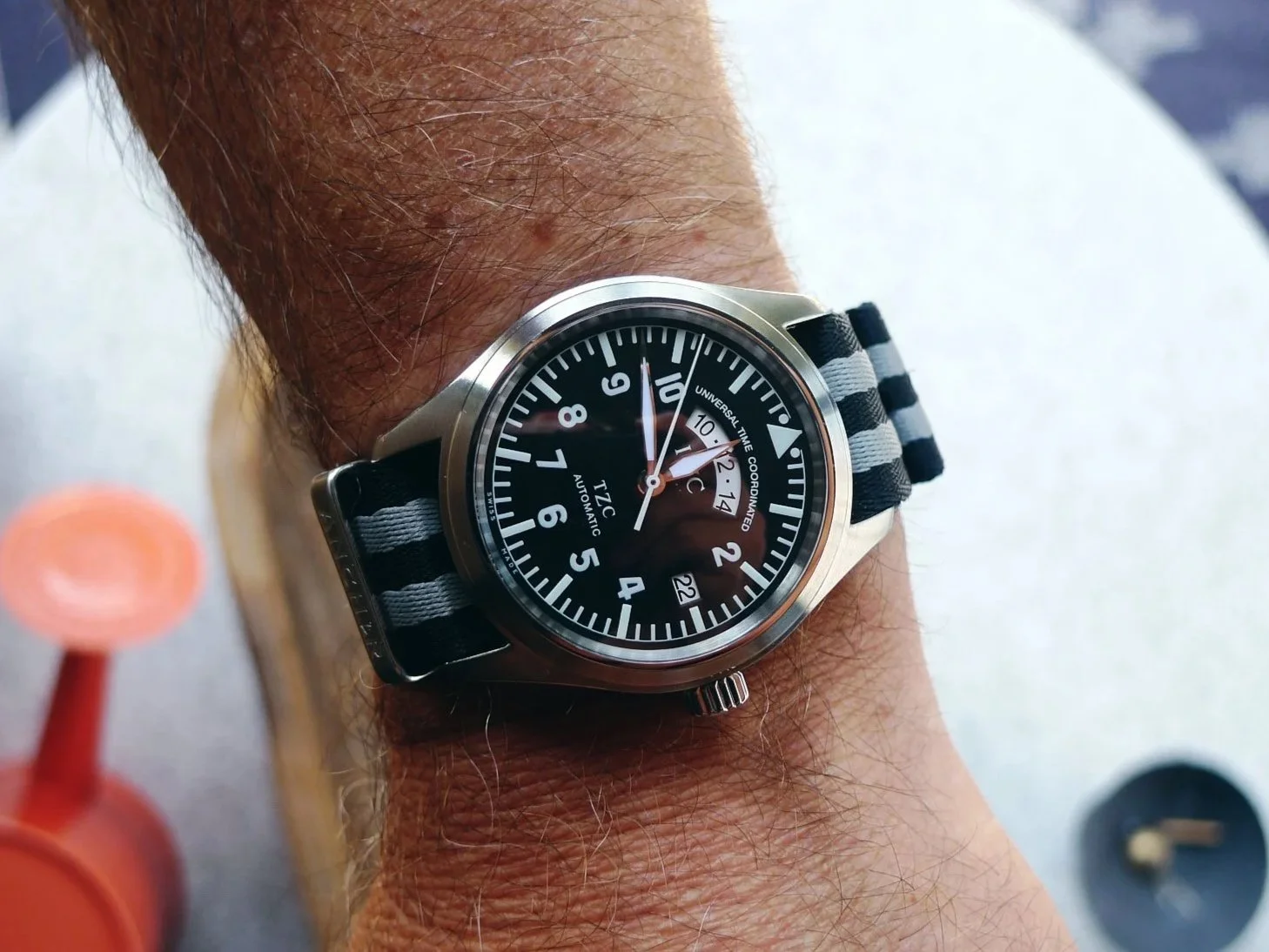
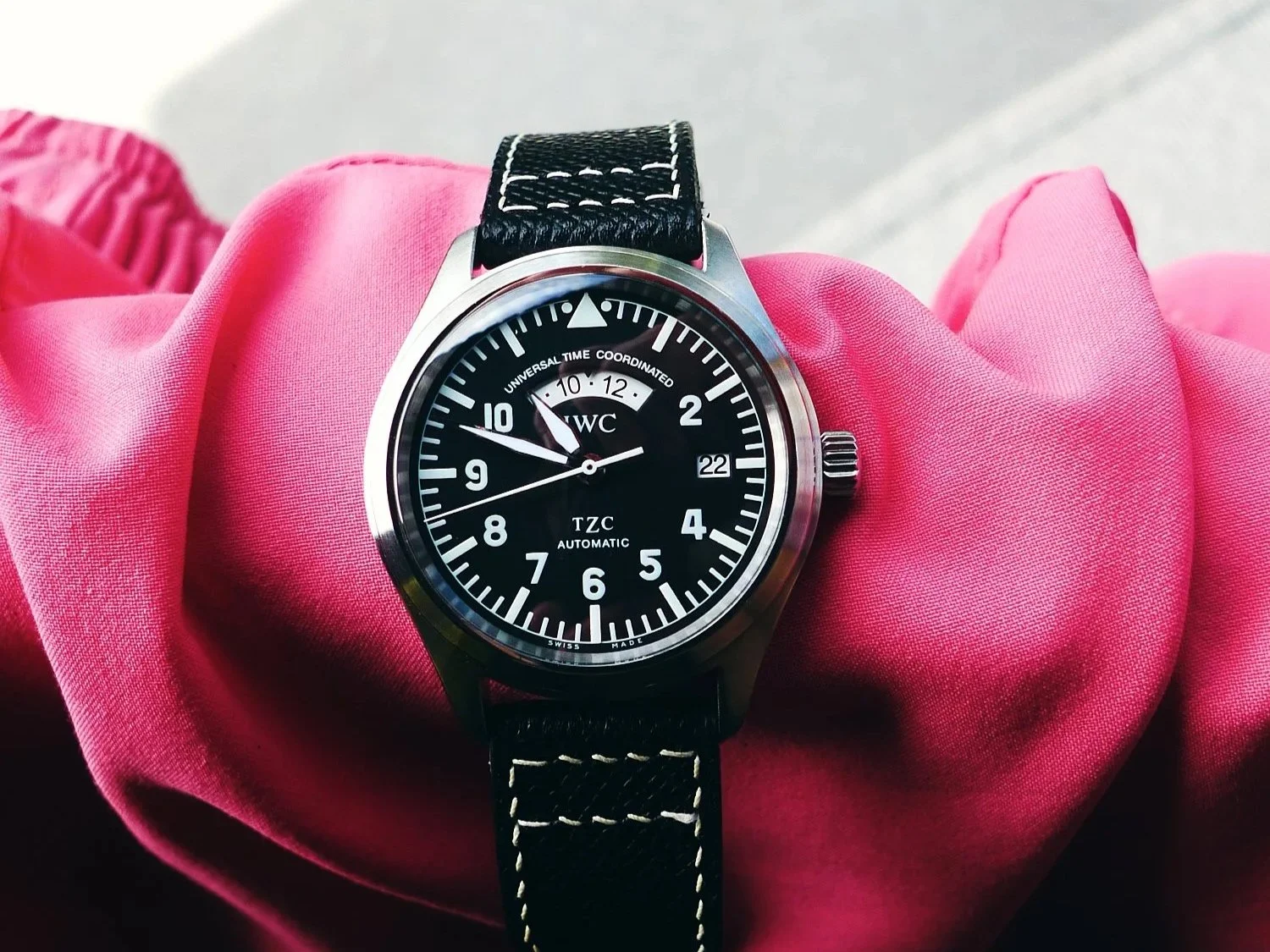
IWC Pilot’s UTC on an Anchor Straps NATO.
IWC isn’t necessarily the first brand that comes to mind for those seeking a GMT or UTC timepiece—I’m going to use those terms loosely and interchangeably from here on, watch-nerd caveats acknowledged—but this one has a trick on its dial that makes it arguably more user-friendly than much of its more hyped competition, from both large and microbrands.
Pair that with an attainable price on the current pre-owned market and you have a tempting value proposition in a luxury tool watch. But I bet this little pilot isn’t on your radar.
Should it be?
The Use Case
For me, the question is not simply whether a piece of gear is good, but whether it earns its place on the journey. I’ve applied the same test to cameras too, most recently asking whether the Insta360 Ace Pro 2 could earn its place as a one-camera travel solution. I travel a great deal, both for work and leisure, and that is reason enough for any watch collector to solve a “problem” with a shiny piece of metal on the wrist. The problem in question is how to set and track a second time zone easily while on the move—and, for the discerning enthusiast, how to do so without disrupting the watch’s flow of time.
Enter the traveller GMT, or in this case UTC, concept. In simple terms, it allows you to change the main hour hand to local time without stopping the seconds hand, while simultaneously displaying the time back home.
There are compelling options across the spectrum, from the relative unobtanium of the Rolex GMT-Master II to offerings from Seiko, Parmigiani Fleurier, Vacheron Constantin, Formex and many more. How does one choose in such a crowded market?
Budget is a good starting point -there’s a serious spread in the aforementioned brands, for example. From there, I think serendipity has a lot to do with the piece you ultimately find. And so, as any serial hobbyist would, I set off on several months of online research.
The Timepiece
I stumbled across this little IWC while doomscrolling through a local watch community on my phone during a 90-minute late-night Uber ride from YYZ to a conference in Niagara Falls.
The IWC Pilot’s Watch UTC, bearing the TZC—or Time Zone Corrector—designation on its dial, admittedly wasn’t on my radar at all, despite being a pilot’s watch. Awful pun; it needed to happen.
In fact, the brand as a whole had largely escaped my attention, aside from a few earlier and smaller chronographs in its back catalogue that I had earmarked for “maybe one day.” The current lineup, including today’s 46mm ceramic Timezoner, would simply dominate my 6.5-inch wrist, making me feel like a kid wearing his dad’s watch. Sadly, I face a similar problem with Panerai and other large watches whose designs I nonetheless enjoy.
Serendipitously, this particular watch was listed for sale in a community not far from Niagara. Seeing as home was far away in British Columbia, I took this as a sign that I was meant to have a look. A few DMs later, I had arranged to see the piece between meetings the following day.
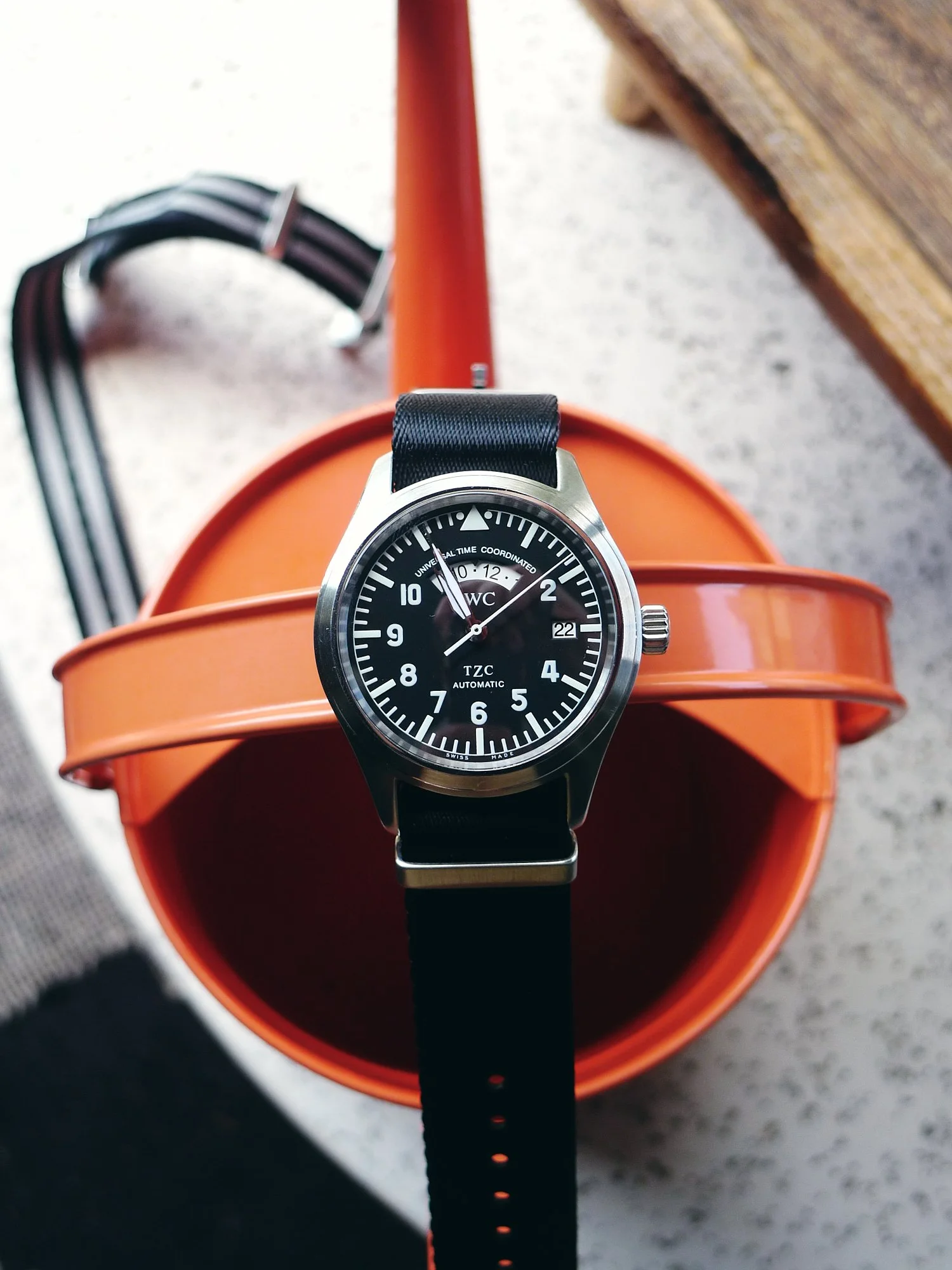
Black NATO straps compliments the dial, creating a perception of a deeper black tone.
My criteria for purchasing used watches are simple but limiting. I’m typically looking for something close to pristine or new-old-stock, so that I can put my own dents and scratches into it. I’m the same with cars—and, well, almost anything really.
Luck was on my side here. The watch was close to NOS and came complete with its stainless-steel bracelet, which barely had a mark on it. It looked even better in person than it had in the photographs and, following some mild negotiation, it was on my wrist for the trip home.
On a Wristwatchme black leather strap for a dressier look
The Specs
Model: IWC Pilot’s Watch UTC
Reference: IW3251-02 — stainless-steel bracelet configuration
Production era: Approximately 1999–2003
Case: Stainless steel
Diameter: 39mm
Thickness: Approximately 13mm
Lug width: 20mm
Crystal: Sapphire, secured against displacement caused by sudden drops in air pressure
Caseback: Solid stainless steel
Water resistance: 60 metres when new
Magnetic protection: Soft-iron inner case
Dial: Black with luminous Arabic numerals, hands and pilot’s triangle
Bracelet: Stainless steel
Movement: IWC calibre 37526, based on the ETA 2893-2
Winding: Automatic
Frequency: 28,800 vibrations per hour
Jewels: 21
Power reserve: Approximately 42 hours
Functions: Central hours, minutes and seconds; date; independently adjustable jumping local-hour hand; and home time displayed on a rotating 24-hour disk. The date moves both forward and backward with the local-hour hand when crossing the International Date Line.
Design
The UTC is an enigmatic blend of understated elegance and function-led design, wrapped in a small but commanding package.
The first standout is the domed sapphire crystal, which is an absolute magnet for reflections. This makes photographing the watch challenging—occasionally infuriating, in fact—but in practice it does not meaningfully affect readability.
The case is extremely comfortable, with lugs that curve down and hug the wrist. There is enough weight to remind you it is there without incessantly demanding your attention.
The more time I spent with it, the more I noticed some of its finer details. An impossibly thin polished chamfer runs from lug tip to lug tip along each side of the case, complemented by a polished edge on the otherwise brushed bezel. The signed crown is small enough not to disturb the back of the hand, yet still easy to grip. That said, I find it much easier to operate with the watch off my wrist.
Bespoke epsom leather strap by Wristmatchme
The dial has a lot going on, so let’s break it down.
The sword hands suit the flieger style and pair well with a razor-thin, white-painted centre-seconds hand that matches the rest of the dial printing. The triangle and dots at 12 help ensure that you don’t put the watch on upside down, while reinforcing the vintage flight-instrument aesthetic.
The Arabic numerals from 2 through 10 are present, save for the 3, which is replaced by a white date window—useful for a traveller, of course. The IWC wordmark sits subtly but proudly above the centre of the dial.
Above it rests the watch’s defining feature: the UTC window, a quarter-circle cutout displaying home time. It is here that the genius of the design becomes evident. Black numerals are printed on a rotating white 24-hour disc, while a small triangular marker at the top of the window establishes the reading point. This means your home time is always displayed in the same place on the dial. With more conventional GMT designs, your eye must first find the additional hand and then interpret its position against a separate scale. In practice, the IWC is more immediately readable—and by a meaningful margin.
Not that readability is a race, but why this approach hasn’t caught on more widely, I’m not sure. My guesses include the general desire to pay homage to the “king” of the category and the abundance of affordable movements designed around a conventional GMT hand.
The IWC approach also consumes a fair amount of dial real estate—but then so does something else, which brings me to my primary gripe with the watch.
Can’t un-see that big Z
Quirks
Time Zone Corrector is already a fairly unusual descriptor, but the TZC acronym—with its enlarged “Z”—looks a little goofy sitting above 6 o’clock on such an otherwise purposeful watch. Perhaps it suited the fashion of its day, but reducing that letter by about 0.5mm would do the design a world of good. Removing the acronym entirely and leaving “Automatic” to stand alone at the foot of the dial might be even better.
It is a matter of taste, of course, but it feels out of character with the rest of the watch.
The other element that mildly triggers my OCD is the “Universal Time Coordinated” script above the UTC window. I don’t mind the window being labelled, as it makes sense to distinguish it from something like a date display—and yes, there is a certain Hamilton to which this bears a passing resemblance. However, the wording appears just slightly off-kilter from a symmetry perspective, which occasionally makes my eye twitch.
Those details aside, the one functional improvement I would make is to the lume. If the UTC disc were lumed and therefore legible in the dark, it would be even more useful on long overnight flights, when curiosity about the time back home tends to arise again and again.
The lume overall is about average in initial brightness and well below average in duration—no doubt at least partly an age-related factor at this point.
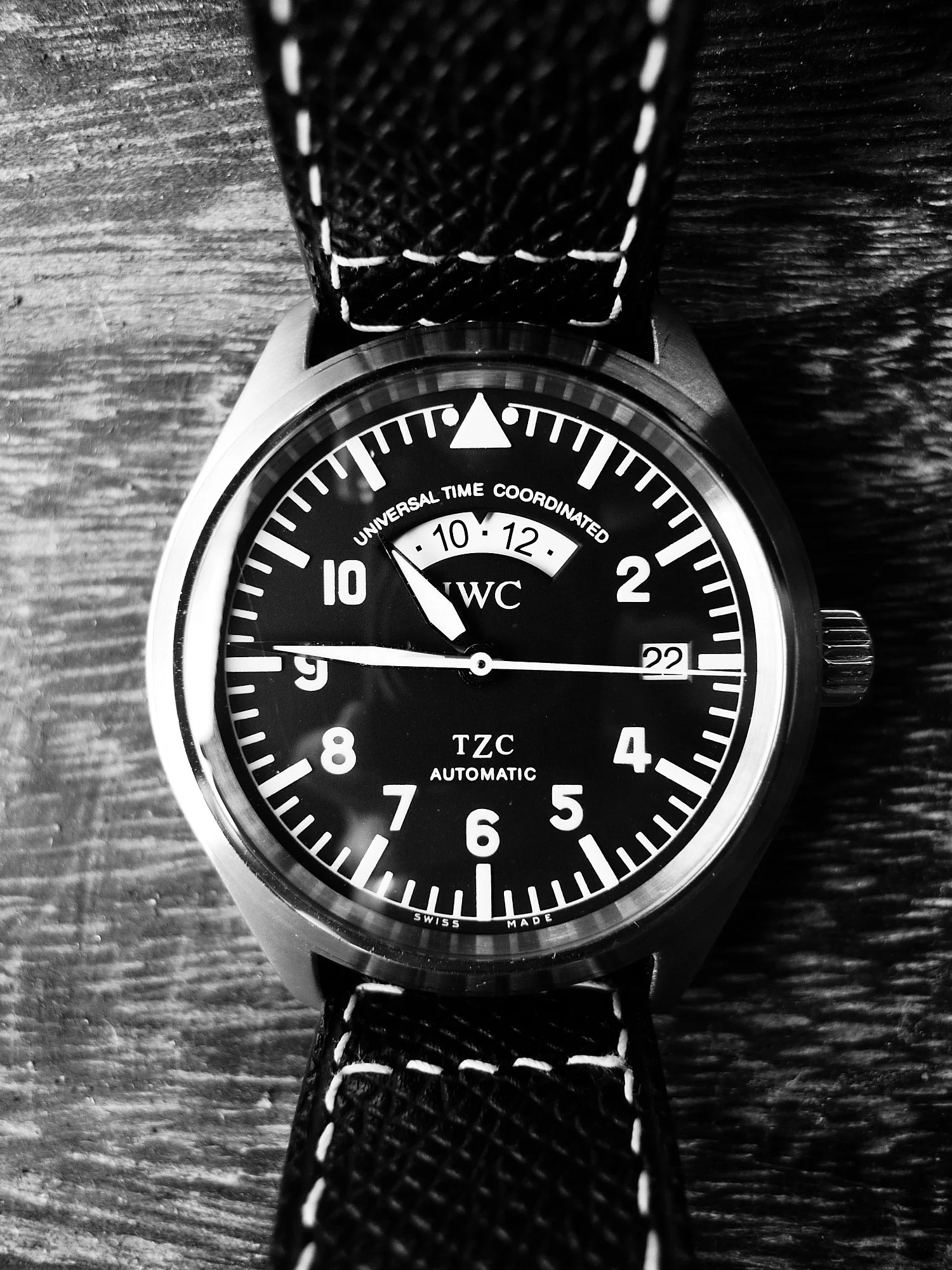
Why is the “Z” larger than the T and C? If you know, comment bellow!
The Bracelet
IWC bracelets are renowned for their comfort and solid construction, but I find that their slightly blocky design contrasts with the otherwise organic, softly curved lines of the brand’s flieger cases. This one fits beautifully and feels great, but visually it just doesn’t suit the watch—for me.
I wore it on the bracelet for the first month. While it was delightfully comfortable and easily adjustable once I had watched a few videos explaining the mechanism, it never looked quite right.
On to a NATO strap, then—but not before disaster struck.
The end links are so precisely fitted, and the gaps through which to access the spring bars so narrow, that it is surprisingly easy to damage the shoulders of the spring bars and render them nearly impossible to remove. What I expected to be a five-minute job turned into several hours of mounting panic as I made the problem progressively worse while trying to free the end link.
The debacle ended with a trip to my favourite watchmaker, who needed to use a diamond drill to release the end link from the case. The underside of the bracelet suffered a tiny amount of damage in the process, but the case emerged no worse for wear. Lesson learned. The bracelet now lives in my watch drawer.
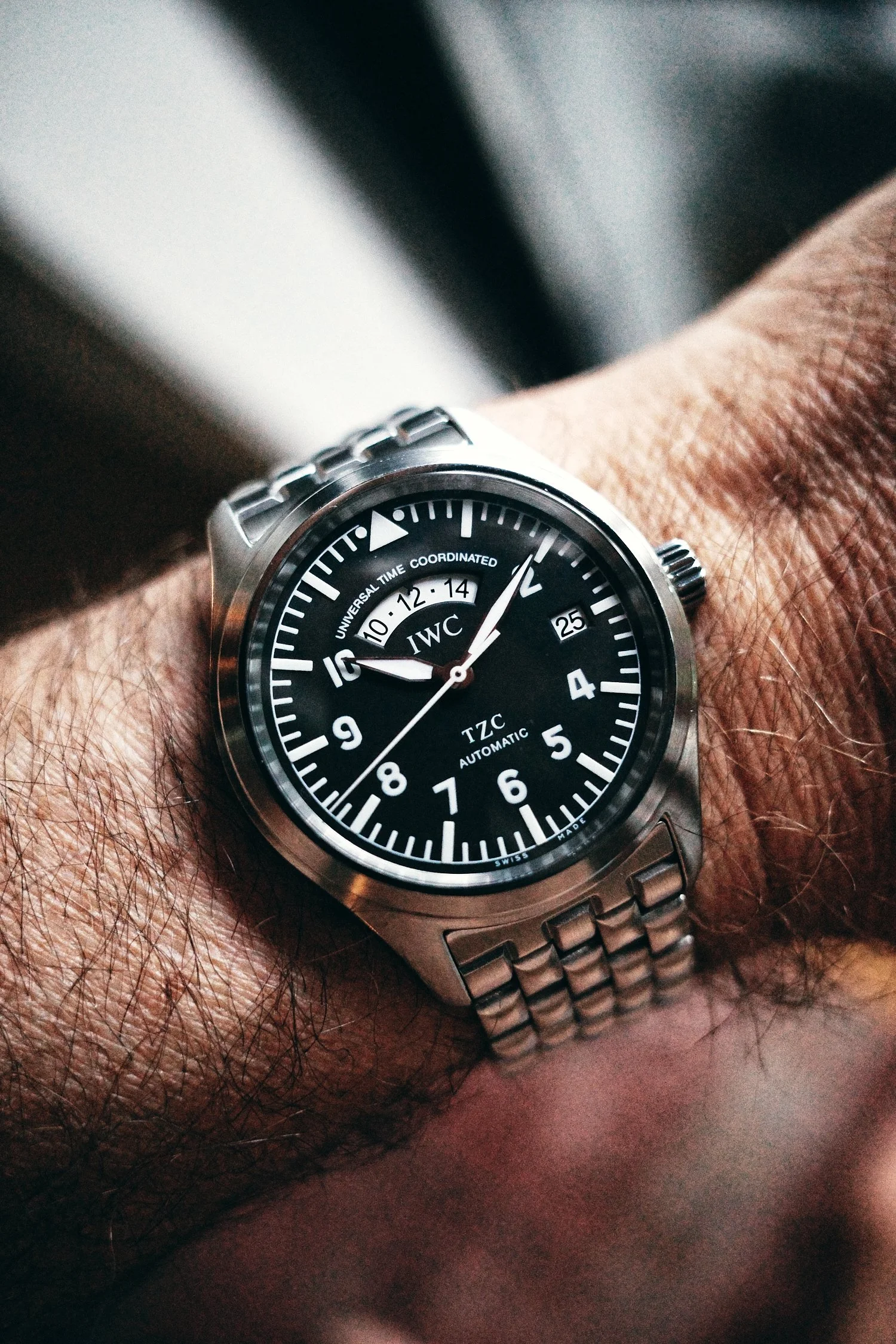
One and only shot on the bracelet, I’m afraid to reinstall it in case it gets stuck again…
The Pilot’s Watch UTC is an absolute strap monster, easily transitioning from casual to dressy depending on your choice of NATO, rubber or leather. A custom pilot-style Epsom leather strap by Wristwatchme is my favourite way to elevate the look, while black, Bond and grey NATOs all suit it well.
IWC Pilot UTC on bespoke Wristwatchme epson leather strap.
I chose Le Petit Prince blue for the underside because it’s IWC—and why not?
As a Travel Tool
A travel watch should do more than display another time zone. It should make life on the move slightly easier without introducing another object to worry about—and this is where the IWC makes its strongest case.
The independently adjustable local-hour hand works exactly as a traveller wants it to. In-flight, pull out the crown, jump the main hour hand forward or backward to local time, and continue on without stopping the seconds or disturbing the minutes. The date follows the local-hour hand in either direction as you cross midnight, which sounds like a small detail until you arrive somewhere exhausted and several hours removed from the time zone your body still thinks it occupies.
The UTC display is even more useful in practice than it appears in photographs. Home time remains fixed in one location at the top of the dial, rather than moving around it on an additional GMT hand. A quick glance tells me the hour back home without requiring me to find and interpret another hand against a 24-hour scale. When travelling for work, that makes it easier to judge whether it is a reasonable time to message a colleague or check in with family.
It also moves comfortably between the different versions of oneself that travel tends to require. On a NATO strap, it feels appropriate in an airport, walking through a new city or spending a casual day outdoors. Put it on black leather and it is restrained enough for meetings or dinner. At 39mm, it fits beneath a cuff, remains comfortable over a long travel day and never feels like another cumbersome piece of equipment.
Its discretion may be an even greater advantage. This does not look like an obviously expensive watch to anyone who is not already interested in watches. It avoids the recognition—and potential anxiety—that can accompany better-known luxury travel watches. There are destinations and situations where that matters more to me than prestige.
It is not perfect. The weak lume limits the usefulness of the UTC display in a dark aircraft cabin, and the 60-metre water-resistance rating—when new—does not inspire the same carefree confidence as a modern sports watch. I’m not stressed about some light swimming and beach-time with this watch, but it’s not going on any dives with me, which means I’m packing along a second (or third) piece for trips where I want to see under the sea -lot’s more to come on this topic in future articles. Its age also means I am somewhat more conscious of impacts, general moisture and the condition of its seals than I would be with a new tool watch.
Still, as an actual travelling companion, the IWC succeeds because its cleverest feature is also its most practical one. It is compact, discreet, versatile and unusually quick to read. Rather than merely looking like a travel watch, it meaningfully improves the experience of moving between time zones.
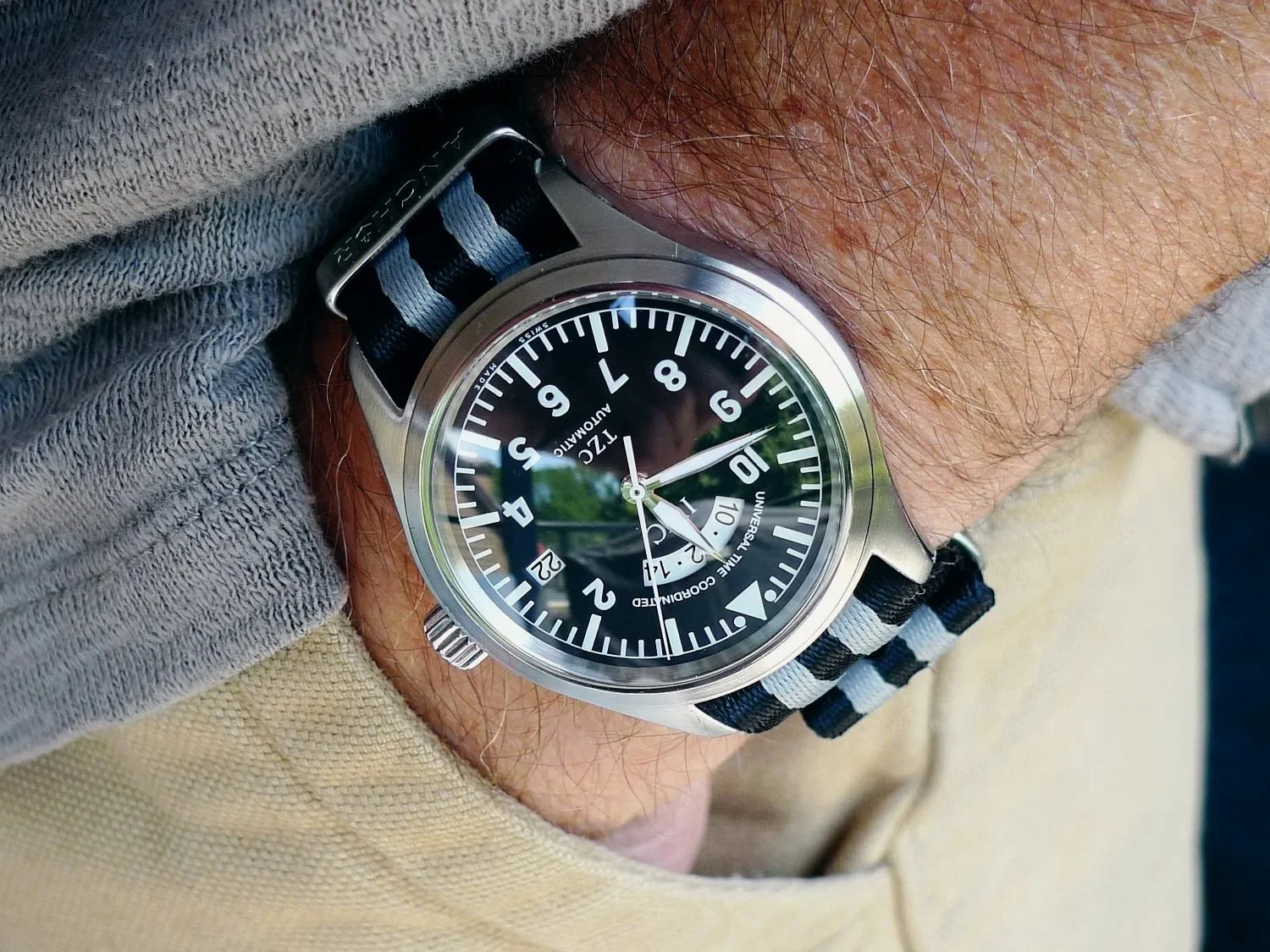
IWC Pilot’s UTC on Anchor Bond NATO
Should you get one?
The IWC Pilot’s Watch UTC is not the obvious choice—and that is much of its appeal. Travellers whose priorities include immediate brand recognition, modern specifications or a watch that can move from the airport directly into the ocean without a second thought will find better options elsewhere. I’m always on the lookout for the latter myself. But if discretion, compact proportions and an unusually intuitive approach to displaying home time sit higher on your list, this largely forgotten IWC deserves far more attention than it receives.
Its classic aviation aesthetic, strap versatility and overall subtlety have sufficiently charmed me into becoming a very happy owner several months on from purchase. I even wear it as my GADA watch at home, despite a fair bit of competition in the watch box. Perhaps that is the strongest endorsement I can give it: designed for crossing time zones, yet compelling enough that I keep reaching for it even when I’m going nowhere.
More Gear for the Journey
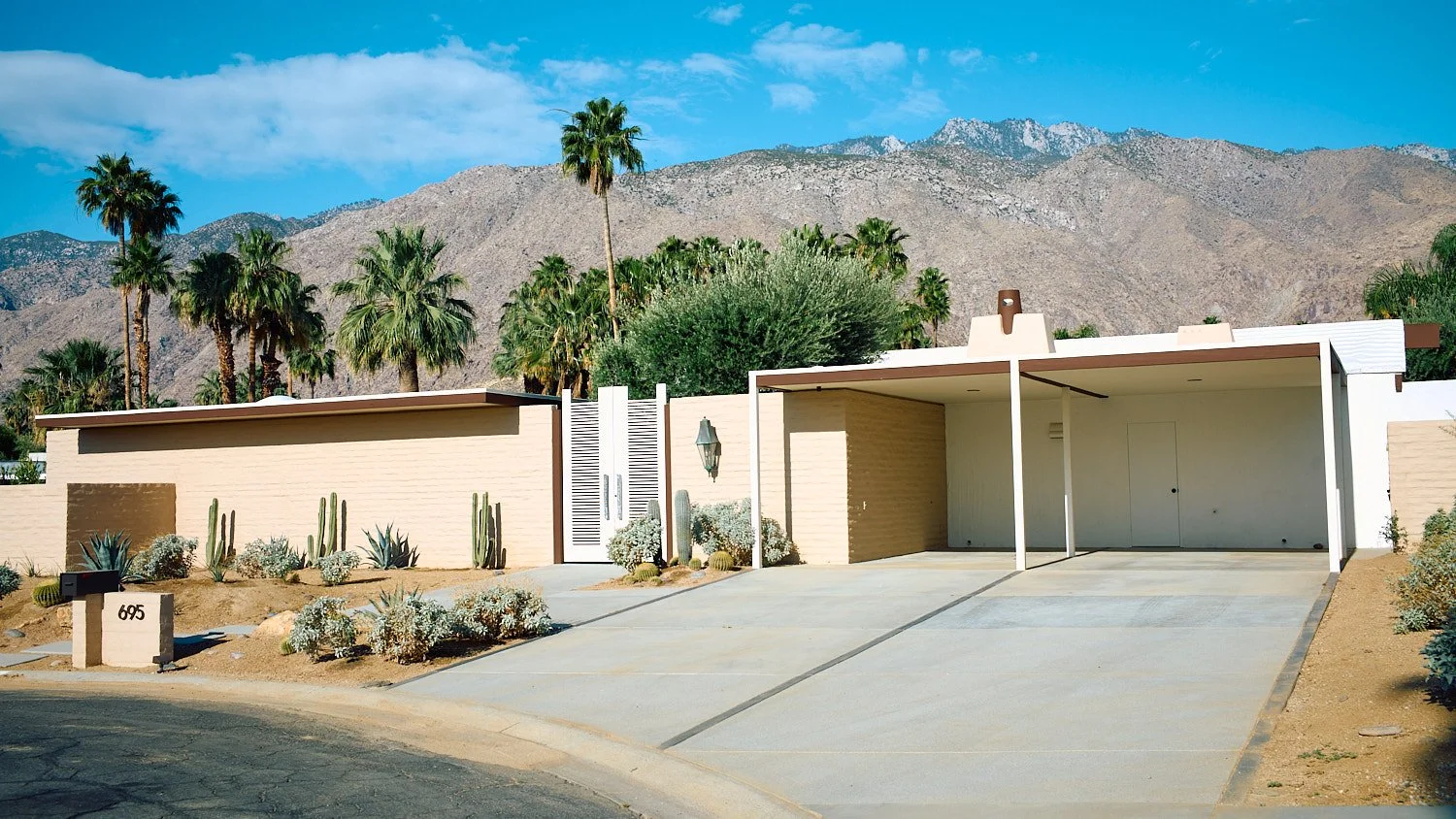
Desert Rhythm - Palm Springs, CA
A relaxed Palm Springs getaway featuring mid-century architecture, great restaurants, boutique hotels, pool days, and desert sunshine.
Palm Springs, California, Leica M10R, 35mm Summicron
The Hunt for a Quick and Easy Getaway
Read our last warm-weather escape: Maui in Monochrome — West Maui, Revisited →
With the year whizzing by at pace, we decided to plan a last-minute family trip for rest and relaxation. Somewhere warm, easy to reach from Vancouver, and relaxed enough that the itinerary could revolve around pools, bikes, food, and sunshine rather than logistics. Unexpectedly, Palm Springs popped onto the radar as a location that could fit the bill nicely. With a few clicks of the laptop it was booked. Would it deliver?
Casa Palma Hotel, Palm Springs, California, Leica M10R, Voigtlander 50mm Nokton
Casa Palma
For accomodations, we wanted to find a place that was close to downtown Palm Springs as well as the famed neighbourhoods of mid century modern homes that the city is best known for. A pool was a must and children had to be welcome as well. Casa Palma delivered on these and more with amenities including two pools, a hot tub, tennis/pickle ball courts, a gym and an on-site restaurant, albeit one that was open limited days. They also had bicycles for use by guests and to our delight childrens’ bikes as well! The design is clean, (think elevated motel) the rooms spartan but comfortable, and the location is just about ideal. I found Palm Springs to be larger than I thought and so despite having reviewed the map in advance of booking (thinking we could walk to some venues), we found ourselves biking or driving more often than not.
Casa Palma Hotel Pool, Palm Springs, California, Leica M10R, Voigtlander 50mm Nokton
Our trip happened to be timed for the end of the peak festival season with Coachella and then Stagecoach having finished up in the week prior. Potentially as a result, for the first few days of our stay we essentially had the entire hotel to ourselves which is terrific when you have a rambunctious 4 year old with you who wants to explore. Even as occupancy started to fill-in ahead of the weekend, the vibe was relaxed and unpretentious. The two pools give you options depending how quiet or busy a mood you’re hoping for, and the first pool is bathed in sunlight for the vast majority of the day, keeping the temperature ideal in tandem with the cooling breeze that would arrive reliably each afternoon.
Casa Palma pool area, Palm Springs, California, Leica M10R, Voigtlander 50mm Nokton
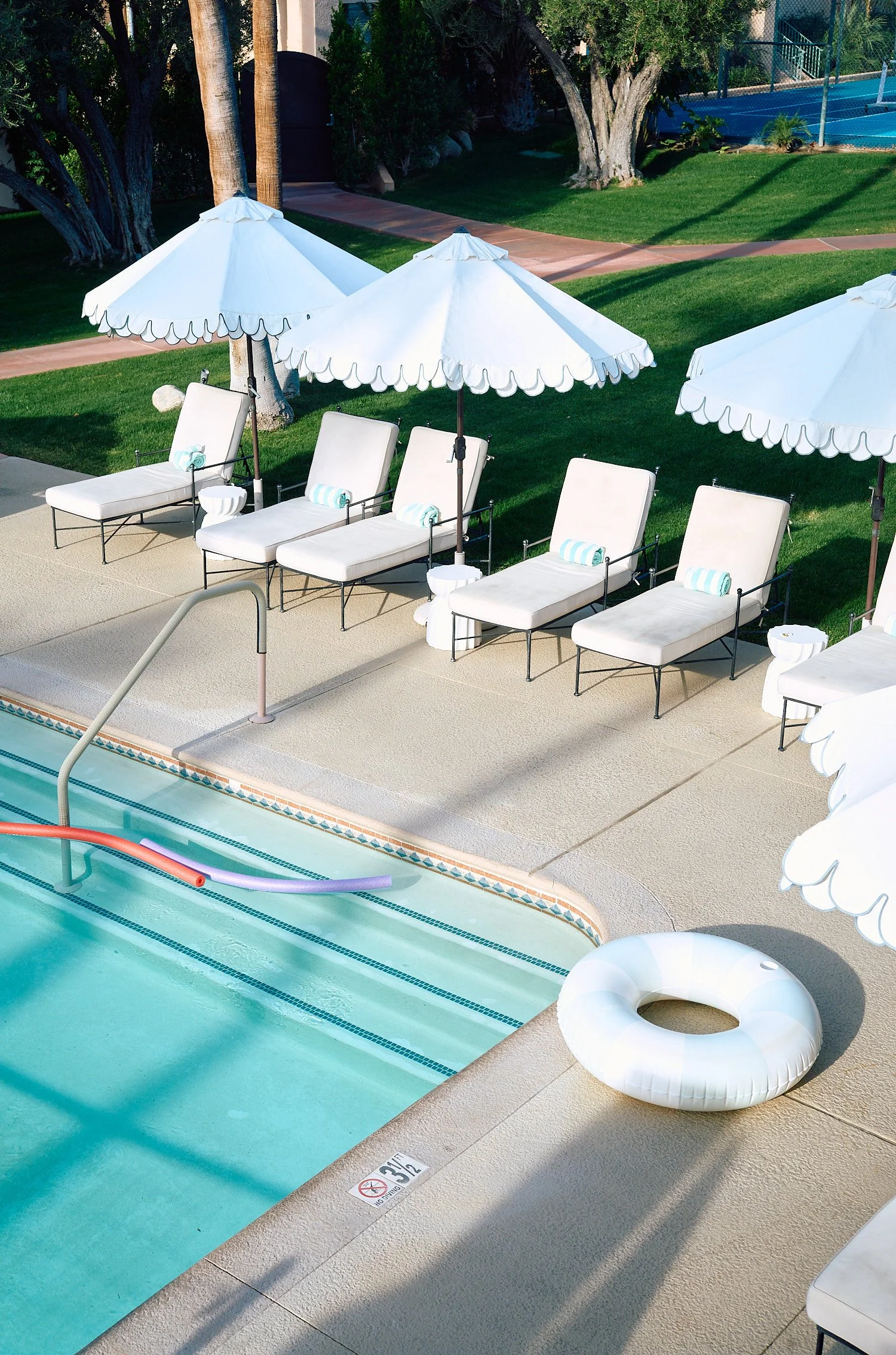
Casa Palma pool area, Palm Springs, California, Leica M10R, Voigtlander 50mm Nokton
Restaurants of Palm Springs
As we lacked cooking facilities, we knew we’d be eating out a fair bit on this trip, and looked forward to trying some of the interesting restaurants Palm Springs has to offer. Once again, our timing proved ideal, with the festival crowds long-gone, we could walk into most restaurants we wanted to try with no reservations and a minimal wait. Here are a number that stood out:
BIRBA
Italian cuisine served on a relaxed patio. The pizzas were good and the rest of the menu overall tasty here.
The patio at Birba, Palm Springs, California, Leica M10R, Voigtlander 50mm Nokton
Workshop Kitchen
Sit inside for this one. Workshop Kitchen pairs industrial architecture with some of the most creative dishes we had on the trip.
Great interior design of Workshop Kitchen, Palm Springs, California, Leica M10R, Voigtlander 50mm Nokton
Workshop Kitchen, Palm Springs, California, Leica M10R, Voigtlander 50mm Nokton
Workshop Kitchen, Palm Springs, California, Leica M10R, Voigtlander 50mm Nokton
PARKER
A Palm Springs insititution bathing in mid century modern glory. This was one of the few restaurants we reserved in advance and I’d recommend you do the same if you’re hoping to try it out. Brunch is the go-to here and the portions are filling and delicious. My wife stayed for the balance of the morning to enjoy the spa. Try the lobster omelette!
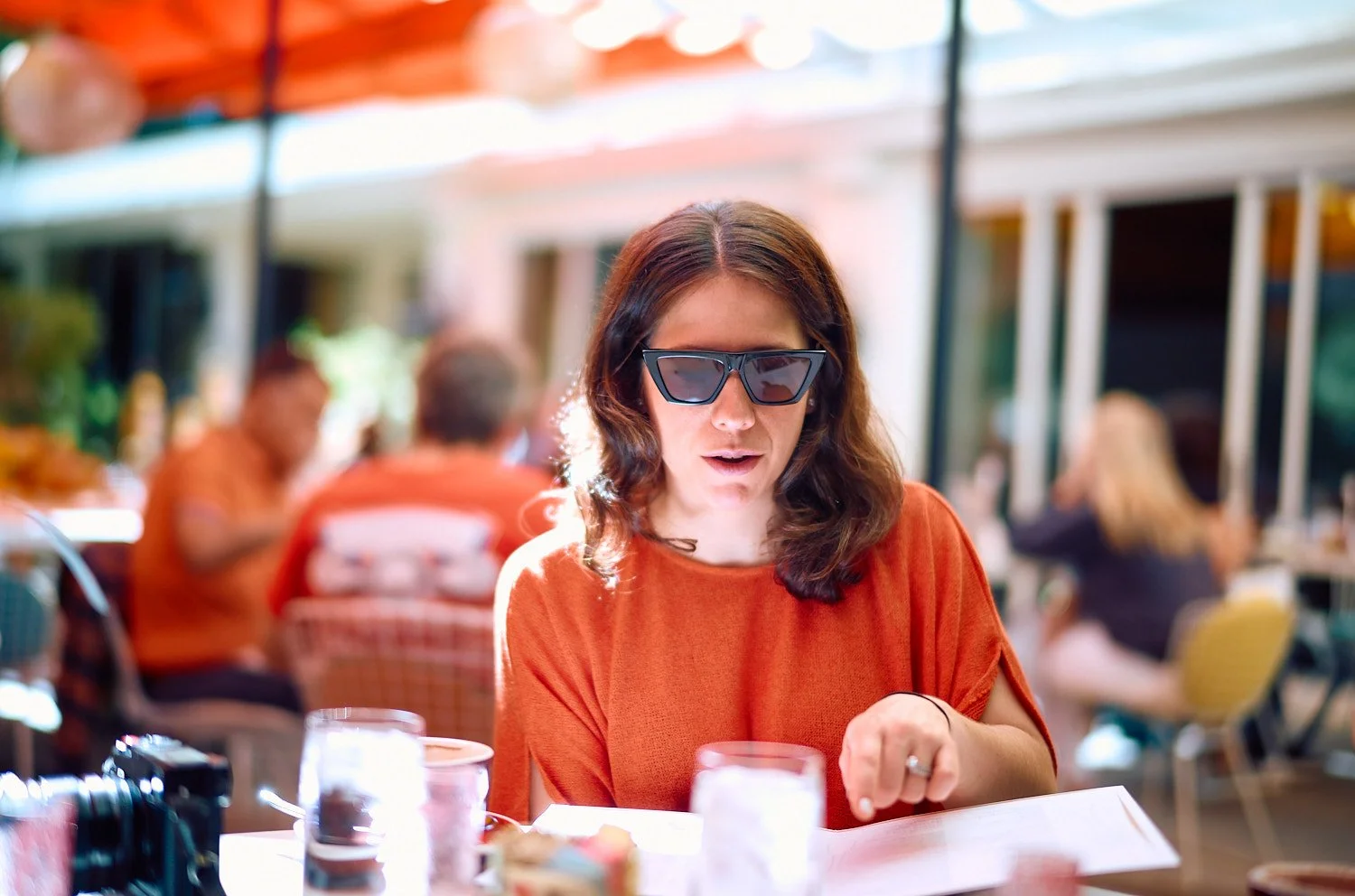
My brunch date at the Parker, Palm Springs, California, Leica M10R, Voigtlander 50mm Nokton
Beautiful Bottle display at the Parker, Palm Springs, California, Leica M10R, Voigtlander 50mm Nokton
Lounging area in the Parker, Palm Springs , California, Leica M10R, Voigtlander 50mm Nokton
Obligatory Wall Pose, Parker Hotel, Palm Springs, California, Leica M10R, Voigtlander 50mm Nokton
A bit of car spotting, Citroen SM parked a long time ago at the Parker. Palm Springs, California, Leica M10R, Voigtlander 50mm Nokton
BOOZEHOUNDS
Clearly a party-starter spot, with at least three bachelorette parties in attendance while we were there. Menu is an interesting mix of fusion with North American and asian influences. The food was great as were the cocktails. The west wall is dominated by a wide window looking out at the mountains, framing as if in a movie theatre a cinematic view of the changing desert colour as the sun set.
One of several bachelorette parties at Boozehounds, Palm Springs, California, Leica M10R, Voigtlander 50mm Nokton
LA CASUELAS
Right on the main strip this is the go-to for some fun live music and tasty Mexican dishes. The dance floor was hardly ever empty.
GELLATO GRANUCCI
I didn’t expect to find the best gelato I’d ever had in North America, but here we are, a 3rd generation family run business with roots in Italy and the Netherlands. Try the Mint Chip, I went back for more. Their flavoured waffle cones are also a real treat.
MCM Paradise
No visit to Palm Springs is complete without seeing some of the beautiful mid century modern homes it is famous for. In many ways Palm Springs felt like a bit of a love letter to design, where even some of the familiar fast food chains had a butterfly roof and terra cotta looking walls. Our approach was largely to visit what we could by easy reach of our loaned bicycles*, say 30min from our hotel. To our delight these neighbourhoods included many unique and interesting homes and even Frank Sinatra’s house!
Palm Springs Homes, Palm Springs, California, Leica M10R, 35mm Summicron
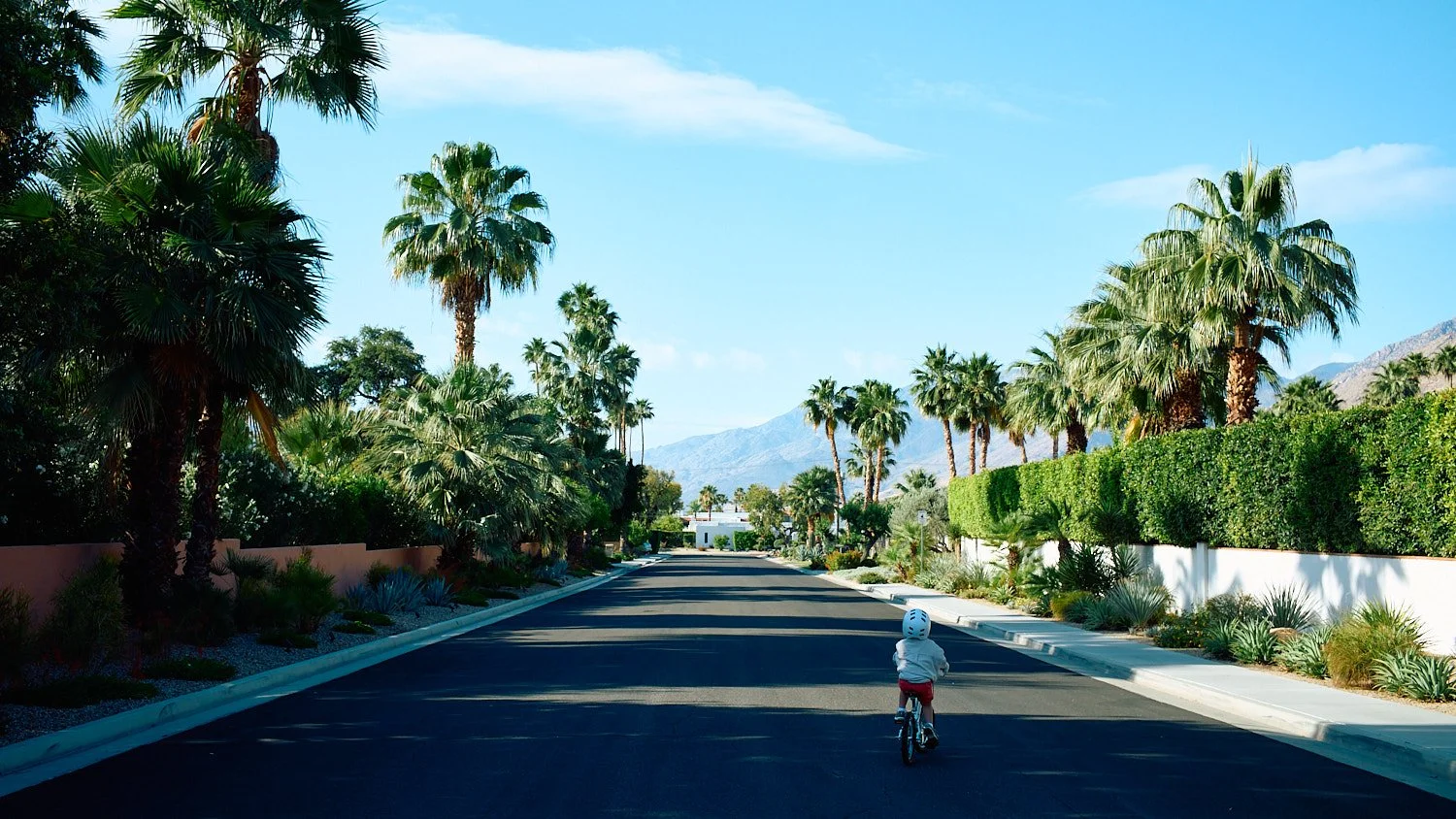
Quiet in the morning. Palm Springs, California, Leica M10R, 35mm Summicron
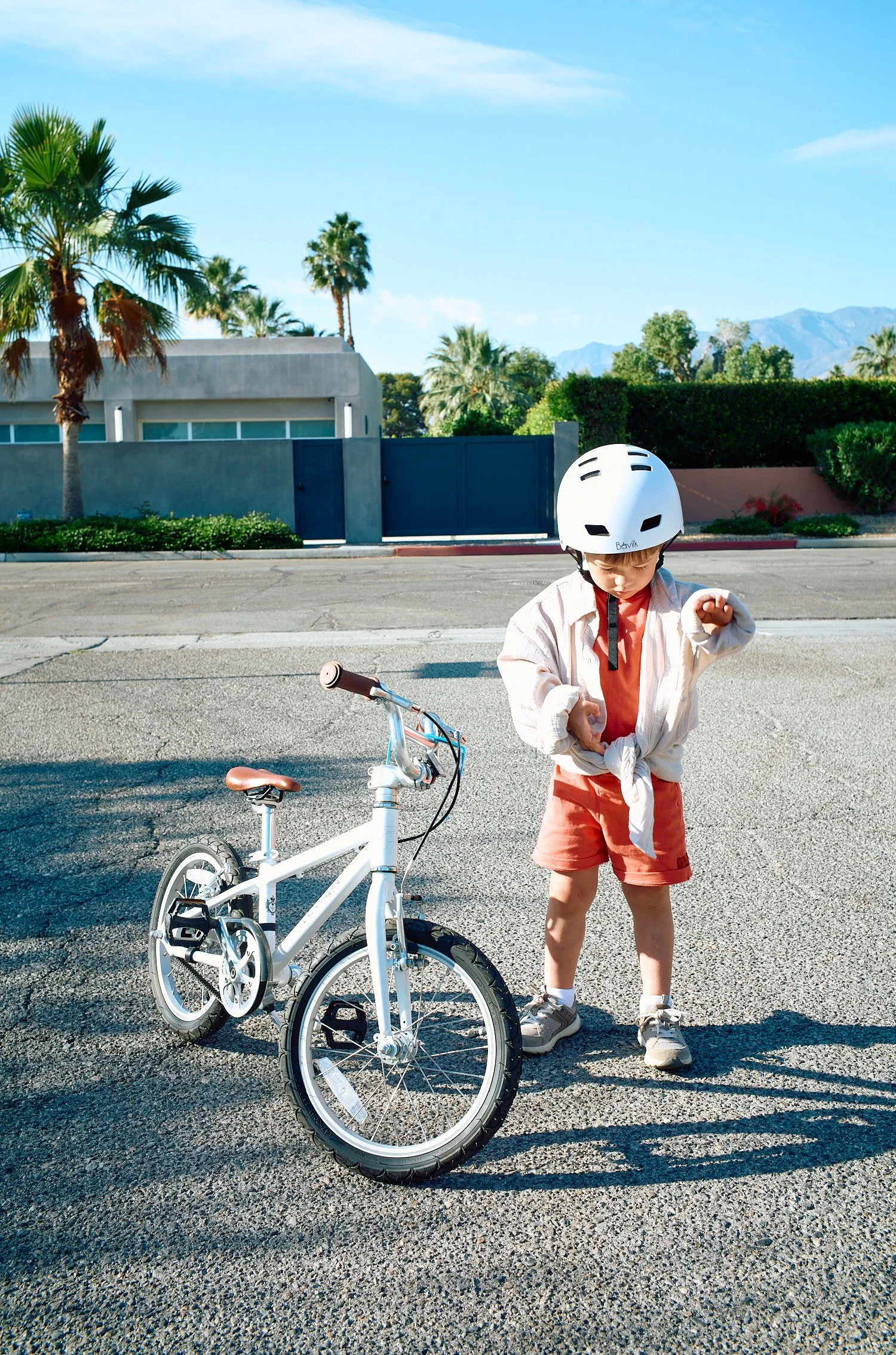
Bike Buddy, Leica M10R, 35mm Summicron
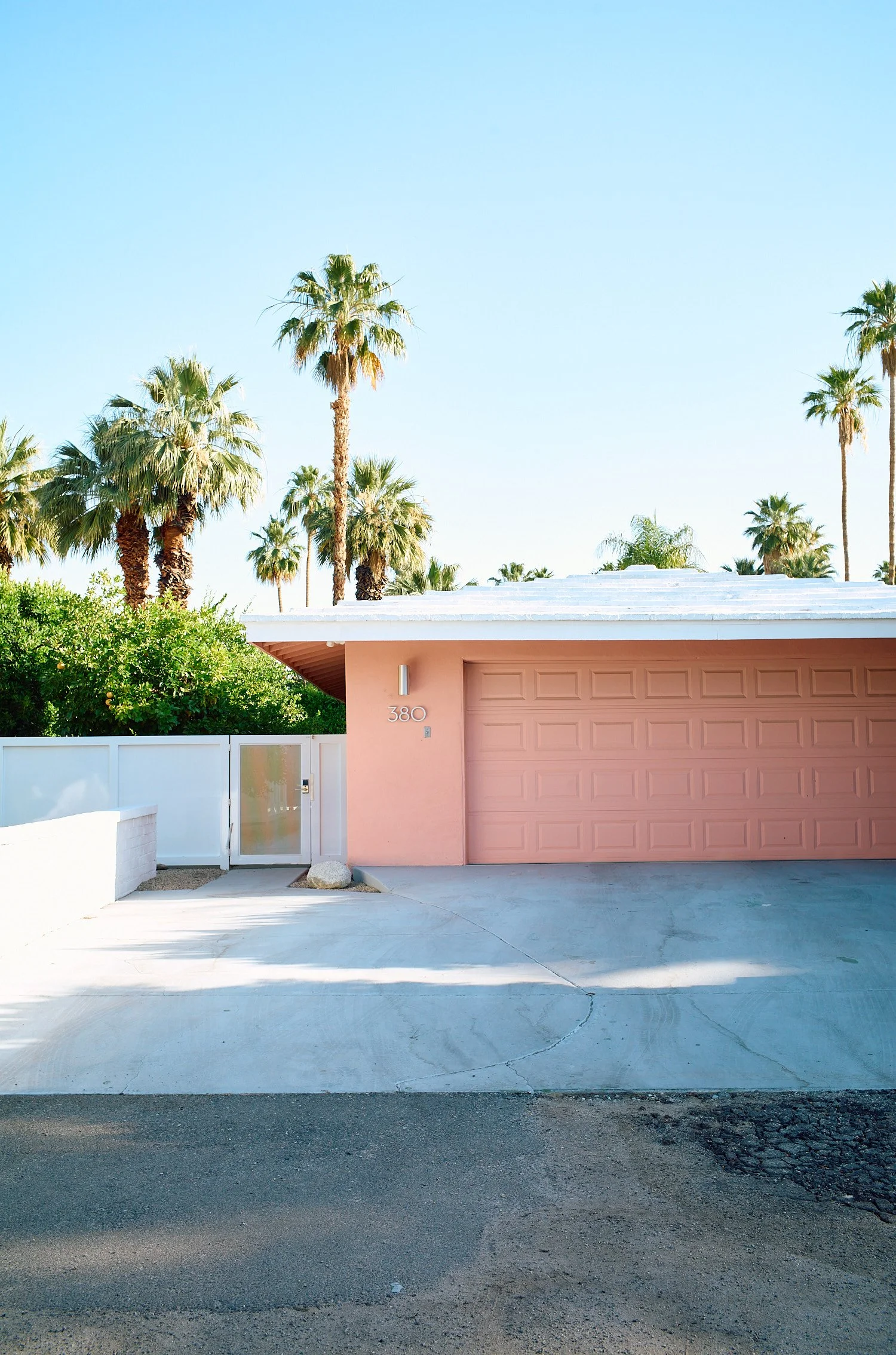
Look at that garage roof! Palm Springs, California, Leica M10R, 35mm Summicron
Gorgeous entrance, Palm Springs, California, Leica M10R, 35mm Summicron
Balcony adjacent the Casa Palma, Palm Springs, California, Leica M10R, Voigtlander 50mm Nokton
One observation for those who may also feel inclined to bike around the town is that it isn’t quite as bike friendly as I’d originally assumed. While the roads are wide, perhaps comically so for suburbs, sidewalks and bike lanes were remarkably inconsistent -starting and stopping seemingly haphazardly, as if they were decided on a block by block basis rather than with routes in mind. Not a deal breaker for the cyclists among us, but something to be mindful of if you are biking with children.
Omni Rancho Palm Springs - Splashtopia
Ensuring our son was enjoying his visit was important to us, and so among other things like playground visits (and paw patrol on the tv before bed) we booked a day at the Omni Rancho which adverstised having a large water park area with lazy river and etc. This hotel is in Palm Desert which was about a half hour drive from our hotel. To call it “Splashtopia” was perhaps a bit of a stretch, but it suited our son just fine with a pair of large waterslides that he just made the minimum height requirement for, and a lazy river that was decently long with plenty of inflatable floaty rings to grab and drift along with.
Omni Rancho Splashtopia, Palm Springs, California, Insta360 Ace Pro2
Service is provided right to your sunbed which is very convenient, although (and perhaps this was due to an overall lull in tourist visits that week) seemed a bit light staffed. Keep a family member guarding should you order some snacks because the local birds are quick and hungry.
Had our son not met the water slide height requirement we would likely have had some dissapointment on our hands to manage, so I’d double check this if you are bringing little ones along. (And I wouldn’t make a special trip here absent the kiddos for the water park alone)
Downtown Palm Springs & The Village Fest
The downtown strip is largely a collection of restaurants, shops, galleries and hotels - as you’d certainly expect. While quiet during the week, this area began to pick-up by Thursday night, particularly when the “Village Fest” night market begins.
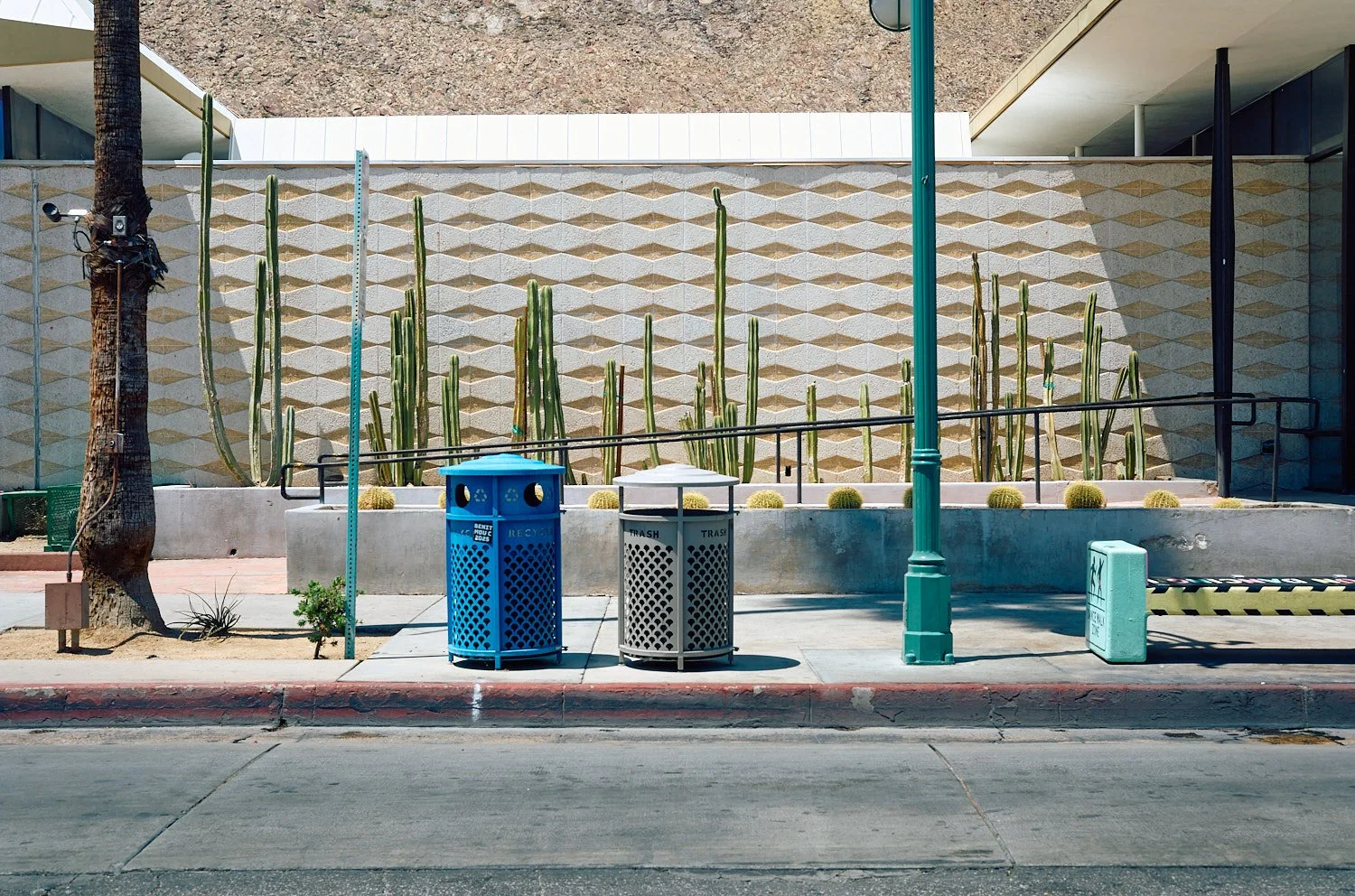
Even the garbage cans look fun, Palm Springs, California, Leica M10R, Voigtlander 50mm Nokton
These guys are everywhere, Palm Springs, California, Leica M10R, Voigtlander 50mm Nokton
Palm Trees everywhere (makes sense), Palm Springs, California, Leica M10R, Voigtlander 50mm Nokton
Shopping alcove, Palm Springs, California, Leica M10R, Voigtlander 50mm Nokton
Palm Springs, California, Leica M10R, Voigtlander 50mm Nokton
Every Thursday night, Palm Canyon Drive in downtown is closed for a street market with many vendors ranging from clothes to tacos to massages. It’s worth a stop if you’re in town, even if only to enjoy the vibe as people mill about as a warm-up to a night out. The restaurants were the busiest we’d seen them as a result
Village Fest, Palm Springs, California, Leica M10R, Voigtlander 50mm Nokton
Our Walking Selfie Stick
Street Food in Palm Springs, California, Leica M10R, Voigtlander 50mm Nokton
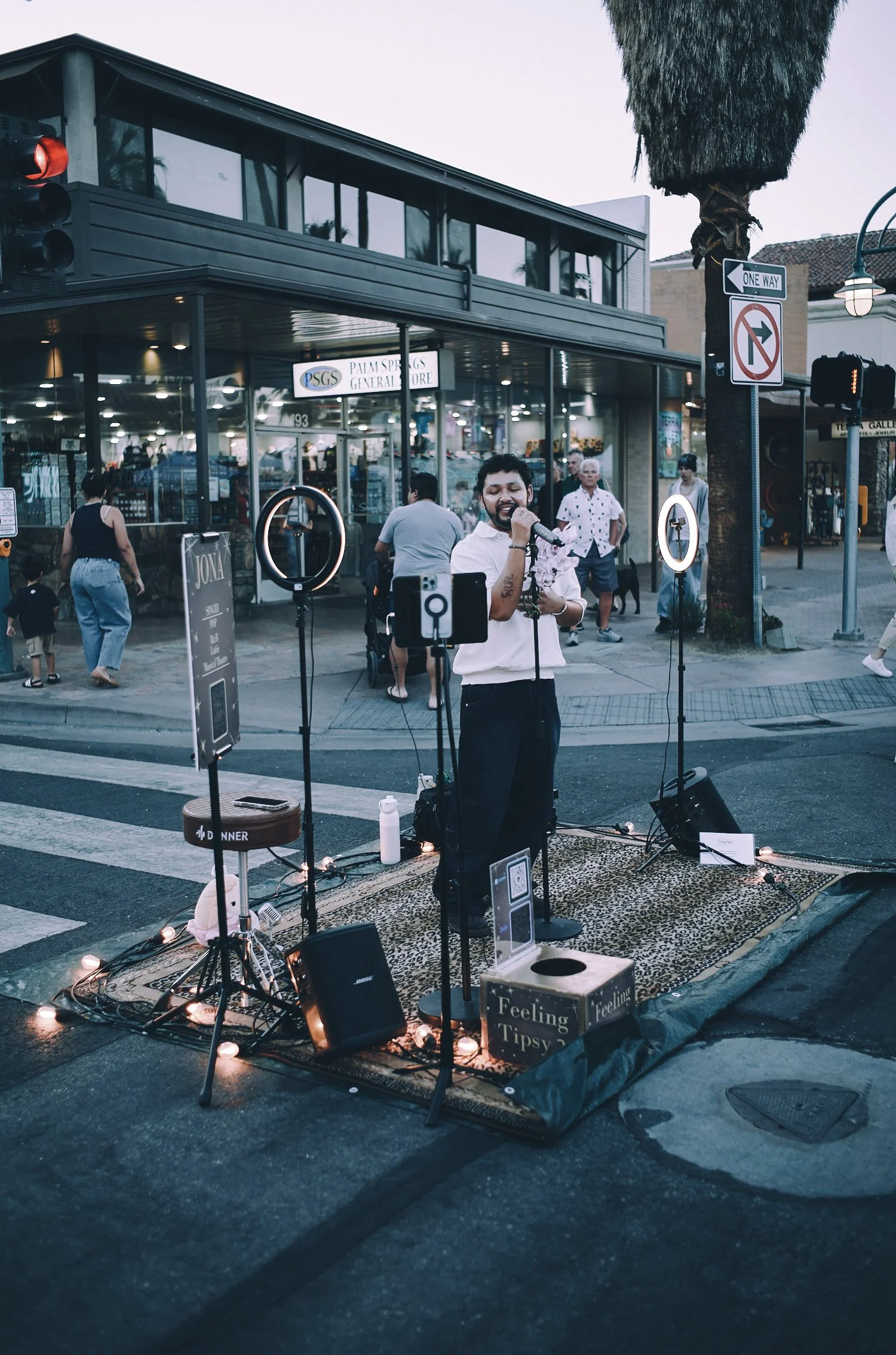
Entertainment abounds at Village Fest, Palm Springs, California, Leica M10R, Voigtlander 50mm Nokton
Art Museum
I wouldn’t call our kid an art buff, but taking in a bit of culture and history seemed like a great distraction for an afternoon and so we decided to visit the Palm Springs Art Museum. Now, we started at the Architecture and Design Museum (which it turns out is connected) but that was, well, sparse. Perhaps the display (on architecture and its impact on fashion) was still under construction, but if you paid the full entry fee just to see that you’d have been disappointed. However, since the entry carried over to the main museum a few blocks away, we decided to explore that and get more bang for our buck
Palm Springs Art Museum, Palm Springs, California, Leica M10R, Voigtlander 50mm Nokton
The Art Museum felt special right away. A Large brutal structure conspicuous against the bright blue sky and desert mountains behind. I’m glad we took the opportunity to see it, and while we were a bit rushed from exhibit to exhibit (4 year old attention spans being what they are) it still felt like an enriching experience. The building itself is
Palm Springs Art Museum, Palm Springs, California, Leica M10R, Voigtlander 50mm Nokton
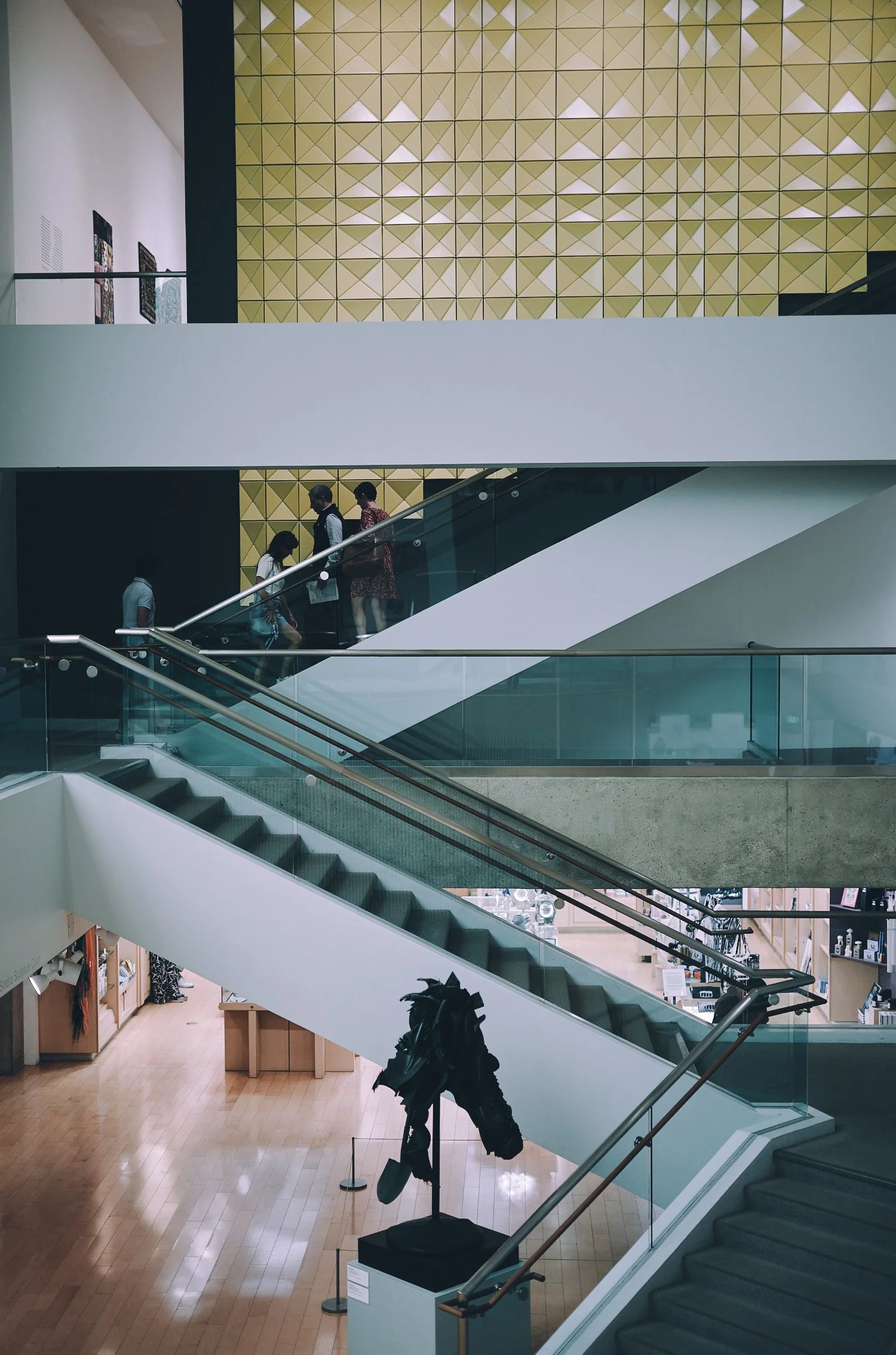
Palm Springs Art Museum, Palm Springs, California, Leica M10R, Voigtlander 50mm Nokton
Palm Springs Art Museum, Palm Springs, California, Leica M10R, Voigtlander 50mm Nokton
Palm Springs Art Museum, Palm Springs, California, Leica M10R, Voigtlander 50mm Nokton
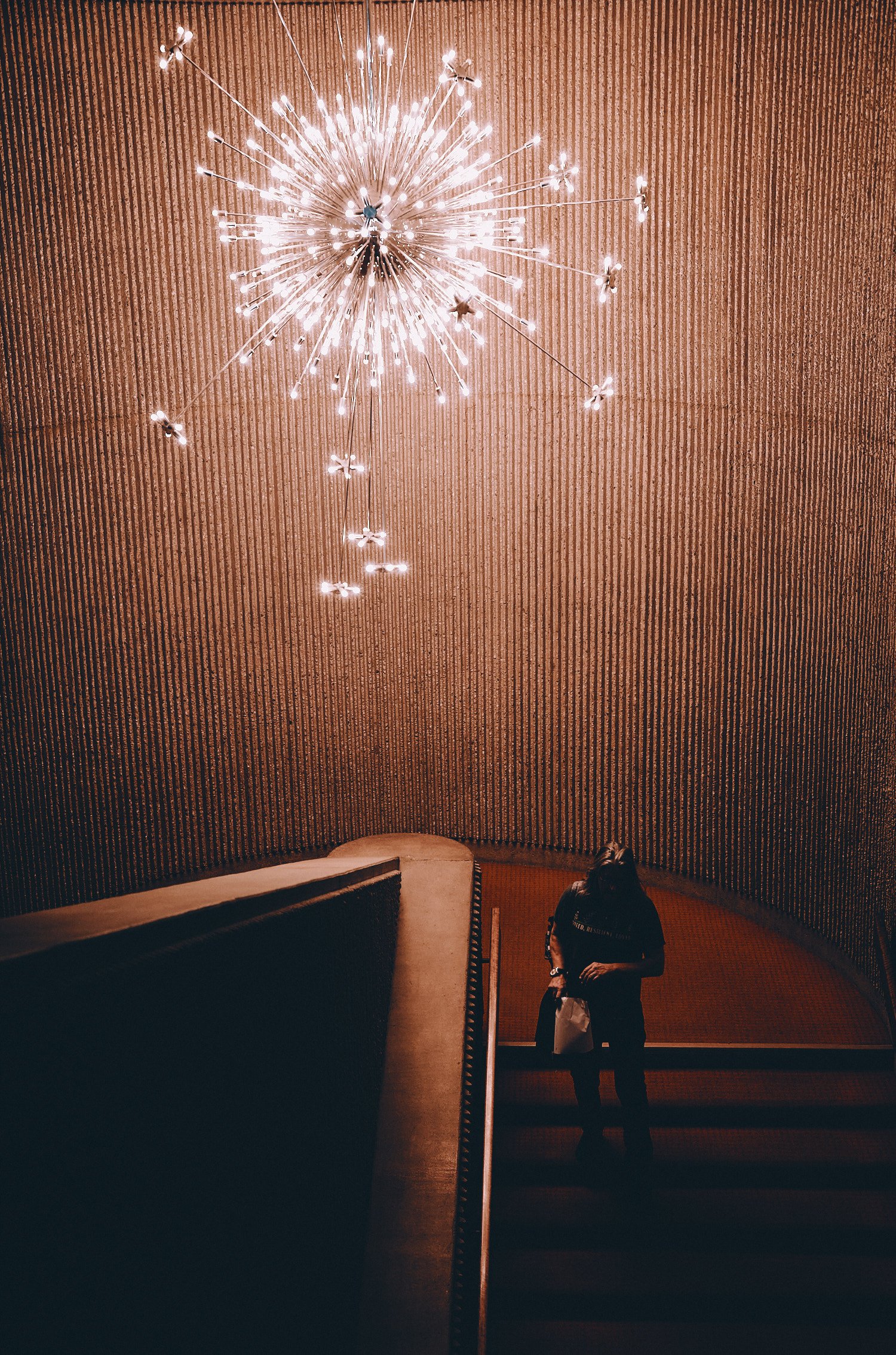
Palm Springs Art Museum, Palm Springs, California, Leica M10R, Voigtlander 50mm Nokton
Aviation Museum
We decided to visit the aviation museum while my wife went to the spa one morning. This is worth the stop if you are a history and aviation buff. Multiple hangers full of interesting vehicles, and enough to keep my son occupied for 2+ hours!
P51D Mustang at the Palm Springs Avaition Museum, Leica M10R, Voigtlander 50mm Nokton
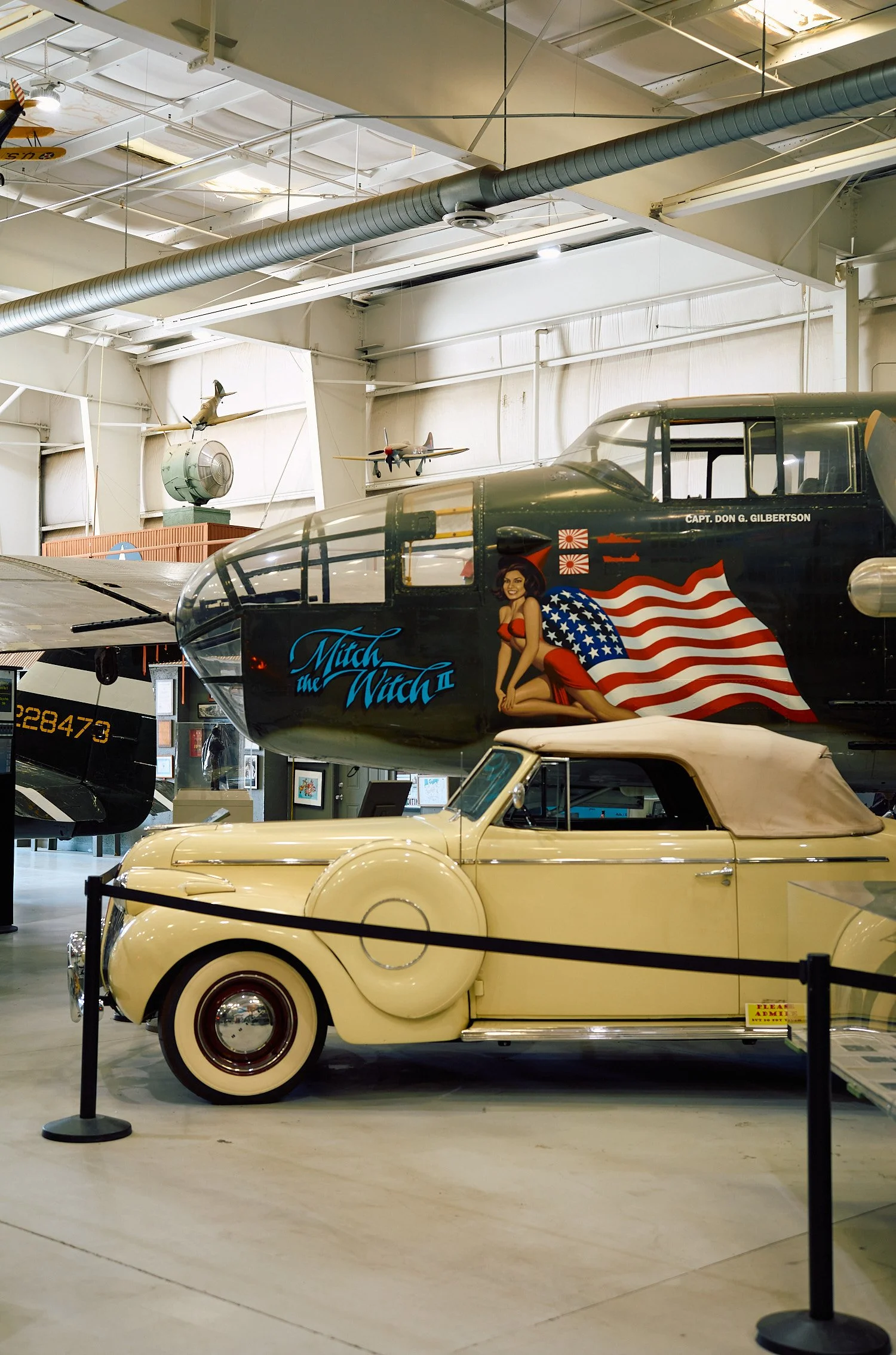
An array of planes, cars and more, Palm Springs Aviation Museum, California, Leica M10R, Voigtlander 50mm Nokton
Bonus Hotel - Kimpton Rowan
As luck would have it our return flight was cancelled due to a flat tire. After a couple of hours at the airport awaiting news of the repair timing, it became clear we weren’t heading home that night. So, we decided to book a room right in downtown at the Kimpton for a bit of a different experience. With multiple restaurants and a rooftop pool and bar we’d more than be able to find a way to spend this unexpected additional time in Palm Springs.
The rooftop pool and bar are definitely the scene here and we spent most of the afternoon and following morning there. The cocktails were delicious and served right to your sunbed. The pool is never more than chest deep and while it could clearly be a big party spot some nights, it was quite relaxed, welcoming and accommodating for kids with our son making a few friends to splash around with. The people watching is excellent with a fairly eclectic crowd gracing the water and its surrounds.
Desert Rhythm
Palm Springs ultimately delivered on its promise: an easy escape filled with sunshine, good food, pool time, and a healthy dose of mid-century design. There’s something undeniably pleasant about the city’s relaxed desert rhythm, especially when life elsewhere feels particularly busy.
I’m not sure I’d rush back purely to explore more of the city itself, but I can absolutely see the appeal of returning with a larger group of friends or family, renting one of the iconic homes tucked into these quiet neighbourhoods, and embracing the slower pace for a few days. In many ways, that feels like the version of Palm Springs that makes the most sense to me.
Dusty Audi R8, Palm Springs, California, Leica M10R, Summicron 35mm
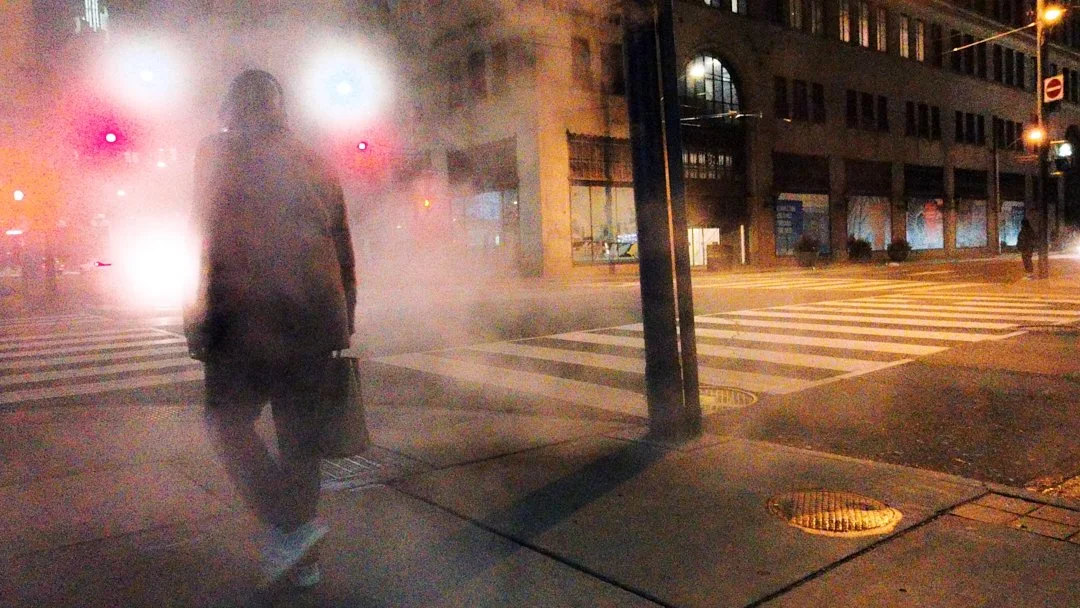
First Impressions of the Insta360 Ace Pro2 as a Stills Camera
The Insta360 Ace Pro2 showed up on my radar a couple of months ago as I started to research replacements for my aging GoPro Hero 8 Black. While my original use case for it stemmed from its core niche (action videos of mountain biking, snowboarding, motorsports, diving etc.) I was increasingly drawn to it for its much-touted broader capability set.
Toronto street corner, Leica Eternal, Toronto, ON, Insta360 Ace Pro2
Can an Action Camera Really Shoot the Street?
The Insta360 Ace Pro 2 landed on my radar while looking to replace my aging GoPro Hero 8. Initially, it was about action video—but the broader pitch pulled me in: vlogging, modular accessories, and, intriguingly, still photography. I had no expectation it would replace dedicated cameras like my Ricoh GR III, but it raised a question:
Could this be a one-camera solution for short trips, business travel, or quick weekends where I want both video and stills—without carrying much?
I decided to find out.
Update: Several months later I took the Ace Pro 2, to Greece for two weeks to answer that question properly. You can read my full Insta360 Ace Pro 2 travel camera review here.
Early Use
After some quick setup, I took it out on a mountain bike ride. I crashed. Both I and the camera survived. Footage looked solid—already a step up from my old GoPro.
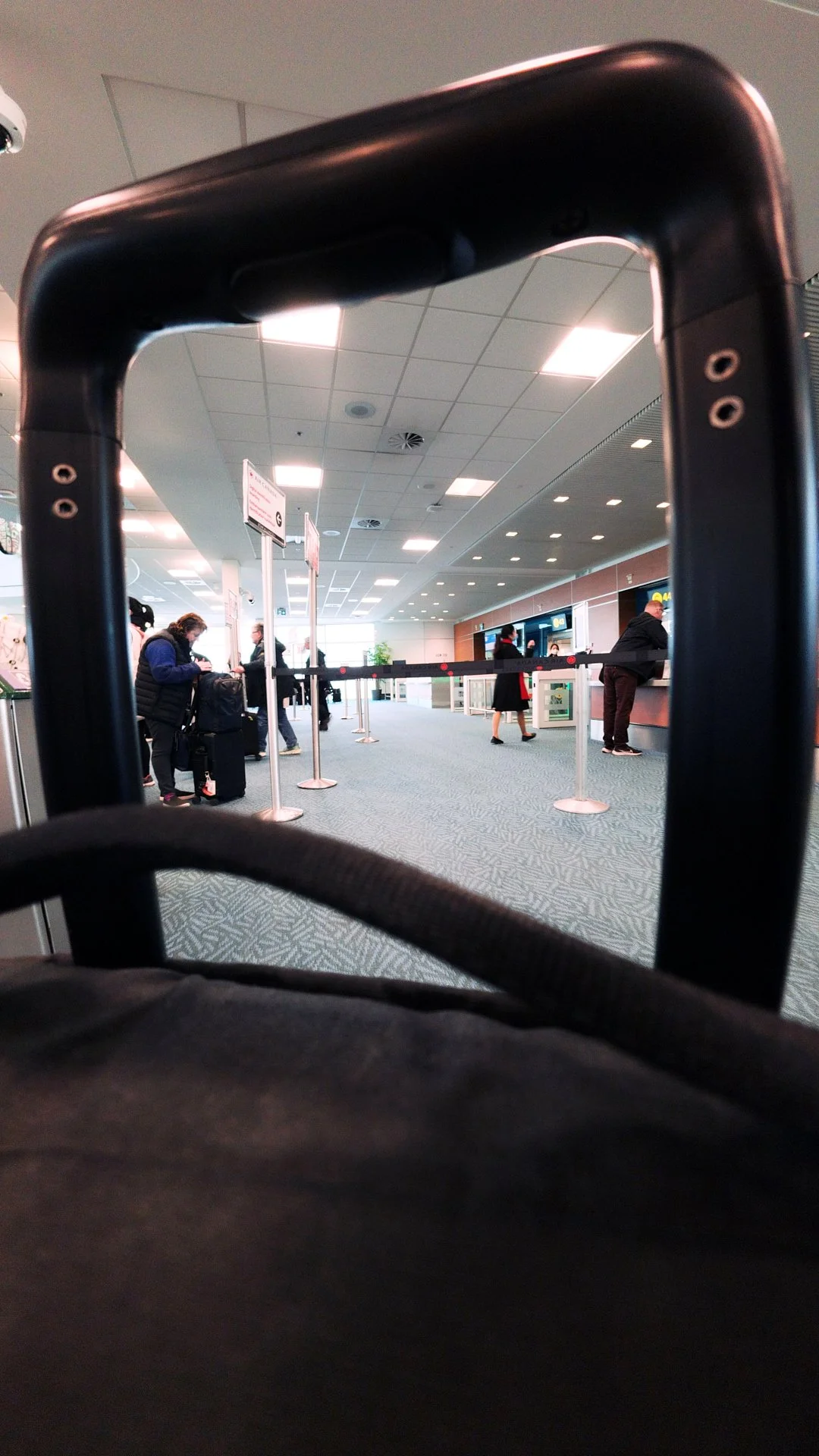
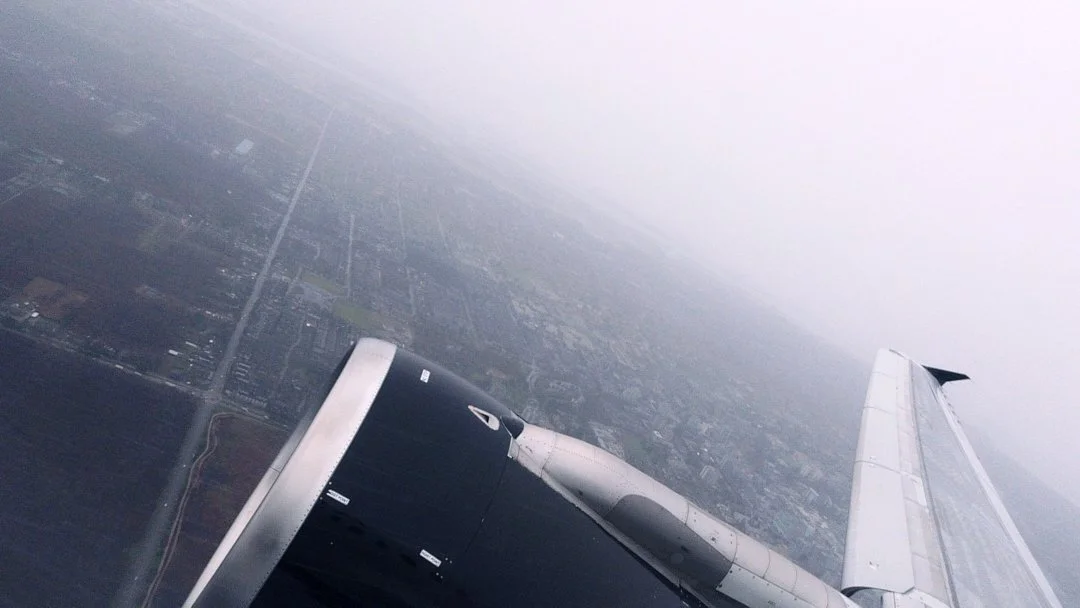
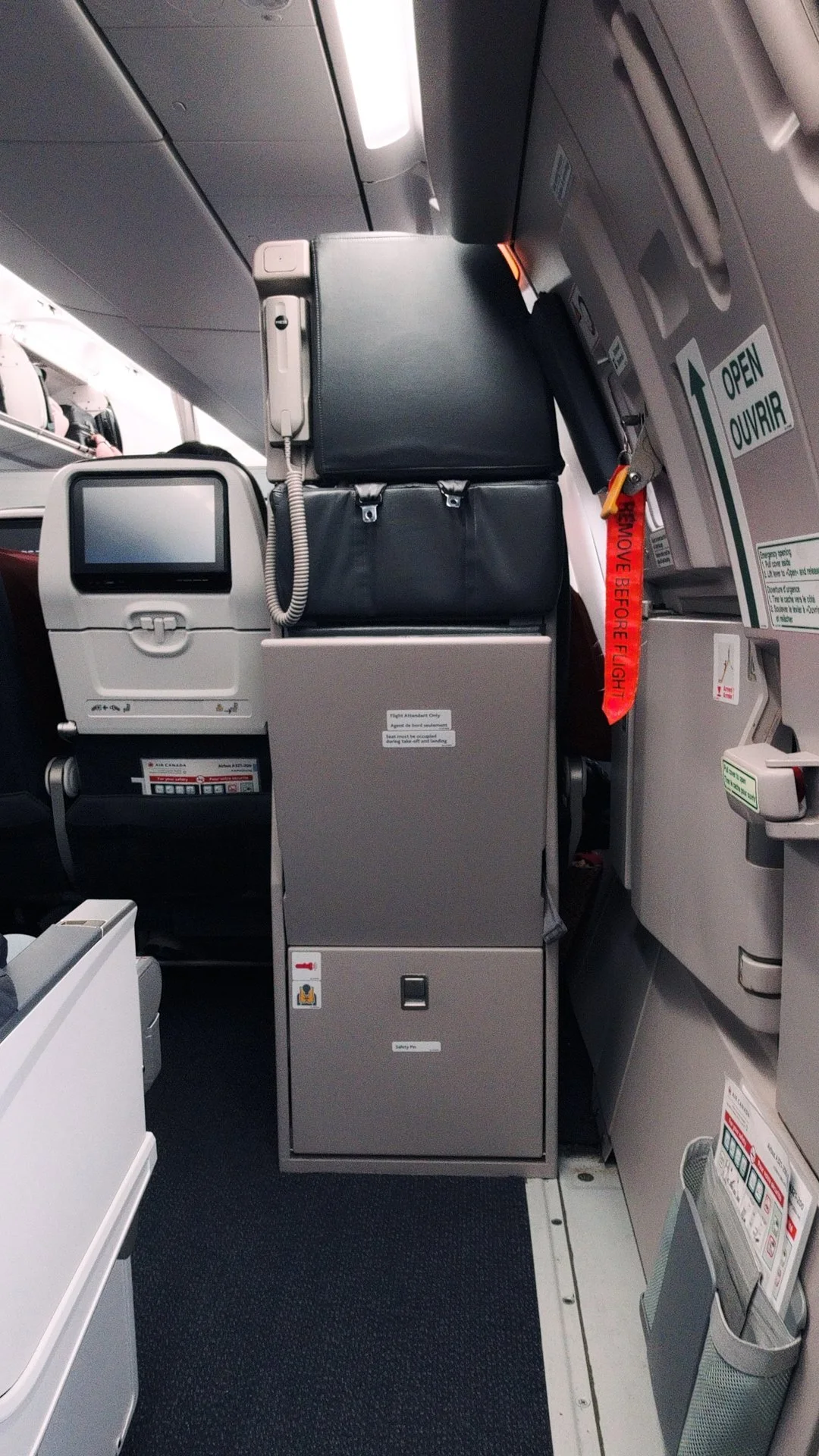
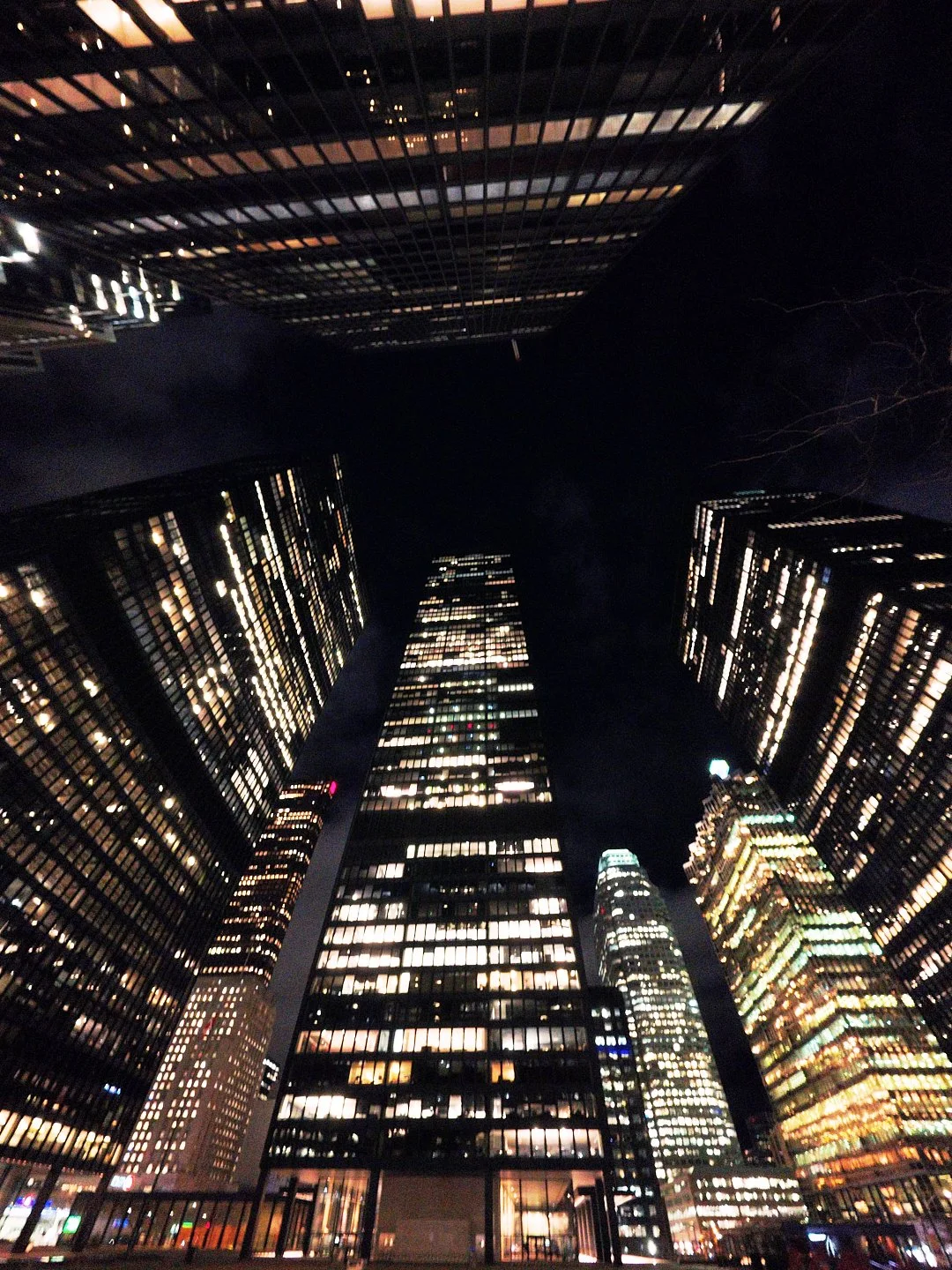
Next test: a short business trip to Toronto. These trips are typically tight—24-48 hours, packed meetings—but with small windows for street photography or a quick vlog. Most of my shooting ended up happening in the evening, making this a good test for low-light performance.
Like any new piece of gear, it was fun to experiment with—different JPEG profiles, fields of view, and modes which create a myriad of combinations to explore. But a few limitations showed up quickly.
Where it Struggles
Shutter Lag (the big one)
For street and candid photography, timing is everything. Here, the Ace Pro 2 struggles.
The Xplorer Pro Grip shutter triggers on release, not press, of the button - which certainly messed with my flow
There’s a noticeable delay (~0.5s) before capture
Buffering slows consecutive shots
For still subjects, it’s fine. For moving scenes, it’s a problem.
Using the on-screen shutter button improves responsiveness, but doesn’t solve shot-to-shot delay. Ironically, the Xplorer Pro Grip—intended to enhance stills—feels like it is holding the camera back on this one..
This camera forces you to slow down. That’s not always bad—but it limits confidence when shooting anything dynamic. You can adapt, but the question is whether you should have to (or want to).
Samples shot at “normal” pace vs consciously slowing down to account for lag:


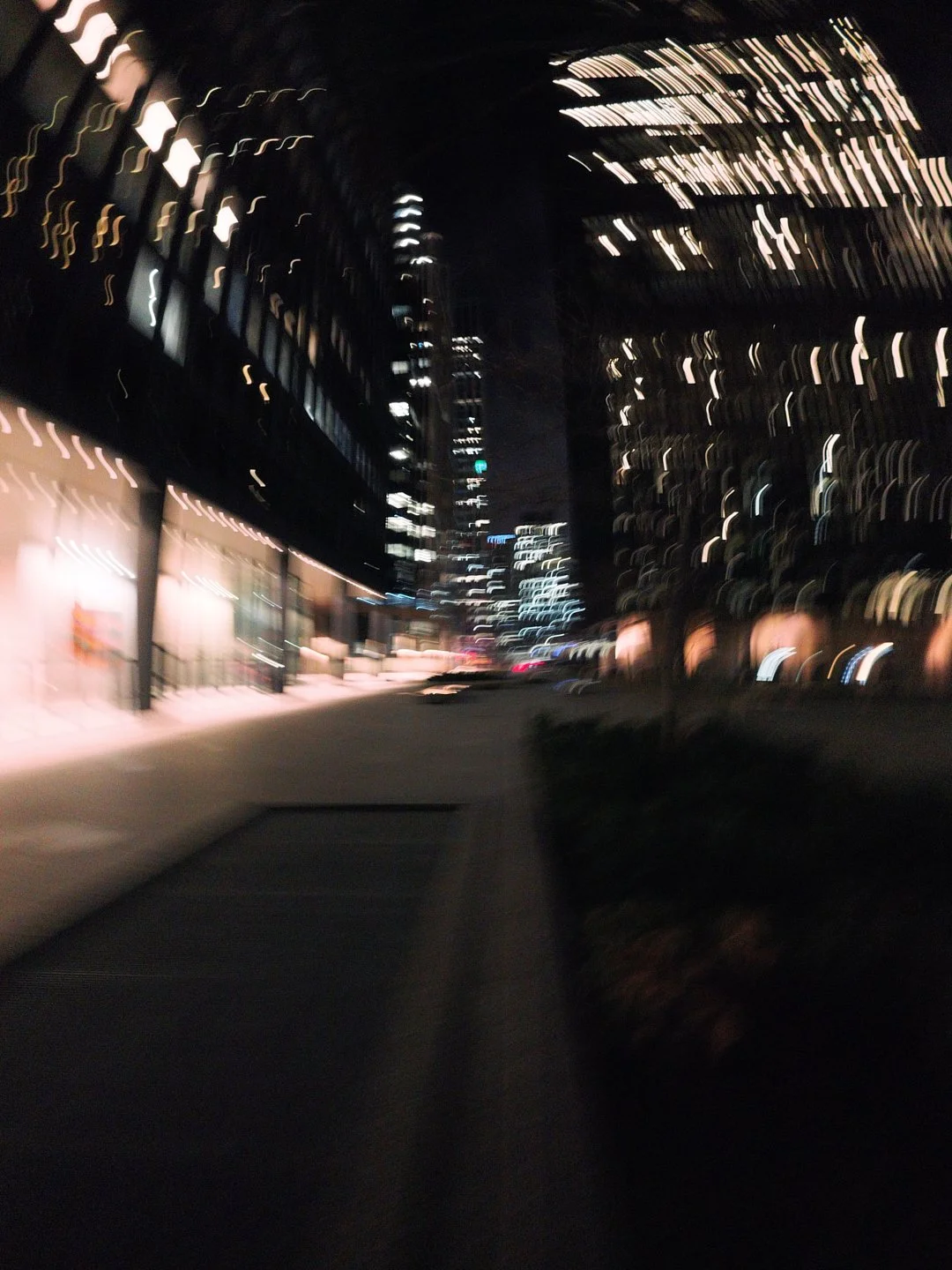
2. ISO & Image Behaviour
The way the camera handles in auto mode is a bit perplexing, particularly when it comes to ISO.
Manual ISO caps at 1600 (despite auto going higher)
Auto tends to favor lower ISO + slower shutter in dim scenes
JPEG grain can get heavy in low light
Pureshot helps the grain considerably, but requires deliberate switching. Kudos to Insta360, though, for having an automated icon pop-up when the camera believes Pureshot is called for. - That’s well thought out and a helpful reminder in the moment.
3. Ergonomics
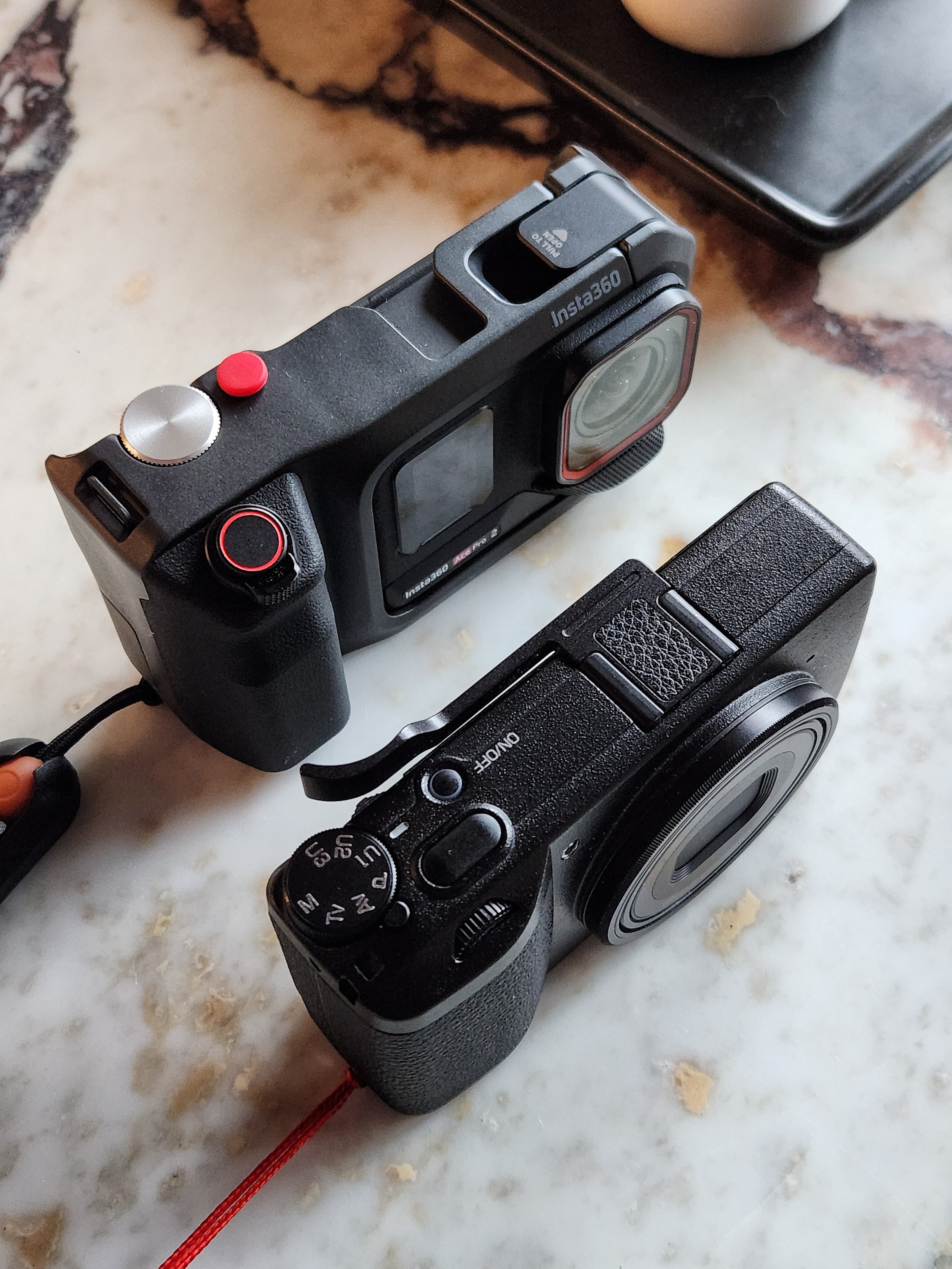
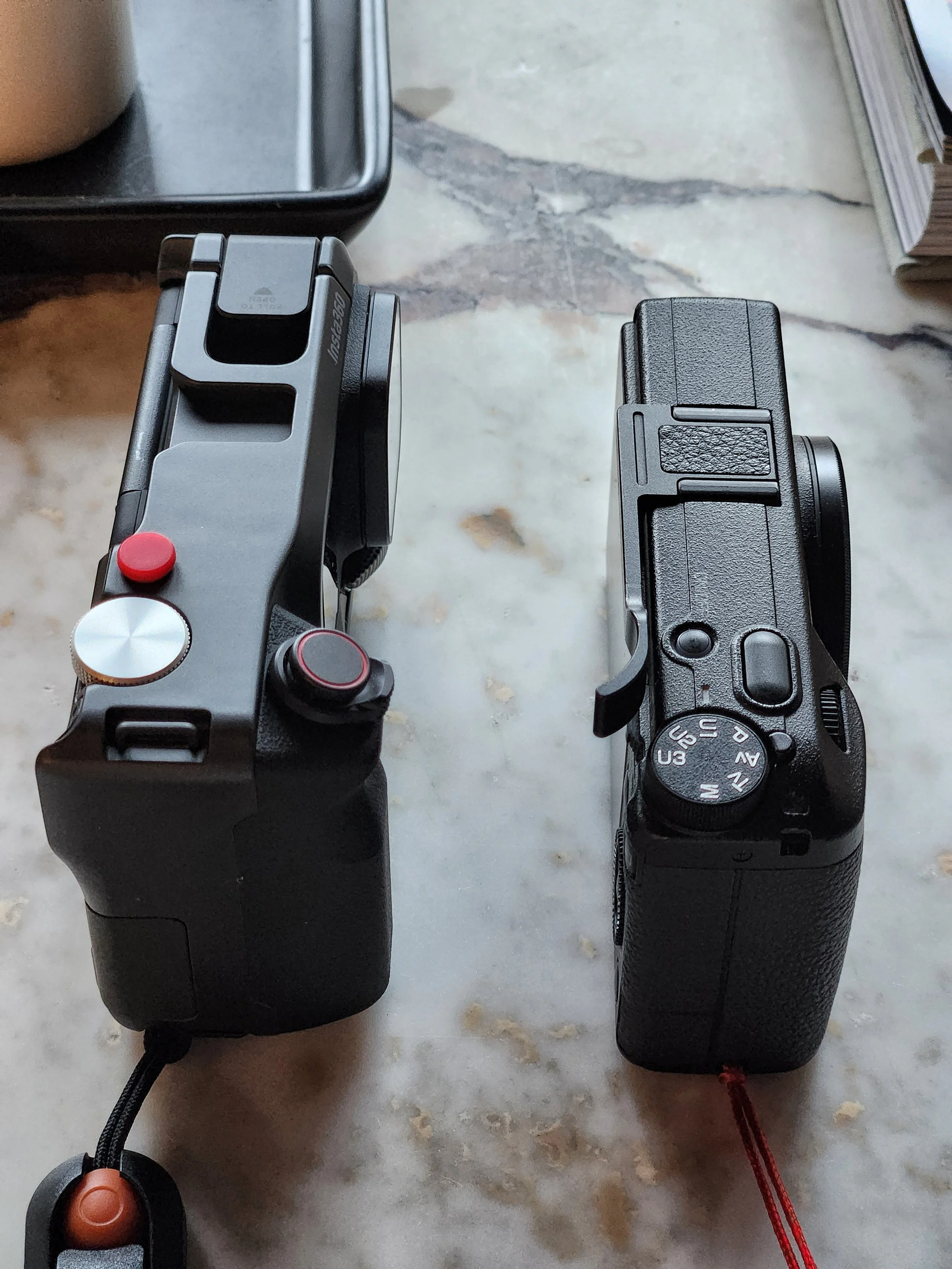
It looks cool, but for a “pocketable” camera it is surprisingly heavy and thick with the Xplorer Pro Grip attached. Perhaps that’s the price we pay for the extra battery capacity, and no doubt I’m spoiled by the featherweight Ricoh GR iii that typically accompanies me on street shoots (with two spare batteries in my bag owing to it’s poor battery life). Here are some thoughts on the form factor after a couple days of use:
Thumb dial is overly sensitive → accidental changes are common (for me) from the slightest nudge in a natural grip position. A cold-shoe mounted thumb rest could potentially solve this.
Grip is bulky → less “pocketable” than expected (think jacket, not jeans)
No included lens cover → constant low-level anxiety for smudges and scratches
I’ve already lost the shutter button → The screw-in button has managed to disappear having backed-out unbeknownst to me. I’ve substituted a spare that happened to be in my gear drawer, but I can’t say I’ve ever had this happen on another camera.
It’s by no means a large camera, but with the grip attached it’s heavy enough that you’d notice it quickly on a selfie stick, say if you were doing dual-duty for vlog and stills on the run.
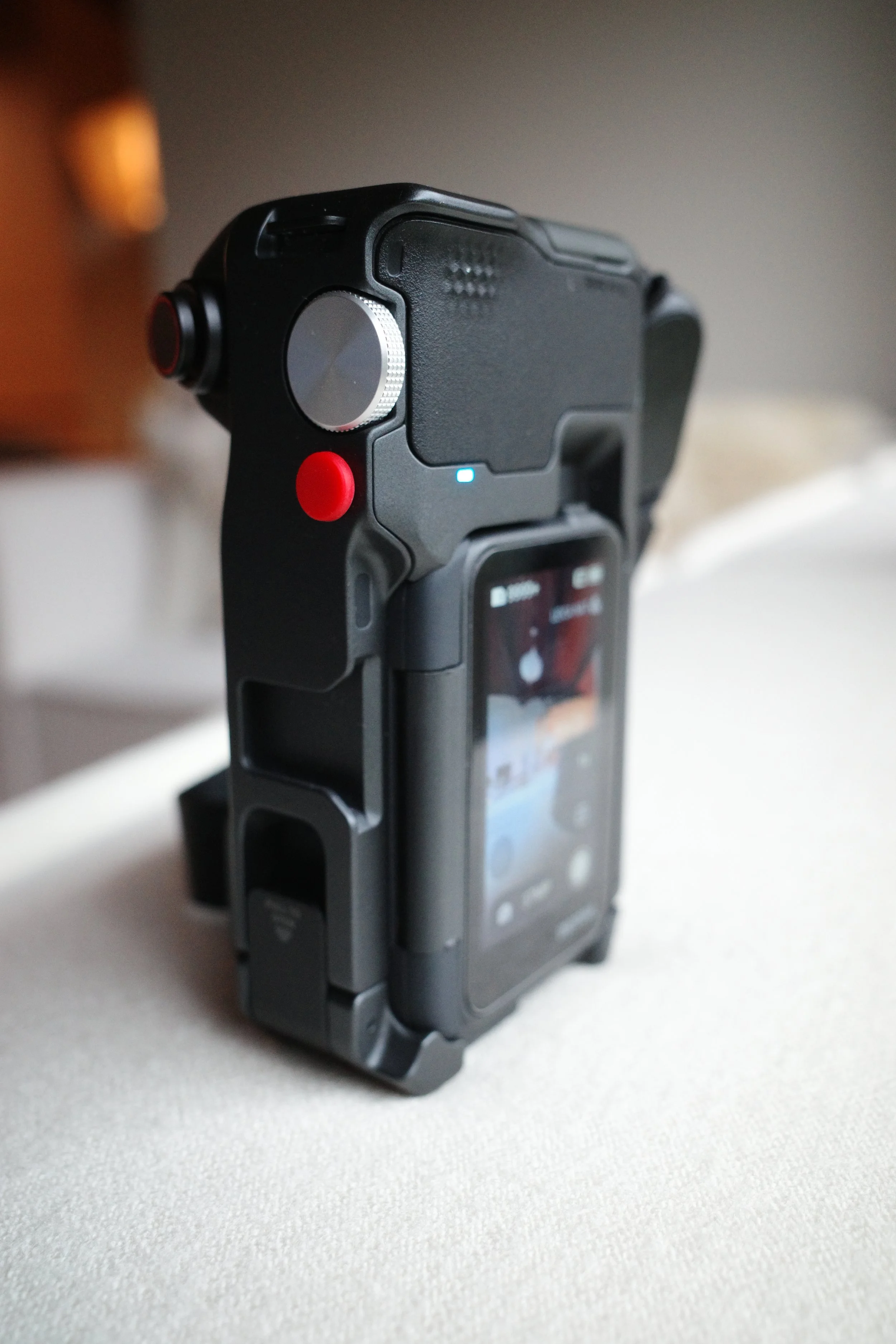
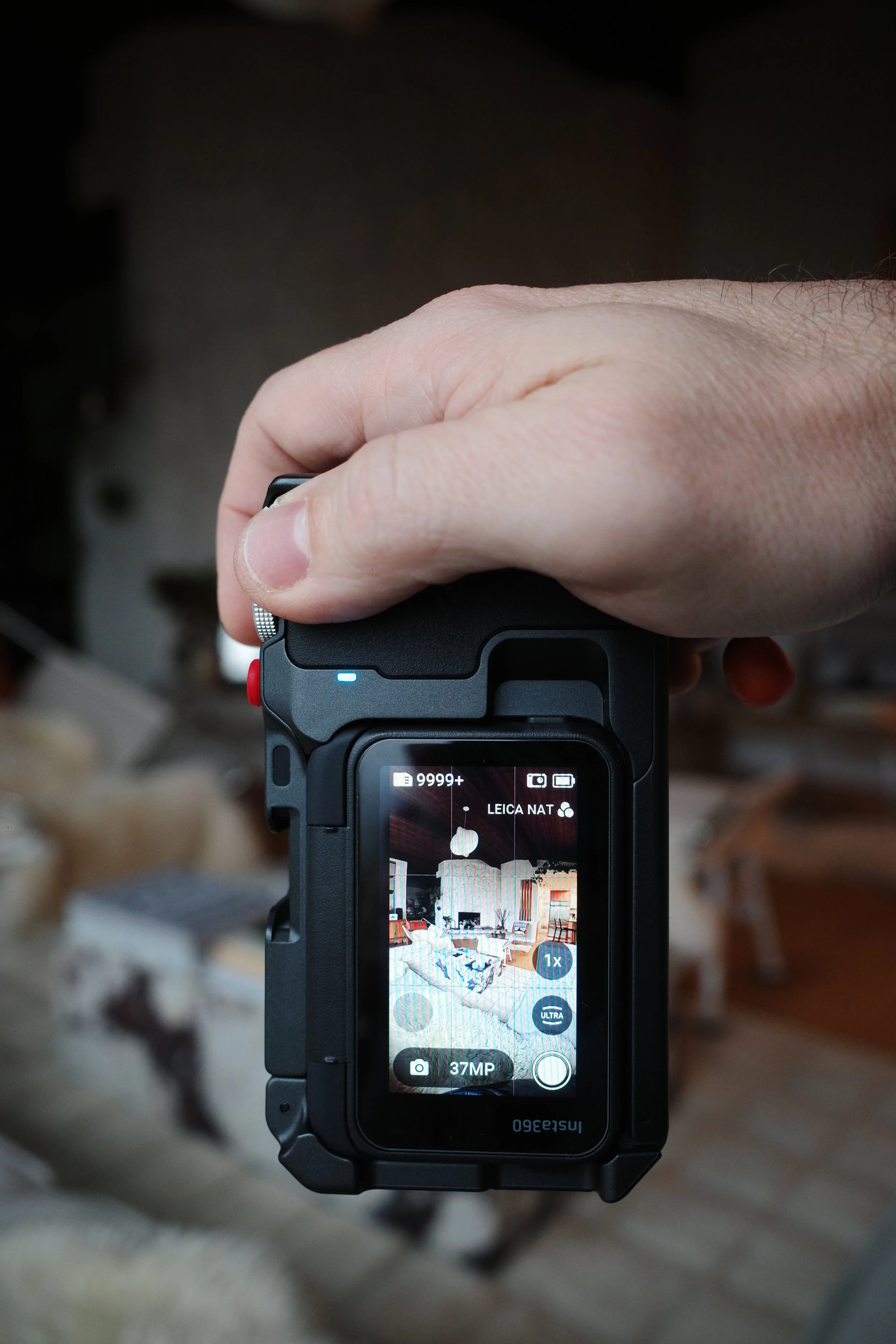
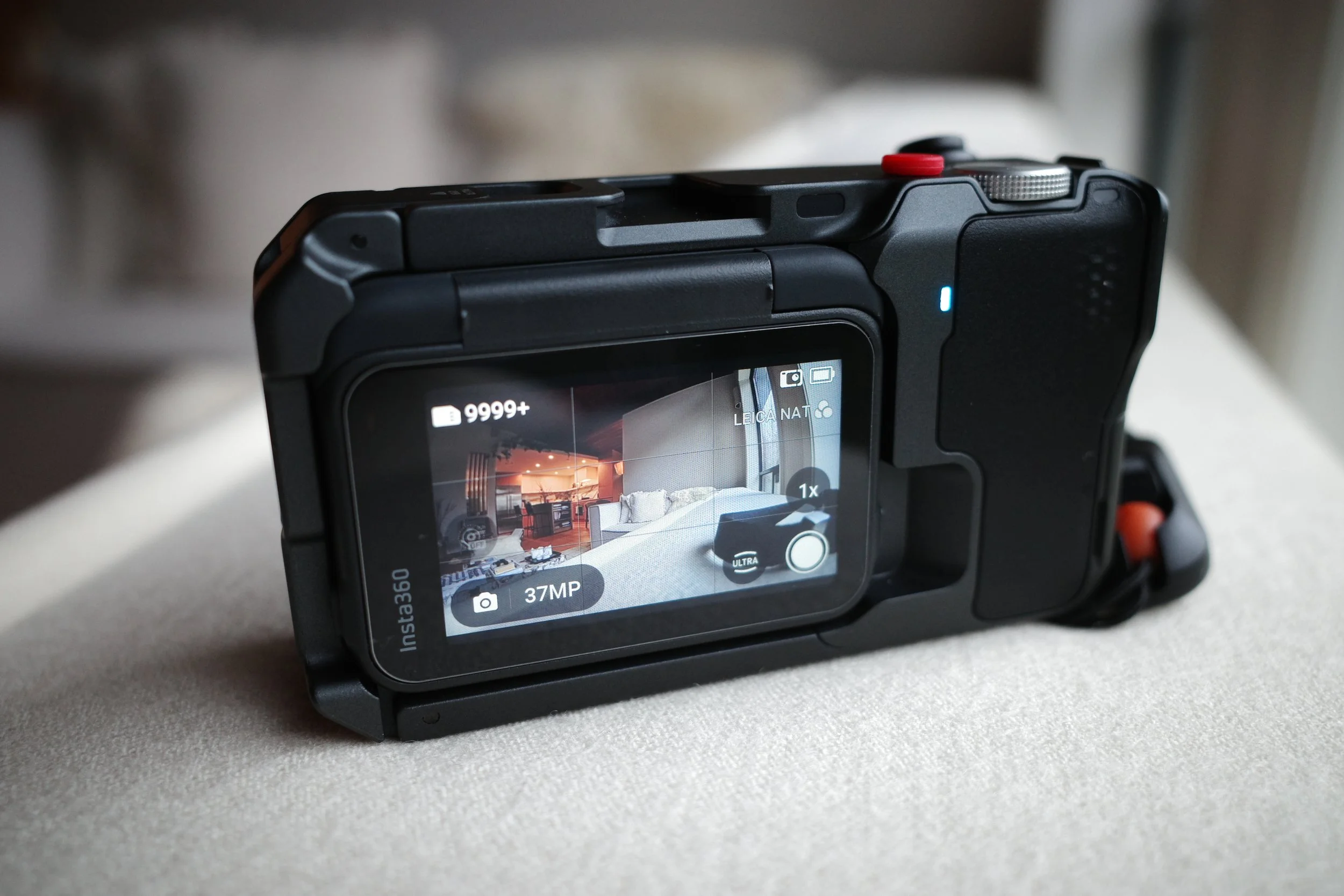
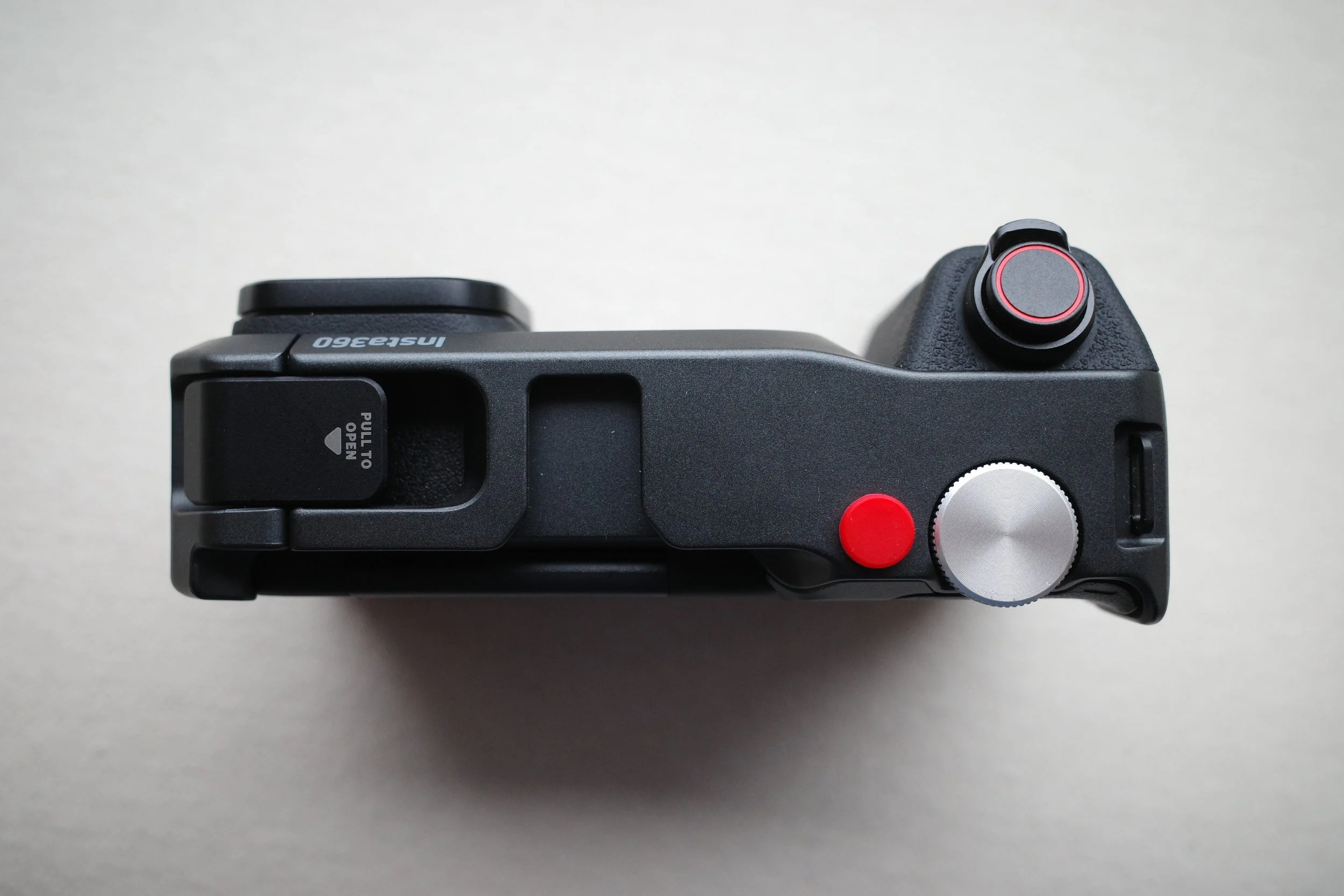
“...it feels like the Xplorer Pro Grip, despite its intent as an enabler for stills, is actually holding this camera back.”
Gap in the steam, Leica Eternal, Toronto, ON
What Works Well
JPEG Profiles
The JPEG profiles are strong out of camera and feel very useable. There are a lot of options and I’ve only begun to scratch the surface with them. There’s something for everyone from subtle to over-the-top effects here.
The Leica profiles—especially Eternal—stand out. Dark, contrasty, and stylistically relevant. With light editing, you can get compelling results.
Desolate UP Express stations, Leica Eternal

Shot taken from the UP Express, Leica Eternal
Taken without using Pureshot, heavy grain is evident but I don’t mind it here, Leica Eternal
Attempting a panning shot with the Insta360 Ace Pro2, Leica Eternal
Downtown Toronto, Leica Eternal, Insta360 Ace Pro 2
2.Field of View
There is lots of flexibility, especially with accessory lenses. This gives it a leg-up on a lot of traditional point and shoots with fixed prime lenses or limited zoom capabilities. This combined with the many Jpeg profiles expands on the creative potential of the Ace Pro 2 - I don’t think I’ll get bored of it any time soon!
The Downside:
FOV isn’t recorded clearly in metadata
Ultra-wide setting even without an accessory lens can literally capture your fingers on the grip, and so could prove problematic for handheld shooting.
Union Station, Toronto ON
Union Station, Toronto ON
“Another surprising finding was that in Ultra Wide mode the lens actually picks-up my fingers on the grip!”
Finger visible on the grip on right side of frame, Insta360 Ace Pro2, Ultra FOV
3.Lens System
The cinematic lens is excellent—well-built and genuinely expands creative potential.
The ability to change lens attachments to achieve a multitude of looks and expand capabilities is one of the camera’s strongest advantages. Not to mention other accessories such as the dive-case, which I just recently ordered. (stay tuned for the undersea review!)
Still captured in the Insta360 Video Editing software, Cinematic Lens Attachment
4.Durability
Well it’s already survived a crash, so top marks for that!
Compared to something like the Ricoh GR series, this feels far more robust. Add-in the Insta360 replacement program, and it’s a strong point when considering this platform. The lack of lens cover for the standard lens is the downside here. With the grip mounted some watertightness is evidently lost due to removing the usb-c cover and plugging in the rubber-housed grip connector plug, but it seems more than capable even then of handling a downpour.
So—Can It Replace a Point & Shoot?
Not yet.
Image quality is certainly good enough for casual use and social content, but the responsiveness issues hold it back for serious (or perhaps I should say reliable) stills work. If results matter—or if you’re shooting anything dynamic—you’re better off with a dedicated camera (or even a modern smartphone). This may seem a likely or even obvious conclusion to seasoned or dedicated hobbyist photographers, but I don’t think that’s who this camera is targeting.
Final Take
The Ace Pro 2 is impressive—but not as a stills-first camera.
Where it shines is versatility:
video
rugged use
creative experimentation
For stills, it’s capable—but constrained.
That broader question—whether a piece of gear genuinely earns its place on the journey—is also at the heart of my IWC Pilot’s Watch UTC review.
So where did that leave me? A few months after these initial impressions, I took the camera to Greece for a two-week real-world test of the Ace Pro 2 as a travel camera, curious to see whether more familiarity—and a few firmware updates—could change my mind.
Reflecting on the Insta360 Ace Pro2
The Road to Hana — Beyond the Turn (Part II)
The Road to Hana and beyond — narrow roads, raw coastline, and the question every traveler faces: turn back, or keep going?
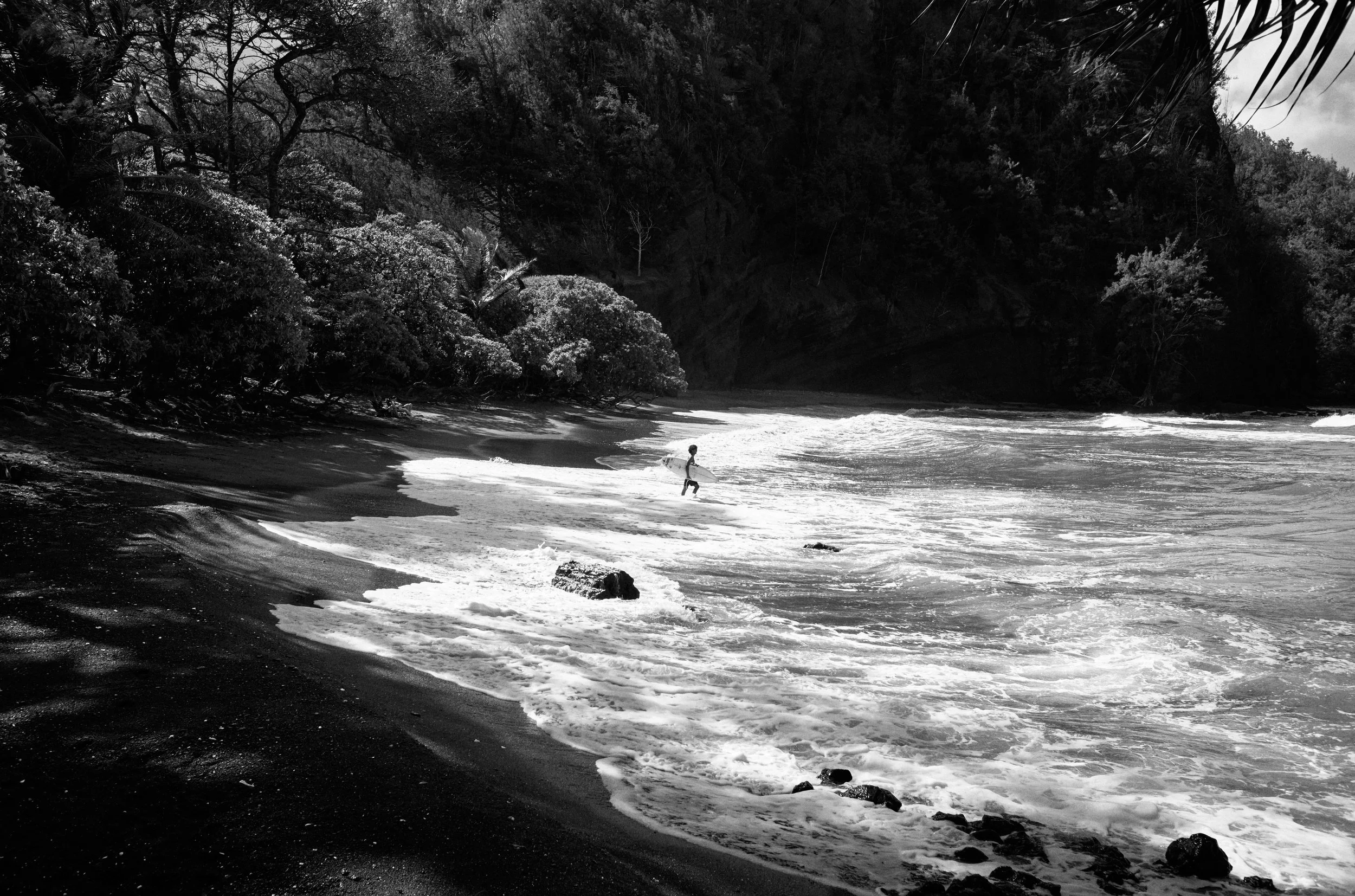
Young Surfer at Koki Beach Park, Maui, Hawaii, Leica M10R, 35mm Summicron
Long Way ‘Round - Or, Why We Can’t Keep Still
You could spend a week in West Maui and never feel the need to leave. We tried—but the pull to explore won out. The Road to Hana is demanding enough on its own, but beyond it lies a stretch most visitors are warned against: rough roads, uncertain conditions, and a simple question—is it worth continuing at all?
We’d done the loop once before—and, perhaps foolishly, decided to do it again.
Aston Papakea, Kaanapali, Maui, Hawaii Leica M10R, 35mm Summicron ISO500
Paia
We left before sunrise. This is not because your author is a morning person, furthest-from in fact, but experience taught us that the road to Hana, given its tight, narrow and winding nature, can become quite the slow grind once the tourists and transport trucks start to fill it. That and there’s a lot to see and a lot of ground to cover to see it all. With empty stomachs and the dawn commencing just ahead of us, we drove east planning on a reasonably quick first stop for breakfast and provisions in the small town of Paia 34 miles away.
The Boba Bar, Paia, Maui, Hawaii Leica M10R, 35mm Summicron
Paia, Maui, Hawaii Leica M10R, 35mm Summicron
Paia, Maui, Hawaii, Lecia M10R, 35mm Sumicron
Paia proved a quaint little town, and while we didn’t stay long, it’s a good launching off point to the Hana Highway with a gas station and a multitude of coffee shops and restaurant options. We caffeinated at The Boba Bar and stocked up at Mana Foods which is a bit of an eclectic organic food market that includes a Hot & Ready counter of warm food options. Happily recommend both, but there’s certainly a bit more to explore if you have an extra 30min or so. We on the other hand were eager to get going, but not without stopping at Ho’okipa Beach Park which is just a bit further down the road from the town for some lovely views to get us in the mood for the drive ahead. At Ho’okipa you’ll almost certainly see some turtles on the beach, and likely a few chickens and roosters as well, but the rocks suggest to me it’s not an ideal spot for a swim.
Ho’okipa Beach Park, Maui, Hawaii, Leica M10R, 35mm Summicron
The Real Road Begins
If you are not a confident driver, this route is not for you. Once well past the quaint confines of Paia, the road begins to narrow as grassy rolling hills give way to thick jungle that occasionally encroaches onto the road, squeezing it narrower than you’re ready to imagine. As someone who competed in motorsports for nearly a quarter century, some sections of the route even have me exclaiming “Really?!” as I round a bend only to find the entire road narrowing to 1.5 lanes wide with a transport truck barreling towards me. Heading out towards Hana, there is typically a sheer drop on your left-hand side and a wall-like mountainside covered in trees and ferns on your right. There’s no room to squeeze over in many places, and sections appropriate for passing are very few and far between. This is not to say this isn’t enjoyable for us motoring masochists, but be prepared for a mentally fatiguing workout.
Of course, with the added stimulus of my in-laws and a 2.5 year old in the car, the variables impacting one’s focus only intensify. The familiar wail of “I have to peeeeeeeee” seems all the more shrill when you know there’s nowhere to stop, literally. Luckily there are sections where the road wides slightly, likely to accommodate larger trucks passing eachother in opposite directions, and these are typically just before some of the narrow bridges that span waterfalls and chasms. I don’t want to dissuade you from trying it (and there are alternatives including guided tour rides by experienced locals), but when you get to the “end” you will find yourself asking the fundamental question: “Do I want to do that all over again in the opposite direction?”. We’ll come back to the answer of that question a little later in the story. I’m getting ahead of myself though, because there are some stunningly beautiful sights to stop at along the way and besides views the chance to take a little mental break from the taxing road is more than welcome.
Waialohe Park, KeʻAnae Peninsula, Maui, Hawaii, Leica M10R, 35mm Summicron
Ke’Anae
After about 20 miles of endless corners you’ll approach your first opportunities to stop and take a breath. First, a quick turn-off to the right takes you up a small hill to Savor Maui, a little food truck with coffee and snacks. Unfortunately the stove wasn’t working when we got there, so it was cold food only, but our bellies were still happy from breakfast so a smoothie and some caffeine and we carried on. Shortly afterward you can again leave the main road to descend to the Ke’Anae lookout. This small peninsula just into the sea with black rocky shores constantly smashed by the waves. It’s quite the juxtaposition of green to black to bright blue (not that you can see that here).
I suggest you start with a quick stop at Waialohe park for some photos, which is just on your left as you make your way onto the peninsula, then walk up to Aunty Sandy’s Banana Bread because the banana bread is tasty and it’s something of an institution here. Hop back in the car and drive a bit further to the Ke’Anae lookout for more waves crashing on jagged shores. Ke’Anae makes for a short but welcome detour, and you’ll be felling fresh to tackle the road once again which you access the same way you came.
Ke’Anae Lookout, Maui, Hawaii, Leica M10R, 35mm Sumicron
Nahiku Market
Another viable spot for a lunch stop, we enjoyed the coconut shrimp and chips here and there’s options for coffee, desserts and souvenirs as well. This small market sits just to the side of the road and is easy to spot as you’re driving.
A quick snack break at Nahiku Marketplace along the Road to Hana, Maui, Hawaii, Leica M10R, 35mm Summicron
Hana Lava Tubes
Just before reaching Waiʻānapanapa State Park adventurous travellers can choose to take a detour and visit the Hana Lava Tubes. For a small fee visitors receive a guide map and flashlight to facilitate exploring the cave system. It’s a bit surreal walking through a lush tropical environment among towering palms only to come upon a staircase into a barren rocky hole in the ground. If you’re not claustrophobic I’d suggest this is an interesting diversion to take on this journey that is otherwise dominated by jungles and seascapes. The immediate change in climate (from warm, bright and humid to dark and cool) provides an otherworldly reminder of the volcanic origin and nature of Maui that feels distinct from the towering Volcano ever present at the island’s centre. Originally created by flowing lava, and likely extending for many miles, one’s mind races to the incredible force of nature that created it and perhaps what the locals might have thought of them in ancient times and how they might have interacted with them. Sanctuary, ceremony, even just storage? Many such caves can be found on the island but likely most are not suitable for any but the most experienced spelunkers. If nothing else a visit here is a nice break from the heat outside. Note: as of February 2026, Google lists the cave as temporarily closed for further archeological exploration, so be sure to check ahead if you’re keen to visit.
Hana Lava Tube, Maui, Hawaii, Leica M10R, 35mm Summicron
Wai’anapanapa State Park - Black Sand Beach
A mile or two after the lava tubes take another detour left towards the coast to enjoy the black sand beach of Wai’Anapanapa State Park. While this side of the island tends to be breezy, this was a nice spot to stop and relax for a while on the warm sand. I took a swim with mask and snorkel and it was quite fascinating to observe the light playing along the bottom with the grey/black sand swirling in mesmerizing patterns. The water here is exceptionally clear, which makes for some fun treasure hunting as well allowing me to spot eels, fish, a turtle and a pair of sunglasses. There’s a rinsing station at the bottom of the stairs before heading up to the parking lot and I highly recommend you use it as this sand seems to stick to everything more than usual - perhaps another of its unique properties.
Black Sand Beach, Maui, Hawaii, Leica M10R, 35mm Sumicron
Black Sand Beach, Maui, Hawaii, Leica M10R, 35mm Summicron
Hana
As I said in the introduction, “It’s about the journey, not the destination”. For us Hana was not the target of this trip, but given it’s the roads’ namesake, and tummies were grumbling again, it only makes sense to stop here. Hana is a fairly quiet and unassuming village, with a beach that pales in comparison to those you’ve passed along the way as well as some of the sights that follow that I’ll touch on shortly. You’ll more than likely be hungry by the time you get here and the small food truck village on the south side of town (set your map for Poke Bob’s) is delightful and delicious with a variety of options to suite many tastes. I didn’t take many photos in Hana and that’s not a slight to the town, but we were more fixated on food and taking a bit of a break after hours in the car.
We attempted to visit the "Red Sand Beach” but were turned around by a security guard who told us it was the private property of a nearby school. Fair enough I suppose, though we didn’t see any indication of that in our pre-trip research. Hana Bay Beach Park may be a suitable spot for a picnic but I didn’t feel compelled to try swimming or sunbathing there. Suffice it to say, you aren’t enduring the road to see Hana, or at least, that shouldn’t be the mindset you approach the journey with. Call it a milestone, a box ticked, and the mid-point from which you have a decision to make, carry-on, or turn back?
Poke Bob’s Food Truck, Hana, Maui, Hawaii, Leica M10R, 35mm Summicron
Koki Beach Park
Just south a few miles south of Hana is a turn-off that’s worth taking. Koki Beach Park is a beautiful bay lined with a a mix of sandy beach and rocky shoreline with the Alau Island Seabird Sanctuary visible just offshore. This, we discovered, is a favourite haunt of some local surfing schools. Students travel here from all over the island, some daily, to put in hours of practice and training in the waves. It seems far from an ideal spot for us uninitiated, with shallow reefs and jagged rocks jutting out of the waves all over. Coaches stand at the shore and brief their classes before sending them out into the sea.
Surf School at Koki Beach Park, Maui, Hawaii Leica M10R
The Road Less Travelled
Leaving Koki Beach, you follow the road south and there are more sights to see including Wailua Falls -a lovely hike with a beautiful bamboo forest along it’s route. While that hike is normally worth the visit (we stopped there many years prior) we were starting to think about the road home and in particular trying to cover most of it in daylight. This is a point worth considering in your planning, driving these routes at night wouldn’t appeal to most, but with a bit of planning and an occasional eye on your watch you can cover much of it before dark and still have time to relax along the way.
Shortly after the turn-off for the falls, the road begins to get a bit rougher. Eventually you’ll come to a sign that reads “Road Closed” standing directly in your path. This is the spot the rental car shop told you not to go past along with some additional suggestions that you’re at your own risk in doing so, possibly without insurance coverage, and “there’s not much to see there”, and so on. I’m not suggesting you disregard that advice, but if one were to do so, there are certainly sights to enjoy -unlike anything you’ve seen yet. Additionally, I’ve been told that the guided tours can continue past this point, and if that option better suits your risk appetite then it may well be the preferred approach. Beyond the sign the road does indeed get rough, and has noticeably gotten worse in the ~10 year gap since we first visited, more akin to some remote Forest Service Roads in the mountains back home; with significant potholes, rocky washed-out sections, single-lane bridges and some perilous precipices adjacent crumbling sections of road on the outside of blind corners. Have I sold you on it yet? Read on.
Maui, Hawaii Leica M10R, 35mm Summicron
To me the South and South-West corners of Maui are spectacular. A complete change in ecosystem from what you’d experienced up to this point, you traverse from lush jungle to rolling grassy plains and dry steppes more akin to what you might see in cowboy movies (apart from the ocean and volcano, of course). It is beautifully desolate. You will encounter almost no other travellers on this stretch but for the cows at pasture and occasionally in the middle of the road. If you’ve timed your day well, you’ll start to round the South-West corner of the island as the sun begins to set and that serene vista alone has been worth doing the road to Hana twice. The road condition also improves here to the point you’re rolling on nearly perfect asphalt on an undulating road with twists and turns that beckon the riders and racers among us to pick up the pace. But the scenery and atmosphere here compels you instead to take it easy, to take it in. The stress of the hours of driving up-to that point melt away and you glide towards the setting sun in peace.
The further you travel the more massive the island and its volcano Haleakala appear. Unobstructed by palms, the view endlessly expands before you. You begin to wonder just how far you are from your starting point after all (very). Further, you ask yourself -how different can this Island be from one corner to the next? Does the towering volcano at its centre really have such power and influence that the very weather and life surrounding it changes so completely depending where in its shadow they lay? Perhaps that’s part of Maui’s charm, in its mimicry of the sheer diversity of the Earth we enjoy today -condensed into something one can experience between sunrise and sunset.
Maui, Hawaii Leica M10R, 35mm Summicron
Maui, Hawaii Leica M10R, 35mm Summicron
Maui, Hawaii, Leica M10R, 35mm Summicron
Maui, Hawaii, Leica M10R, 35mm Summicron
West Maui in Monochrome — Kaanapali, Napili & Kapalua (Part 1)
When I booked a week away to the Island of Maui, a project dawned on me to abandon the temptation to capture the vivid colours of the island and seek instead to document it as I first saw it through the monochrome images shared by explorers and tourists generations before me.
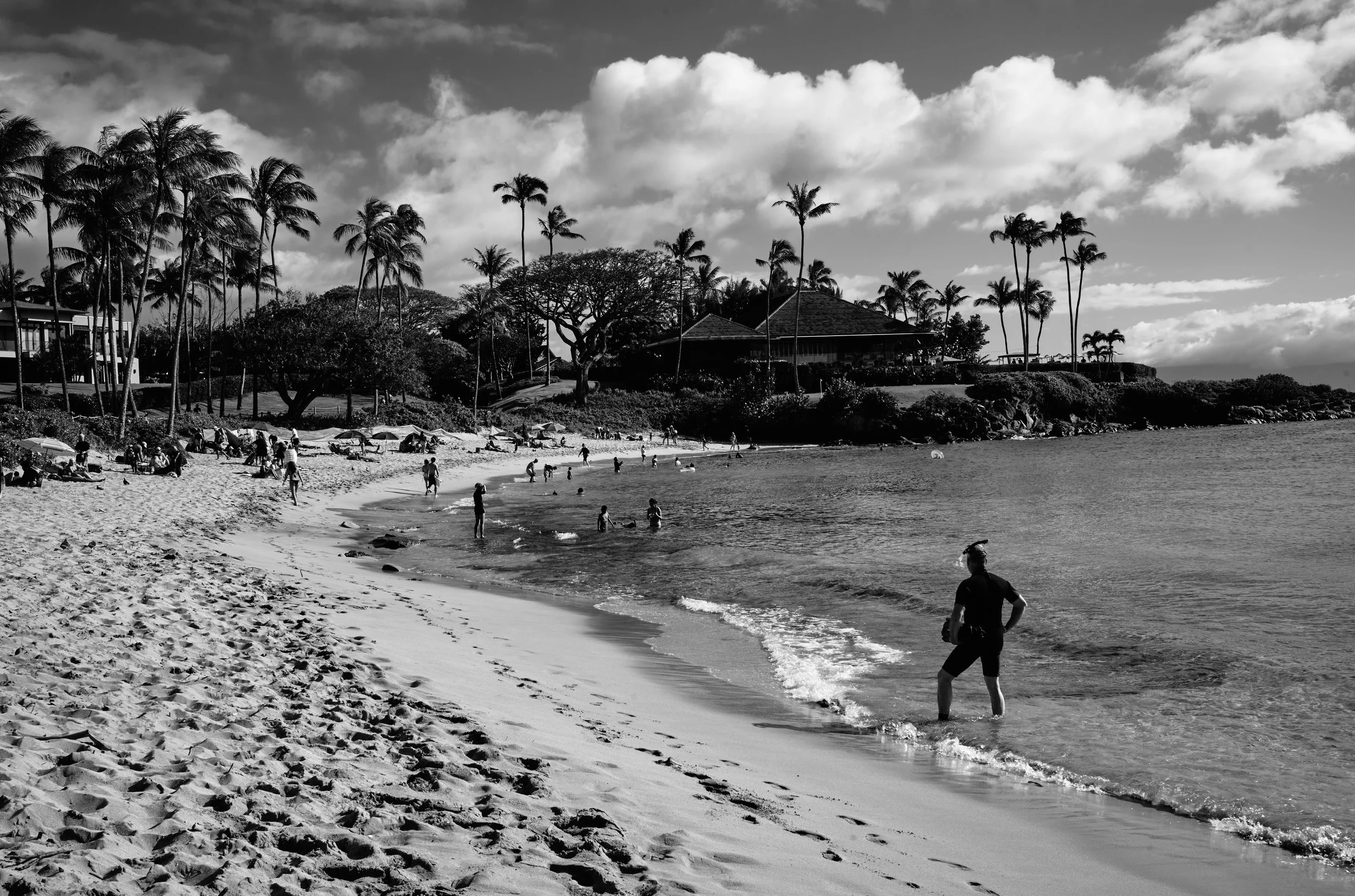
Kapalua Beach, Maui, Hawaii, Leica M10R, 35mm Summicron
Aloha
Growing up, I was endlessly fascinated by old books and magazines I’d find at my grandmother’s house describing the far off places of the world. National Geographic magazines and Readers’ Digests, some decades old even at that point, were filled with novel images and captivating stories of wild coastlines lined by swaying palm trees, towering volcanoes, thatch-roofed villages, and strong men paddling through giant waves. Some images showcased vibrant landscapes, while others in grainy black and white evoked the excitement of discovery and left the color pallette to the imagination and to me these were somehow the more engaging images. So, when I booked a week away to the Island of Maui, a project dawned on me to abandon the temptation to capture the vivid colours of the island and seek instead to document it as I first saw it through the monochrome images shared by explorers and tourists generations before me.
Aston Papakea, Kaanapali, Maui, Hawaii Leica M10R
Aston Papakea, Kaanapali
Regular readers of my blog might find this destination a bit surprising, especially as a place we’ve now visited twice, and at the same property no-less. While it’s neither wild (well, wait until the next story for that) nor posh, it is, to me, eminently relaxing and to that effect sometimes I don’t mind being able to just put my feet up, not think too hard about what to do next, and arrive and leave rested from a trip. To me, Kaanapali retains an enjoyable balance between curated and quaint, with resort properties large and small lining the coast as well as a small towns and hamlets along the coastal road.
We stayed here once before, around ten years ago, at the same property in fact, the Aston Papakaya Resort. Kaanapali is one of the core resort areas on the west coast of Maui, with the seaside facing the islands of Moloka’i and Lanai. It was largely sparred by the wildfires that devastated Lahaina the year before, the remnants of which we caught glimpses of along the way. There’s everything from simple homestays to extravagant hotel properties to stay at depending on the vibe you’re looking for. Our apartment within the Papakea property was well appointed with a full kitchen, lanai (balcony), and an upper loft area that acted as our “in-law suite”. There was ample room for the five of us which included my in-laws who we brought along in hopes of a bit of babysitting support. The buildings on this property certainly aren’t new, but generally appeared in great condition, with our own suite likely renovated recently judging by the lack of wear and tear. It was a nice bonus that our lanai faced almost due west and allowed a lovely view of the inner courtyard with its ponds, palms, pool and the ocean beyond with Moloka’i rising in the distance. Exuberant songbirds and a steady breeze greeted us as we stowed our bags following the roughly hour long drive in from Kahului airport.
Aston Papakea, Kaanapali, Maui, Hawaii Leica M10R, 35mm Summicron
I find the architecture and layout of this resort interesting. At first glance it doesn’t particularly stand out, but as you begin to wander it’s paths there’s an element of Spanish fortress meets brutalism that feels oddly out of place and at the same time rather playful. I could imagine myself as a kid running along the winding paths, playing hide and seek around sharp corners and verdant bushes, and imagining all sorts of foes attempting to storm this seaside citadel.
Aston Papakea, Kaanapali, Maui, Hawaii Leica M10R, 35mm Summicron
Aston Papakea, Kaanapali, Maui, Hawaii Leica M10R, 35mm Summicron
Aston Papakea, Kaanapali, Maui, Hawaii Leica M10R, 35mm Summicron
Honokowai Beach Park, Kaanapali, Maui, Hawaii Leica M10R, 35mm Summicron
The downside to this resort is the lack of direct beach access. While the sea is certainly immediately adjacent, it’s a sub-optimal setup for any lounging on the sand or snorkelling as only a thin strip of sand separates sea and seawall and even then only at low tide. The good news is there are fantastic options for beach-time both walking and easy driving distances away.
Napili & Kapalua
Napili and Kapalua Bays are located just 7km north of the Aston Papakea. They are essentially adjacent, separated by a spit of land that juts into the sea. If you’re driving, street parking is likely your best bet for both though there is a small parking lot nearby Kapalua. It’s hard to pick a favourite between the two, and in fact looking back at my photos I can struggle a bit to remember which is which! The sand here is soft and warm, though shade is at a premium with the few coveted palm trees spots claimed quickly in the mornings. The snorkeling at both is excellent, and I quickly regretted not bringing my dive camera along to capture some of the beauty. Turtles, of course, are delightfully abundant, but as are many other fish and creatures. I even caught a fleeting glimpse of a barracuda swimming past in the deep blue as I swam out to the outer reaches of one of the bays. The shape of the bays shelters them to some degree from the waves, making swimming and play bye the shore safer for young ones, though still worthy of careful attention. Just a bit further up the coast the north facing beaches are clearly pounded more by the surf and less ideal of a snorkel or casual swim. For food and drinks on the beach your best options are Sea House on Napili and Merriman’s just next to Kapalua. As usual, happy hour is where your money will go the farthest.
Napili Bay, Kaanapali, Maui, Hawaii Leica M10R, 35mm Summicron
Napili Bay, Maui, Hawaii Leica M10R, 35mm Summicron
Kapalua Bay, Maui, Hawaii Leica M10R, 35mm Summicron
Ka’anapali Beach
If you head south from the Aston Papakea there’s a roughly 3km stretch of beach from the Hilton to the Royal Lahaina that offers quick and easy access to the sea, warm sand and a myriad of dinning and shopping options. A trail just above the beach runs the entire length of this strip of sand and allows access to the various vacation properties. These beaches are more exposed than the bays of Napili and Kapalua and thus less optimal for snorkelling or swimming, but nonetheless are excellent spots for laying on a sun bed or towel and soaking in the warmth.
Ka’anapali Beach, Maui, Hawaii Leica M10R, 35mm Summicron
Ka’anapali Beach, Maui, Hawaii Leica M10R, 35mm Summicron
Ka’anapali Beach, Maui, Hawaii Leica M10R, 35mm Summicron
Ka’anapali Beach, Maui, Hawaii Leica M10R, 35mm Summicron
Ka’anapali Beach, Maui, Hawaii Leica M10R, 35mm Summicron
Ka’anapali Beach, Maui, Hawaii Leica M10R, 35mm Summicron
Our favourite restaurant in this particular area, Monkeypod Kitchen (a more casual sister-restaurant to Merriman’s), was actually a bit further south between the Westin and Whaler hotel’s in a dense shopping area. Lively and akin to a Cactus Club for my Canadian readers. Their Mai Tai is excellent. Honorable mention to Duke’s for its vintage surf vibe.
Figuring out the menu at Monkeypod, Maui, Hawaii, Leica M10R, 35mm Summicron
Adventure Time
Most regular visitors to Maui attempt the Hana Highway once, and call it done. Even for the driving enthusiast this tight and winding route, often filled with timid tourists, can become exhausting, and while spectacular, always feels a bit like a test of luck and resilience. To go beyond Hana is of course forbidden -or so they insist at the rental car counter. We’d done this trip before, and clearly forgot -or let’s say, misremembered- how long of a day, and challenging a route it could be. With this being the in-laws first visit to the island we felt remiss not taking them on the journey. How did that go? Was it worth a second try? Where did we stop along the way? Did we go the full lap ‘round (and should you)?
The wilder side of Maui, Hawaii, Leica M10R, 35mm Summicron
Portugal - Sintra
The last leg of our trip was here in Lisbon. We had several days to explore the city and the idea was to do so on foot, rambling the narrow and hilly cobbled streets with one hand on the stroller and the other with the camera. No plan of action here, so let’s see what the city decides to show us!
National Palace of Pena, Sintra, Portugal, Ricoh GRiii ISO160 1/125 f8
Train to a Fairy-tale Land
Read Part V: Portugal - Lisbon →
After a few days wandering Lisbon, and with the end of our trip in sight, we decided on one last change of pace and place. I hadn’t heard of Sintra prior to our planning for this trip, but it sounded like quite a unique place to visit with and array of spectacular palaces and castles all clustered in one small municipality in the Portuguese countryside. We had not spent much time up to this point visiting historical sights, so the appetite was there to dive into a bit of the region’s architecture and history. Besides, the best way to get there is by train, which suited our little guy just fine given he’s perpetually enamoured therewith!
Comboios de Portugal. Lisbon, Portugal, Ricoh GRiii ISO250 1/30 f2.8
It was going to be a hot day, so we started out early, opting to grab some pastries for breakfast from any stores we passed along the 1.5 kilometer walk from our apartment to Rossio Train Station where our adventure for the day would truly begin. There are many trains per day between Sintra and Lisbon, and they’re quite inexpensive, so even if you have a rental car in town the rail route should likely be your preferred option. That said, our attempt to get tickets wasn’t without some excitement. It turned out we got to the station just minutes before the next train was leaving, and what followed was a bit of a mad dash around the station trying to find out where exactly to get our tickets. We got a bit of bad advice from one person we asked which sent us to the wrong floor, but eventually we got up to the correct platform level only to find a gigantic line for one of the few windows with operators. There appeared to be automated ticket machines available as well, but these were also lined up. Here’s the pro-tip for travelling parents: If you have young children, it’s customary and accepted to jump to the front of the line to get tickets. Unfortunately we didn’t know this until it was too late, but at least there’s a cafe on the platform to help you kill time waiting for the next train.
Train! Lisbon, Portugal, Ricoh GRiii ISO250 1/30 f2.9
Peeking into the [cockpit]?, Lisbon, Portugal, Ricoh GRiii ISO 250 1/30 f16
The train trip starts underground until it’s out of the city core and then pops up and into the dense suburbs of Lisbon. This was our first proper glimpse of how most Lisboan’s live and it’s not an unfamiliar site for those used to travelling Europe. Density is king with many apartment blocks, colorfully accentuated by graffiti, whizzing by our windows. The train makes many stops on the way to Sintra, but the overall trip felt short, perhaps just over 30minutes. Eventually, towers give way to more open spaces and villages tucked into valleys begin to signal that the urban expanse is behind us.
The train to Sintra, Lisbon, Portugal, Ricoh GRiii ISO250 1/40 f8

Graffiti from the train, Lisbon, Portugal, Ricoh GRiii ISO250 1/250 f8
Sintra Station, Portugal, Ricoh GRiii ISO250 1/250 f8
Sintra
Hopping off the train at Sintra station you don’t see much, really. The small station sits adjacent a tree-shaded street with a few cafe’s and restaurants lining it. No palaces in sight yet. Some vendors are trying to entice tourists to rent a scooter or take a tuk-tuk to go see the sights, but us being us, we begin to walk where the signs seem to indicate we should go. A small free map at the tourist office proved helpful and I recommend you grab one to help orientate yourself and learn about the sights you want to see.
The first palace you see, Sintra National Palace, Sintra, Portugal, Ricoh GRiii ISO400 1/250 f8
The Sintra National Palace with its distinct twin white chimneys is likely the first palace you’ll see, but when you do you’ll realize you’re nowhere near it. Sintra lays at the base of a mountain and winds it’s away along the valley bellow it, so you have to loop around the valley to make your way to the National Palace.
Grand structures of Sintra, Portugal, Ricoh GRiii ISO2000 1/250 f8
Sintra, Portugal, Ricoh GRiii ISO200 1/60 f11
Sintra, Portugal, Ricoh GRiii ISO200 1/160 f11
While most of the palaces here seem to contain museums, we opted to simply tour the grounds and observe the beautiful exteriors, intricate gardens and stunning viewpoints. This would allow us to take advantage of the beautiful weather we had that day as well, and minimize the chance of the little guy getting too bored and fussy.
Sintra National Palace, Sintra, Portugal, Ricoh GRiii ISO200 1/160 f11
Sintra National Palace, Sintra, Portugal, Ricoh GRiii ISO200 1/160 f11
Fountain at the Sintra National Palace, Sintra, Portugal Ricoh GRiii ISO125 1/160 f8
Sintra National Palace, Sintra, Portugal, Ricoh GRiii ISO200 1/160 f11
Little travel buddy exploring the Sintra National Palace, Sintra, Portugal, Ricoh GRiii ISO125 1/160 f11
Next we made our way to the Quinta de Regaleira palace, to see it’s more gothic structures and expansive grounds and gardens. It’s a bit of a walk to get here from the Sintra National Palace, but well worth it! A surprise lay in store for us here (largely because we did no homework on Sintra before visiting), and the lane leading here was shaded by lovely tall trees and large stone walls. There are a couple of shops along the way where you can grab a snack, or restaurants is you prefer to sit. We did the former on the way to this palace, and the latter on the way back.
Tourists wandering Sintra, Portugal, Ricoh GRiii ISO1600 1/160 f8
Making our way to Quinta Da Regaleira, Sintra, Portugal, Ricoh GRiii ISO 400 1/160 f8
Quinta Da Regaleira, Sintra, Portugal, Ricoh GRiii ISO 320 1/160 f8
Quinta Da Regaleira, Sintra, Portugal, Ricoh GRiii ISO320 1/160 f8
The grounds of this palace are impressive. Winding paths lead you up, down and around a steep hillside, with views across the valley and back at the palace itself. There are ponds, flora of every sort and plenty of hidden secrets too. The cost and effort to have built-out this lavish property must have been immense.
Views from the paths around Quinta da Regaleira, Sintra, Portugal, Ricoh GRiii ISO200 1/100 f16

Gardens of Quinta da Regaleira, Sintra, Portugal, Ricoh GRiii ISO200 1/160 f8
One of the biggest draws to this property is the well located at the top of the hill. Here, a bit of the mystery began. You see, we saw people lined up to enter the well at the top, but no exit…so where were they going? Unfortunately only one of us was able to find out in person. They don’t allow kids with strollers into the spiral staircase. Sort of makes sense in retrospect, but in the moment our attempts to negotiate a way for us all to visit this unique feature were frustratingly denied. Especially given we found this out after a good 15minute wait in line to get to the entrance. My wife drew the short straw, so it was I that descended into this seemingly inside-out tower. What was the point of it? How do I get out? Where do I find my family after?

Quinta da Regaleira Well, Sintra, Portugal, Ricoh GRiii ISO320 1/45 f4.5
Quinta da Regaleira Well, Sintra, Portugal, Ricoh GRiii ISO3200 1/30 f3.2
A cave! More than a cave, lot’s of caves! It seems the cheeky owners of this palace decided to build some catacombs beneath the well, used apparently as a hideaway, underground concert venue, occasional orgy spot and solid hide and seek venue.

Quinta da Regaleira Well, Sintra, Portugal, Ricoh GRiii ISO5000 1/30 f2.8
Quinta da Regaleira Well, Sintra, Portugal, Ricoh GRiii ISO800 1/30 f8
Quinta da Regaleira Well, Sintra, Portugal, Ricoh GRiii ISO100 1/30 f2.8
Eventually reunited at the bottom, we decide to make our way up the mountain that towers over Sintra’s landscape. All along our wanderings so far I’d been noticing parapets of a castle near it’s peak and I was intrigued. The walk up the hill is fairly long, so pack some water and snacks, especially if it’s a hot day. It’s probably worth mentioning here that some of the locations in Sintra require tickets/reservations in advance to visit. We didn’t know that, given the spur of the moment nature of this day trip, and were caught out once or twice having made our way to spot only to find ourselves unable to enter. We had some concerns we may face a similar scenario at the top of this mountain, but decided to chance it anyway. Besides, you can get away with a lot when you need to when you have a baby stroller in front of you.
Imposing entrance of the National Palace of Pena, Sintra Portugal, Ricoh GRiii ISO320 1/125 f8
We were not disappointed. The Palacio National da Pena is simply stunning. You first spot it’s defensive walls after the last of countless switchbacks making your way up the mountain and your eyes are immediately assaulted with color. Disneyland ain’t got nothing on this, the magic kingdom was in Portugal all along, folks. The might and opulence of this place is felt immediately. you could just imagine being some sort of foreign dignitary, sweating after a lengthy trip to the castle only to be faced with a candy-colored impregnable fortress. What sort of a person must rule this place? -you ask yourself as yours eyes wander the parapets for archers.

Palacio National da Pena, Sintra, Portugal, Ricoh GRiii ISO320 1/80 f8
Palacio National da Pena, Sintra, Portugal, Ricoh GRiii ISO200 1/250 f2.8
This quickly became my favorite part of the Sintra excursion. This castle in the sky, painted in wild primary colors, was like something out of a dream and no-doubt the inspiration for so many stories, fairy-tales and films. There are museums and a restaurant within, but we were content to walk around the areas open to the air imagining what it would have been like to reside here some time long ago.
Palacio National da Pena, Sintra, Portugal, Ricoh GRiii ISO250 1/125 f8
Palacio National da Pena, Sintra, Portugal, Ricoh GRiii ISO200 1/125 f8
Palacio National da Pena, Sintra, Portugal, Ricoh GRiii ISO320 1/125 f8
Adeus, Portugal
Literally capping our trip with a castle in the sky felt like a fairy-tale ending to a trip that took us through so many delightful places. From beaches and cafes to cabanas on a lake, winding lanes and the home of monstrous waves, Portugal has a lot to offer a traveller. We only scratched the surface, I’m sure. While we couldn’t hope to cover it all in two weeks, we were happy with the experience we had with this delightfully unique country, it’s friendly people, and delicious food. Our apartment host even helped us track down a taxi with a car seat so that we could catch our early morning flight stress free. Maybe not so tough with a kiddo in tow after all.
Palacio National da Pena, Sintra, Portugal, Ricoh GRiii ISO125 1/125 f8
Portugal - Lisbon
The last leg of our trip was here in Lisbon. We had several days to explore the city and the idea was to do so on foot, rambling the narrow and hilly cobbled streets with one hand on the stroller and the other with the camera. No plan of action here, so let’s see what the city decides to show us!
Our place was tucked up behind that castle, Lisbon, Portugal, Ricoh GRiii ISO100 1/100 f11
Lisbon
Read Part IV: Portugal - Nazare →
The GPS was spot-on for our first foray into Lisbon, which is great because it’s easy to get turned around until you have your bearings. We had four nights here to explore, and (with one exception) we knew we’d be covering it by foot (and that parking was near impossible where we were staying) so after dropping off the family to sort out the apartment, I drove to the airport to drop the car off and took a rideshare back. We’d have to figure out how we’d get back to the airport for our eventual departure (not so simple with a 2-year-old as rideshares don’t typically have car-seats!) but left that as a problem for future-us to figure out.
Not entirely sure our tour-guide knows where he’s taking us. Lisbon, Portugal, Ricoh GRiii ISO800 1/200 f4.5
Navigating Alfama, Lisbon, Portugal ISO125 1/160 f5.6
Old & New, park where you can in a tightly spaced city! Lisbon, Portugal, Ricoh GRiii ISO100 1/25 f16
Entrance to our apartment on the right, Lisbon, Portugal, Ricoh GRiii ISO 100 1/25 f16
Our stay was an apartment on the fourth floor of an old building in Alfama. Almost all of the buildings here are hundreds of years old if not more, of course, and that often means no elevator, (or handrails on the stairs) which was the case for our accommodation. So, not toddler friendly let’s say, and our calves and sanity got a bit of a workout whenever entering or leaving, but the apartment itself was spacious and clean. If you’re used to old European cities, you are likely used to some of the less pleasant odours than can emanate from ancient plumbing and sewers and that was unfortunately a bit of the case in this building, but overall a non-issue in the city. The location was excellent, sitting near the top of the hill beside the walls of the Castello de Sao Jorge. This meant more steep workouts were guaranteed as we wandered, but we quickly found out that this is common feature of Lisbon’s natural topography anyway.
That’s a tight squeeze, Lisbon, Portugal, Ricoh GRiii ISO160 1/125 f8
Walks, Meltdowns and Burgers
We didn’t have much of a plan for Lisbon, rather, content to ramble the varied neighbourhoods, sample the food, take photos and see what there is to see. The architecture and character of the classic heart of the city is fascinating. There are historical influences here from many cultures, a classic defensive layout, occasional modern touches and stunning tilework harkening back to the Moorish period, all making for an eclectic atmosphere. It also makes for a bit of a maze, and despite what many others have said, is not exactly ideal if you have a toddler in tow.
Wandering Alfama, Lisbon, Portugal ISO400 1/125 f8
The streets are narrow, often steep, and largely cobbled which can make them a bit tricky to navigate while pushing a stroller, and I imagine rather treacherous in the rain as the stones are worn slick over centuries of use. Many parts of town don’t really have sidewalks and where they occasionally do, they’re about half the width of the stroller. So, when a car, scooter, or trolley does zip by it’s a bit of a squeeze. That isn’t too challenging, but when your toddler decides he’s had enough of the ride and wants to walk, you’re on heightened vigilance. Even more so when dashing across the street, vehicles be damned, appears to be his new favorite pursuit.
Pro-tip for the parent traveller; when buying a travel stroller, get one with the largest wheels possible that still allows it to fit in an airplanes overhead bin. This will help it navigate uneven surfaces and make it exponentially easier to push around than the small-wheeled, albeit lightweight, variant we used.
Gotta make use of the alcoves, Lisbon, Portugal ISO160 1/125 f8
At this point I regretted not having a neck strap for my Ricoh GRiii, because it was increasingly difficult to get a hand free to remove it from my pocket, and when the wrist strap was on, it took too long to free my hand in a moment when I needed to (and with little kids, speed can be of the essence). I’ll admit, at a certain point I had to stop and have a bit of a tantrum of my own. Maybe it was the heat and a bit of travel fatigue, or “missing the shot” for the nth time, but your author was losing his patience with the situation and possibly a bit hangry as well. Let’s find some food.
Luckily, there’s no lack of places to eat, and many of them were delightful and that always works to shed some stress. Among our favorites were;
Copenhagen Coffee Lab in Alfama. Amazing coffee, excellent pastries, sandwiches and baked treats. They have a very cool vibe, being seemingly tucked away in a basement, but with a large atrium open to the sky should you prefer. Augusto Lisboa was also a hit, absolutely unreal French Toast, but get there early or be prepared to wait in line a while.


Time Out Market is a must visit location and foodie’s delight. Easily 20 restaurants organized in what appears to be a repurposed fish market/warehouse with seating in the middle. Cocktails, seafood, donuts, burgers, pasta, traditional Portuguese from various regions, how about wine tasting? It’s all here. I think we came back here three times, and you could honestly just eat here every day and not get bored. Try “Ground Burger” for salty, cheesy, burger deliciousness that will make you question why you don’t fry your cheese before putting it on the burger every single time.
Time-out at Time Out Market. Best burger I’ve ever had. There, I said it. Lisbon, Portugal, Ricoh GRiii ISO3200 1/100 f6.3
Precarious patio at Clara’s em Castello, Lisbon, Portugal, Ricoh GRiii ISO2500 1/60 f4
LX Factory was another neat spot for food and a bit of the arts scene. There were numerous options here in this gentrified factory district from Mexican food to gelato. I suspect this area livens-up in the evenings, but it was plenty busy mid-day as well.
LX Factory, Lisbon, Portugal, Ricoh GRiii ISO100 1/125 f8
In the neighbourhoods of Chiado and Bairro Alto, you’ll see a number of ‘old fashioned’ looking cars roaming the streets carting tourists about. These are actually new builds that are entirely electric, and can be helpful when wandering the town given its hilly topography can wear you down quickly in the heat. Negotiating rates with the drivers is doable, but getting a toddler on is a bit of a challenge. While a couple of drivers didn’t seem to mind, it seems it’s not entirely legal to do so and in one case we were asked to hide-out a bit before climbing on board when a traffic cop wandered by! These cars aren’t quick, but the suspension is really tight so prepare for a jarring ride. If you had limited time in Lisbon, I reckon they’re worth a try and most offer something of a guided tour as well. There are also tuk-tuks that seemed a bit cheaper for those not needing the faux-vintage vibe.
Tourist cars in Lisbon, Portugal, Ricoh GRiii ISO160 1/125 f16
Are we on the roof?
Given it’s undulating nature, Lisbon has a few tricks up it’s sleeve for the uninitiated. One night, having made our way quite far from our accommodation and well into the evening, we decided to walk back drawing a relatively straight line from the hilltop we stood upon to the one opposite us in the distance where our apartment was. Seemed easy enough, the little guy would more than likely fall asleep in the stroller, and we could enjoy a peaceful wander home. All true, except for when, after a kilometer or so of twists and turns, we found ourselves looking down six or more storeys to the street we thought we were about to intersect (no heads-up from google maps either). We were walking on the roof of a building for the last little while and had no idea! It so happens that Lisbons’ famous elevator was adjacent us but closed for the night, so we’d have to double back and make a big loop to get back on track.
Oops, no way down from there. Lisbon, Portugal ISO 1600 1/20 f2.8
Lisbon by Night
At this stage of the trip we were quite content to let our kiddo fall asleep in the stroller as we wandered, allowing us to stay out a bit later and see how the city evolved at night. The Portuguese seem to start dinner late (not unlike many European cultures I’ve encountered) regardless whether it was mid-week or a weekend, so the streets come alive as the sun goes down, particularly where there’s an abundance of restaurants. Occasionally you’d come across a Fado musician playing their characteristic melancholy songs, a genre I knew nothing about before this trip and found to be a delightful addition to the character of these streets.
I hadn’t used the Ricoh GRiii much in the evenings before this trip, so was learning on the run as we explored Lisbon after dark. The IBIS in general seems very good allowing handheld shots down to 1/4 without much blur, complimenting the lens thats decently sharp wide open. A handy evolution compared to the GRii, which lacked it (and largely pre-dated that tech I think). Low-light autofocus is not great (even interior shots with ambient daylight can challenge this cameras’ AF), but what I’ve learned since is to shoot in Snap-Focus mode and make the best of zone focusing rather than waiting for the AF to catch-up. I think a tripod or monopod would go a long way to aid in image quality in the evenings, but sometimes you’ve got to make do with what you have -which occasionally is the handle of a stroller.
Still need to make our way up to that castle to find our apartment, Lisbon, Portugal, Ricoh GRiii ISO640 1/20 f2.8
Fado Musician sings a melancholy tune outside a tavern, Lisbon, Portugal, ISO1000 1/13 f2.8
Lisbon by night, Portugal, Ricoh GRiii ISO6400 1/50 f4
Quieter streets as we got closer to our place, Lisbon, Portugal, Ricoh GRiii ISO2500 1/20 f2.8
Lisbon by night, Portugal, Ricoh GRiii ISO3200 1/20 f2.8
Scratching the Surface
Our visit largely covered just three neighbourhoods in this expansive city, namely Alfama, Chiado and Bairro Alto. These are likely the most tourist-centric areas in Lisbon, but we’re tourists, so that’s ok! Looking at the map it’s evident we barely scratched the surface of Lisbon even despite covering upwards of 15km a day just walking. I don’t think we walked into a single museum, gallery, or even the castle next door for that matter. You’re never going to see it all of course, and we enjoyed our care-free approach to getting a taste of the town.

Lisbon street art, Portugal, Ricoh GRiii ISO160 1/160 f8
Lisbon Street Art, Portugal, Ricoh GRiii ISO100 1/160 f8

Obligatory church shot, Lisbon, Portugal, Ricoh GRiii ISO320 1/100 f8
One more Stop
After a few days of wandering Lisbon, we decided to conclude our visit to Portugal with yet another impromptu side-trip to somewhere special. We’d be departing the capital by train (much to a certain two-year-old’s delight) for a day-trip in search of a picturesque and ancient town of stunning palaces, hidden tunnels, and natural beauty. Learn about Sintra in the final installment of the Portugal story coming up next!
Light and shadow, Lisbon, Portugal. Ricoh GRiii, ISO100 1/125 f8
Portugal - Nazare
Nazare sits on a steeply sloping hillside terminating at a broad crescent beach adjacent the ocean. The beach you see in front of the bulk of the town is not in fact where the world-famous big-wave surfing takes place. That area rather, is on the opposite side of a steep rocky outcrop that extends 500m or so into the sea on the north end of town. But for starters we thought we’d tour the city and see what it has to offer.
Nazare Beachfront, Portugal, Ricoh GRiii ISO200 1/200 f5.6
Detour to a surf mecca
Read Part III: Portugal - Comporta →
At some point you’ve probably heard of Nazare and its big-wave surfing competition. And if you haven’t, well here you go. Where is Nazare? The town sits on the coast approximately 130 km north of Lisbon, meaning we drove past Lisbon to visit here for the day before heading back. We’d be ditching the rental car as we arrived in Lisbon, so opted to make this last-minute extension of the road trip to one extra destination before we became more bound within the city.
Looking down upon Nazare, Portugal, Ricoh GRiii ISO125 1/200 f16
Looking down at Nazare from the promontory, Portugal, Ricoh GRiii ISO125 1/200 f16
Nazare sits on a steeply sloping hillside terminating at a broad crescent beach adjacent the ocean. The beach you see in front of the bulk of the town is not in fact where the world-famous big-wave surfing takes place. That area rather, is on the opposite side of a steep rocky outcrop that extends 500m or so into the sea on the north end of town. But for starters we thought we’d tour the city and see what it has to offer. The town was busy, easily the busiest we’d seen yet with tourists. This made finding parking challenging, but eventually we prevailed tucking into a curbside spot about a third of the way down the hill towards the main beach. Narrow lanes and alleys, and steep roads are the theme here, and we definitely got a bit of a workout with the stroller wandering the town between laundry lines and smoky grilles cooking up fish and meat. It’s a fun bit of a maze the way it’s laid-out and feels characterful. Approaching the bottom of the hill, the beachfront area is of course very pretty, but thick with kiosks and shops selling the standard tourist items.
Wandering Nazare, Portugal, Ricoh GRiii ISO100 1/125 f7.1
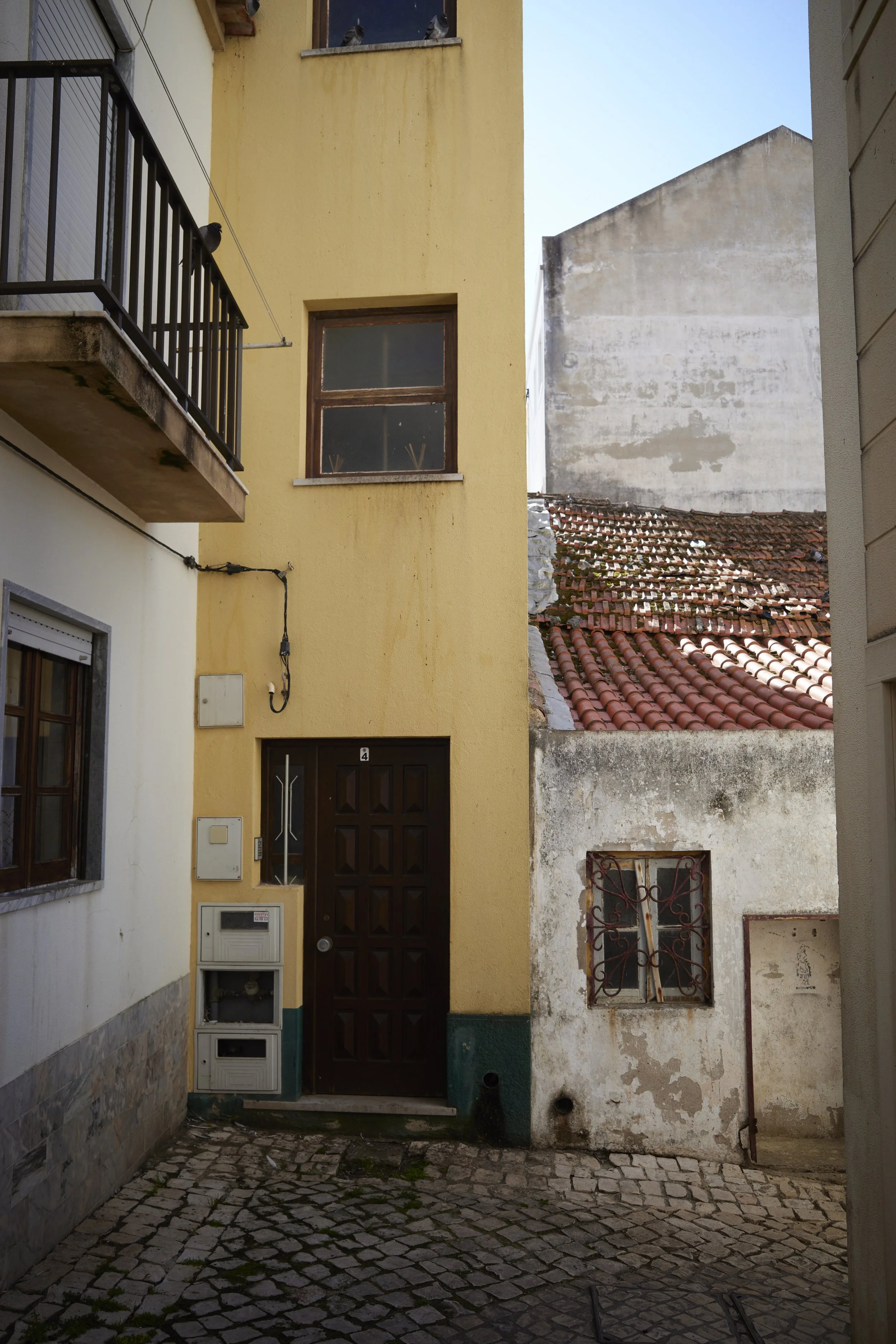
Lots of twists and turns in Nazare’s tiny lanes. Portugal, Ricoh GRiii ISO200 1/1000 f3.2
Laundry, or a Muppet looking out the window? Nazare, Portugal, Ricoh GRiii IS200 1/2500 f3.2
Have a seat and people-watch, Nazare, Portugal, Ricoh GRiii ISO200 1/250 f5.6
Hung out to dry, Nazare, Portugal, Ricoh GRiii ISO100 1/200 f5.6
Almost at Nazare Beach, Portugal, Ricoh GRiii ISO100 1/200 f5
The Nazare beachfront was busy! Portugal, Ricoh GRiii ISO200 1/125 f16
Guided by our stomachs as usual, we searched for a spot a bit back from the beach that was hopefully likely to serve more local fare than pure crowd pleasers. We stepped into a restaurant just before they were closed for their afternoon break and ate a huge fish, which they advertised as the local thing to do. It was tasty, and the ambience nice, if once again a bit more posh than we were aiming for. But hey, when in Nazare…
Fishing boats on display in Nazare, Portugal, Ricoh GRiii ISO400 1/200 f13
We stopped at a local playground to give our little buddy a chance to burn off some energy, then made our way back up, up, up to the car (burning off mum and dad’s energy) to then head over to the promontory to see the world famous surfing area that put Nazare on the map. It was early in the season yet for the truly big waves which begin forming around October and peak mid-winter, but they weren’t too shabby this day either. One can drive most of the way up the the hill and it was a bit easier finding parking up on the headland. From there you can walk to various viewpoints, often surrounded by kiosks selling tourist goodies and snacks.
The views of Nazare and the surrounding area are breathtaking. A visit up here isn’t complete without walking or taking a tuk-tuk-like tourist buggy down to the Forte de São Miguel Arcanjo, a fortress standing vigil over the sea and surfers. This is the structure often seen in the foreground of photos of the big-wave surfing competitions held here and there’s an exhibit within it displaying surfboards and famous names and faces of those that have come to conquer these mountains of water. It’s actually a longer and steeper walk than we anticipated, so if it’s a hot day getting a lift may well be worth it. Rumor has it the likes of Rip Curl and other big surfing brands have bases of operation in the area for R&D as their riders compete for glory tackling waves in excess of 24m in height.
Making our way to the Forte de São Miguel Arcanjo, famous viewpoint of the surf competitions, Nazare, Portugal, Ricoh GRiii ISO200 1/2500 f3.5
Lookin south from the promontory, Nazare, Portugal, Ricoh GRiii ISO250 1/200 f16
The waves are still decent this time of year, but nowhere near their peak. Nazare, Portugal, Ricoh GRiii ISO200 1/200 f16
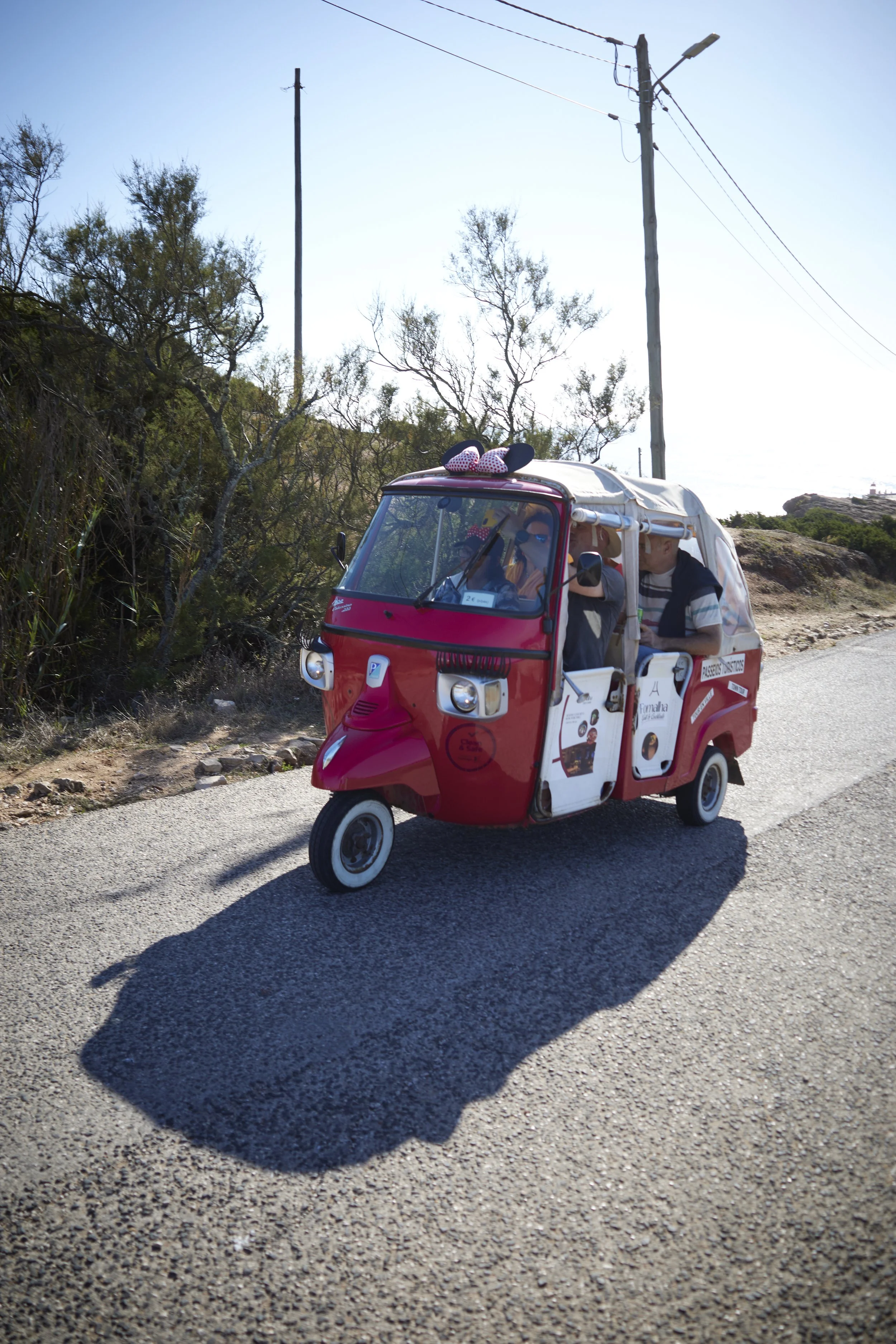
Probably worth the 2EUR for a ride in this heat! Nazare, Portugal, Ricoh GRiii ISO200 1/1250 f2.8
Colorful building up on the promontory in Nazare, Portugal, Ricoh GRiii ISO250 1/160 f8
After a brief pause for some gelato to beat the midday sun, we made our way back to our car, passing a few brightly colored buildings along the way. The propensity to liven a town up with color (rather uncommon at home) is one of the characterful features of places such as this that always brings a smile to my face and helps cement memories of how it felt to visit. Nazare was a fun detour and I’m sure it’s a pretty wild place to be when the surfing competitions roll into town. I’m sure we could have found plenty more to do here, but with the day growing late we thought it best to make our way back to Lisbon before dark to ease navigating our way to the apartment and getting settled in.
Playing with reflections in Nazare, Portugal, Ricoh GRiii ISO160 1/160 f4.5
Portugal - Comporta
It's a bit of a tricky beach. And what I mean by that is, on the first day one could wade out through the surf quite some distance before it got above thigh height. The waves were of a decent size and surf-board rentals and lessons are available here which certainly suits the character and conditions of the waters. On the second day, I tried the same wade into the ocean and got a bit of a surprise…

Family on the Praia do Carvalhal near Comporta, Portugal, Ricoh Griii
Back on the Road
Read Part II: Portugal - Cabanas do Lago →
With some helpful guidance from our hosts at the Cabanas do Lago, we depart in the morning and make our way back to the coastal road heading north. It’s a decent distance to Comporta (160km), so we planned to stop at a few scenic spots along the way for photos, food and some sight seeing. Once again the road was largely empty, and generally contoured in such a way to allow for a spirited pace. Coming back to this part of the world with a motorcycle or a sports car starts to enter my mind as a must-do some day.
First stop was for lunch at a seaside restaurant overlooking a rocky cove. We got a table immediately, but this proved to be a challenging meal as our little guy wasn’t into sitting still for too long. We took turns eating our seafood whilst the other chased him as he dashed through and out the restaurant and back, stopping at tables to see what folks were eating and have a chat. I remember the chasing more than the food, sadly, but at least it tired him out a bit for a nap in the car on the next stretch of the drive.

Beaches near Vila Nova do Milfontes, Portugal, Ricoh GRiii
Vila Nova de Milfontes
This town was the next recommended stop on our route, another seaside town, known for beaches, festivals and gelato. The unique feature here is a beach formed as part of an estuary at the mouth of the Mira river as it enters the Atlantic. With our restaurant runner asleep in the back, and a long road yet ahead we chose to stop briefly for some photos and a bit of excellent gelato from Mabi (the pistachio was phenomenal) but not linger too much before hitting the road again.

Beaches near Vila Nova de Milfontes, Portugal, Ricoh GRiii

Vila Nova do Milfontes, Portugal, Ricoh Griii

Surfer near Vila Nova do Milfontes, Portugal, Ricoh GRiii
As the day progressed we opted to shortcut our route a bit, hopping onto a main highway to cover some ground more quickly. Here again the road was relatively quiet and drivers quick and attentive – it felt more like Germany than I was expecting in this way, but given we were in the shoulder season perhaps there were fewer tourists on the road. Pulling off for our exit we found ourselves on a long, straight, tree-lined B-road that seemed to go on forever before finally arriving at our destination.
Comporta
Our stay was located in a small village in the vicinity of Comporta, though we find people generally refer to this entire area as Comporta. Adding to my list of Iberian Peninsula Google Map fails, we very nearly found ourselves driving through a farmers field, before figuring out that the address for our accommodation was somehow misaligned with Google’s reality, and by a factor of about 6km at that.
The B-Hostel was built with a clear vision of thoughtful design and detail, plenty of privacy as far as the rooms are concerned, and comfortable common areas that encourage interaction with fellow guests. Breakfast is included here and served up to your liking by friendly and helpful staff. The pool is a small pseudo-infinity setup, but given the main attraction is the beaches, it’s not likely to get a ton of use anyway. There’s a bistro next door and another restaurant in the vicinity, but for the most part you need to head further afield here to find food options.

Courtyard by the B Hostel in Comporta, Portugal, Ricoh GRiii

Little guy playing in the B Hostel in Comporta, Portugal, Ricoh GRiii

Courtyard by the B Hostel in Comporta, Portugal, Ricoh GRiii
Once a sleepy fishing a farming-focused collection of villages, this is now one of the hot, up-and-coming areas of the Portuguese coast. Rumors that Brad Pitt and Madonna, among others, have invested in properties here no-doubt fuel the attraction to visit and the fencing and dust of new resorts under construction were a common sight. The beach is breathtaking though, supporting the draw of tourists to the area. On approach you first cross an area of dunes and shrubs and once crested the full expanse of the Atlantic lays before you, with a fine sandy beach sloping steadily towards it. At Praia do Carvalhal your entry to the beach is also gated by a pair of seafood restaurants and a small kiosk serving up drinks for beachgoers.
It's a bit of a tricky beach. And what I mean by that is, on the first day one could wade out through the surf quite some distance before it got above thigh height. The waves were of a decent size and surf-board rentals and lessons are available here which certainly suits the character and conditions of the waters. On the second day, I tried the same wade into the ocean and got a bit of a surprise. Overnight the changing tides must have carved a deep trench just beyond where the ocean meets the beach, and I sank immediately to my shoulders before getting a tumble by an incoming wave. Oops. No kiddo going in here today. The sun was warm though, and we were happy to spend the day sitting and relaxing in the warmth whilst digging in the sand and finding shells. That said, I’d love to have a go at the waves here, and this could be a solid destination for a trip with some surfing buddies one day.

Praia do Carvalhal, Portugal, Ricoh GRiii
The sunset looked set to be a stunner, so we decided to have dinner at Restaurante Sal, one of the two restaurants on the beach. This clearly being a bit posher of a spot than most we’ve visited so far, we decided to zombie the little guy with some screen time so that we could enjoy the meal together without any wild chases. The cuttlefish on ink-colored rice was delightful and a surprisingly large portion. Once the sun dipped bellow the waves though the temperature dropped rapidly, so we didn’t linger too long, and it was bedtime anyway.


Praia do Carvalhal, Portugal, Ricoh GRiii
The village of Comporta itself was not far up the road from our accommodation, and we opted to visit it on one of our cloudier days here, with an option to pop over to another beach if it warmed up. Comporta appears to be the older/original town in the area, and while quaint with a smattering of shops and restaurants, there really isn’t much going on. The nearby beach is a mirror image of Praia Carvalhal though, and likely the draw here as well. We parked the car at the entrance to town, walked a lap or so popping into a few shops before stopping for lunch. The weather improved just as we finished our meal, and we decided to head back to Carvalhal to enjoy the afternoon sun on the sand and one more sunset here.

Be Comporta, Portugal, Ricoh GRiii
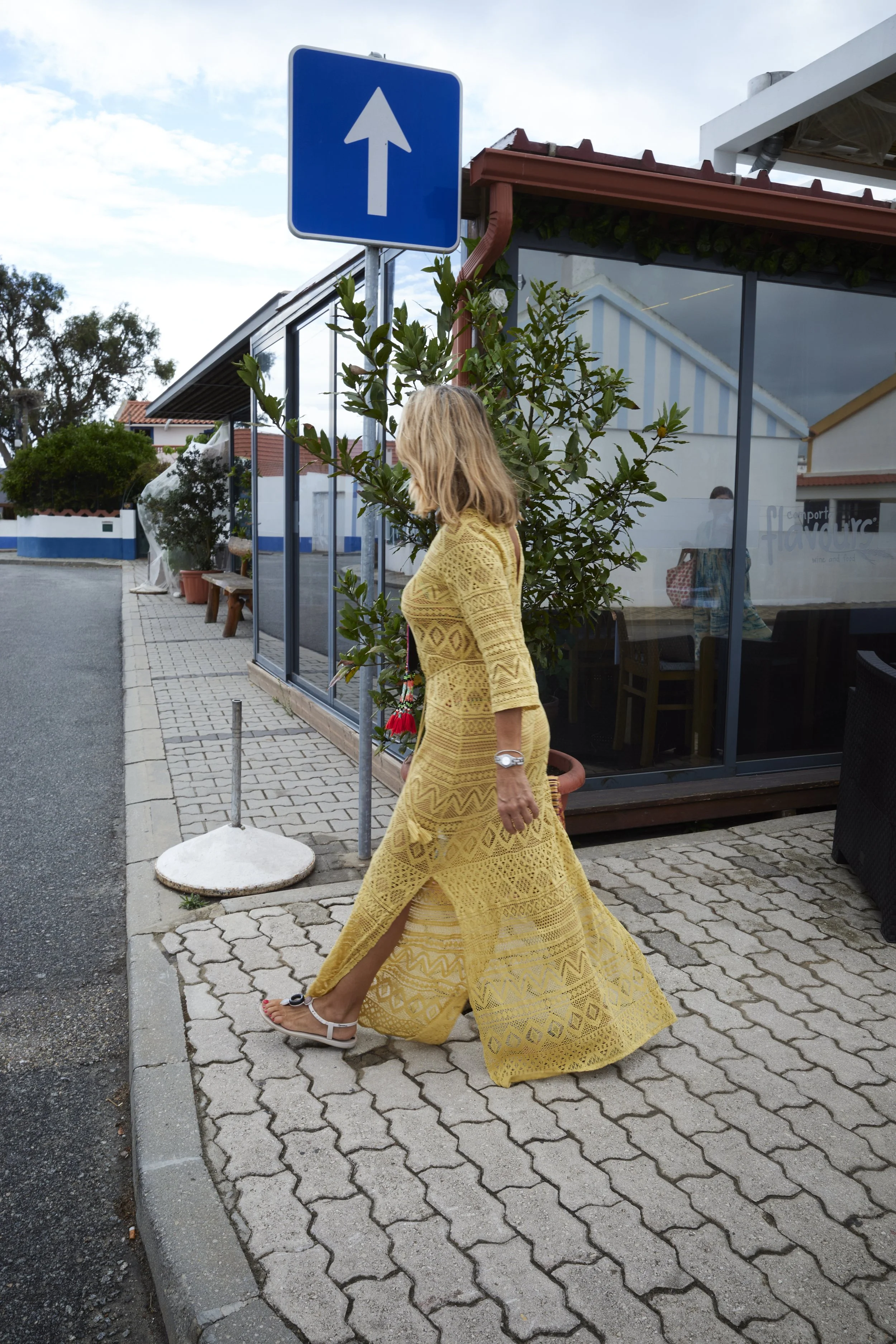
Woman crosses the road in Comporta, Portugal, Ricoh GRiii

Comporta, Portugal, Ricoh GRiii

Defender in Comporta, Portugal, Ricoh GRiii
The Comporta area will evolve rapidly as investment and development increase, chasing/fueling the rising popularity of this as a vacation destination of it’s own. I enjoyed it in this quiet and peaceful state, but think a thoughtful approach to investment in accommodation, restaurants and activities can make this a world-class destination. It’s reasonable proximity to Lisbon (just 120km) makes it that much more attractive. Speaking of, Lisbon was the next and final stay for this trip, but not without a bit of a detour to see the home of the largest waves in the world. To be continued!

On the Beach, Comporta, Portugal, Ricoh GRiii
Portugal - Cabanas do Lago
As we approach the area the dam becomes visible towering over a small valley. The road soon changes from paved to dirt, but nothing most cars can’t handle. We snake along it’s winding path and turn off onto a steep sided valley that surrounds one of the hundreds of coves around the perimeter of the lake. At the end of the road we see the large main house appear through the trees and are immediately greeted by one of the smiling hosts, Filipa, as we arrive.
Albufeira da Barragem de Santa Clara, Portugal, Ricoh GRiii ISO100 1/100 f11
Change of Pace
Read Part I: Portugal - Lagos →
Back home, it’s quite common for us to book a few weekend getaways out of the city in a quiet cabin by a lake or the ocean and just relax in peace enjoying the views and explore the surrounding nature. We’re not typically doing quite the same abroad, and yet somehow this location called to us, and I’m glad it did. A bit of tourist overload in Lagos drive us to seek out our next stay a little off the beaten path. When we found the Cabanas do Lago on airbnb it immediately stood out with its 4.99 star rating and promise of simple and quiet serenity. It happened to have a pocket of availability for a few nights so we booked it as the next stop on our trip.
We had plenty of time to get there ahead of check-in, so decided to take a scenic route up along the west coast then cut back inland towards our destination. We knew we’d pass through some small towns along the way, so figured it easy enough to sort out lunch on the road, and perhaps stop at any destinations that caught our eye while we were at it. The hope was that our son would at some point nap in the car, leaving us an afternoon to settle-in to the cabin before having dinner. If you enjoy driving/riding, the roads in this area are sublime. We avoided the major highways and A roads and stuck to the windy roads that weave their way through the rolling hills. The roads are largely empty, generally cambered in your favour, and a delight of corners and short straights connecting them. A short squeeze on my arm reminded me that our econo-box Citroen was probably not at it’s best at my preferred pace, but even at a decent canter it kept the drive interesting. So would Google Maps, it turns out, as once again relying on it in this corner of Europe was not without it’s problems -read on and see why!
Approaching Praia da Amoreira (sort of), Portugal, Ricoh GRiii ISO160 1/200 f16
Praia da Amoreira
The weather was lovely on this travel day, so we decided to make a bit of a detour to stop at a beach to enjoy our first peek at Portugal’s west coast. It differs significantly from the south-facing Algarve, with broad white sand beaches, rather than the more secluded cliff-lined coves. It also faces the full brunt of the Atlantic ocean with larger waves and steady breezes. Amoreira sits where the mouth of a river meets the Ocean and we’d read that it was among the more beautiful beaches to visit in the area and was also flanked by a restaurant. Our map showed the beach as roughly 9km off our main route of travel, so not a big deal. We faithfully made our way along the revised route until we came to stop by a cliffside restaurant overlooking a beach. Our beach. Uh oh. Wrong side of the river.
While the route certainly took us to a place we could view the beach, there was no way to safely reach it from this spot, with a cliff and river between us and our beach destination. I checked my inputs into Google Maps and indeed the app thought we could access the beach from here, but no such luck. I would take 18km of driving to bring us to the beach just a couple hundred meters away. Fortunately, this little detour passed some stunning views, and with the little guy asleep in his car seat ahead of schedule, we decided to stop at a few spots on our way back to take a few photos where we wouldn’t otherwise be comfortable with him running about.
Aren’t we supposed to be over there? Lagos, Portugal, Ricoh GRiii ISO320 1/200 f16
Looking down upon Praia de Monte Clergio, Portugal, Ricoh GRiii ISO125 1/200 f16
Praia de Monte Clergio, Portugal, Ricoh GRiii ISO250 1/200 f16
Praia de Monte Clergio, Portugal, Ricoh GRiii ISO160 1/200 f16
Praia de Monte Clergio, Portugal, Ricoh GRiii ISO200 1/2500 f3.5
Eventually we made our way to the beach we intended to visit, and just in time for the weather to start to turn. We spent a scant few minutes on the beach before the clouds rolled in and the temperature dropped. Oh well, time for lunch anyway and time to get back on the road. As the detour set our schedule back a bit, we decided to skip the beachside restaurant in favour of picking something up at a shop or bakery along out main route.
Rocky formation on Praia da Amoreira, Portugal, Ricoh GRiii ISO400 1/100 f16
Praia da Amoreira, Portugal, Ricoh GRiii ISO125 1/200 f8.
Waiting while Vicky finds us some food, somewhere in southern Portugal, Ricoh GRiii ISO100 1/1250 f4
Cabanas do Lago
The Albufeira da Barragem de Santa Clara is an enormous man-made reservoir supported by a concrete dam at it’s west end. As we approach the area the dam becomes visible towering over a small valley. The road soon changes from paved to dirt, but nothing most cars can’t handle. We snake along it’s winding path and turn off onto a steep sided valley that surrounds one of the hundreds of coves around the perimeter of the lake. At the end of the road we see the large main house appear through the trees and are immediately greeted by one of the smiling hosts, Filipa, as we arrive.
The Cabanas do Lago property consists of a two storey main house and a pair of smaller cabins, all nestled into the side of a steeply sloped terraced hillside. The ground floor of the main house is communal and contains the kitchen and a living/dining area as well as a patio dining area with a view towards the lake. The family that owns and operates the property lives on the second floor. Our cabin was just the right size for the two of us essentially two rooms; a large bedroom, and a bathroom with shower. Glass doors making up the west wall give us a view onto the valley from our bed and ensures it’s nice and bright inside. (Cabin Photo Credit: Victoria Petriw on the XPro2)
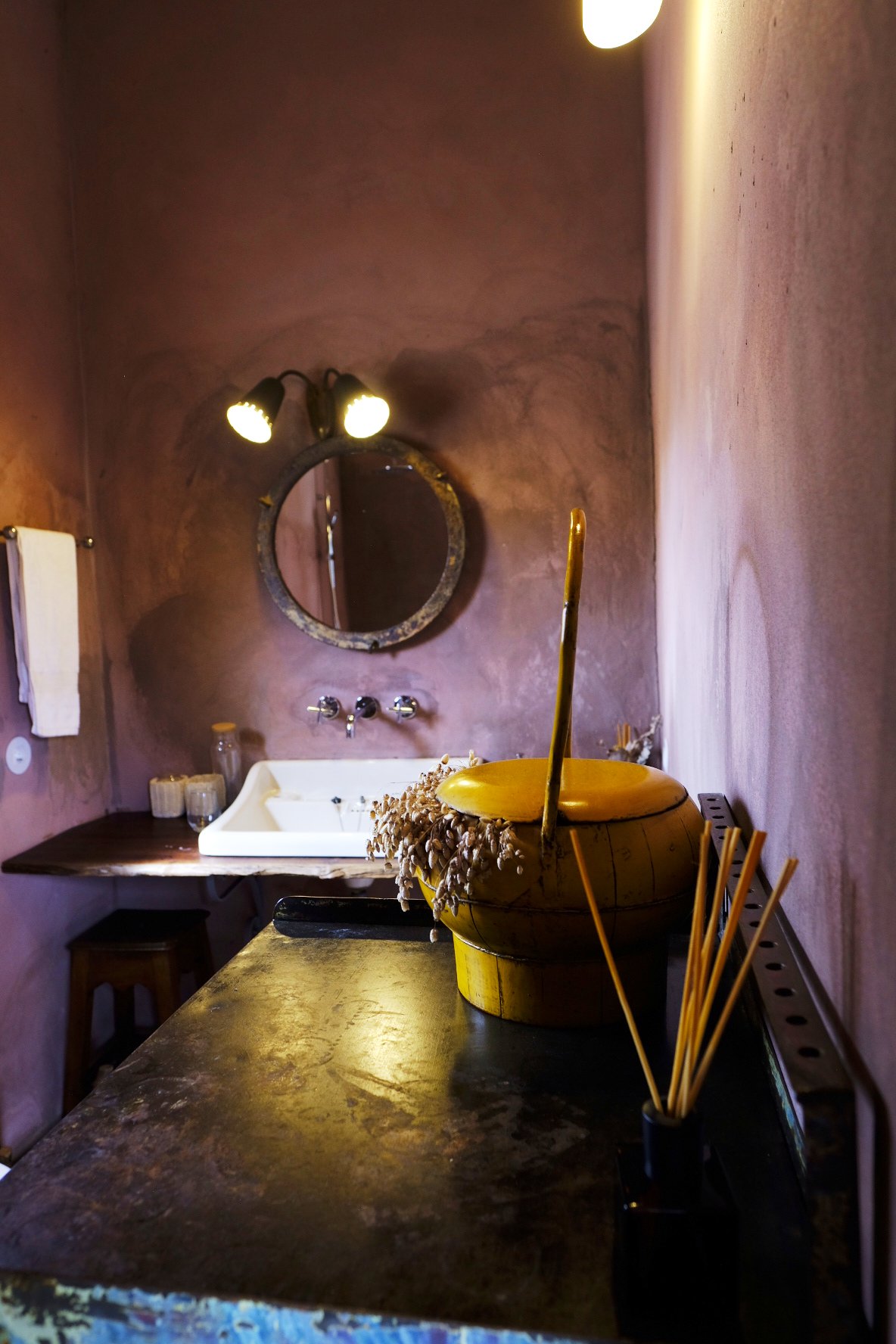
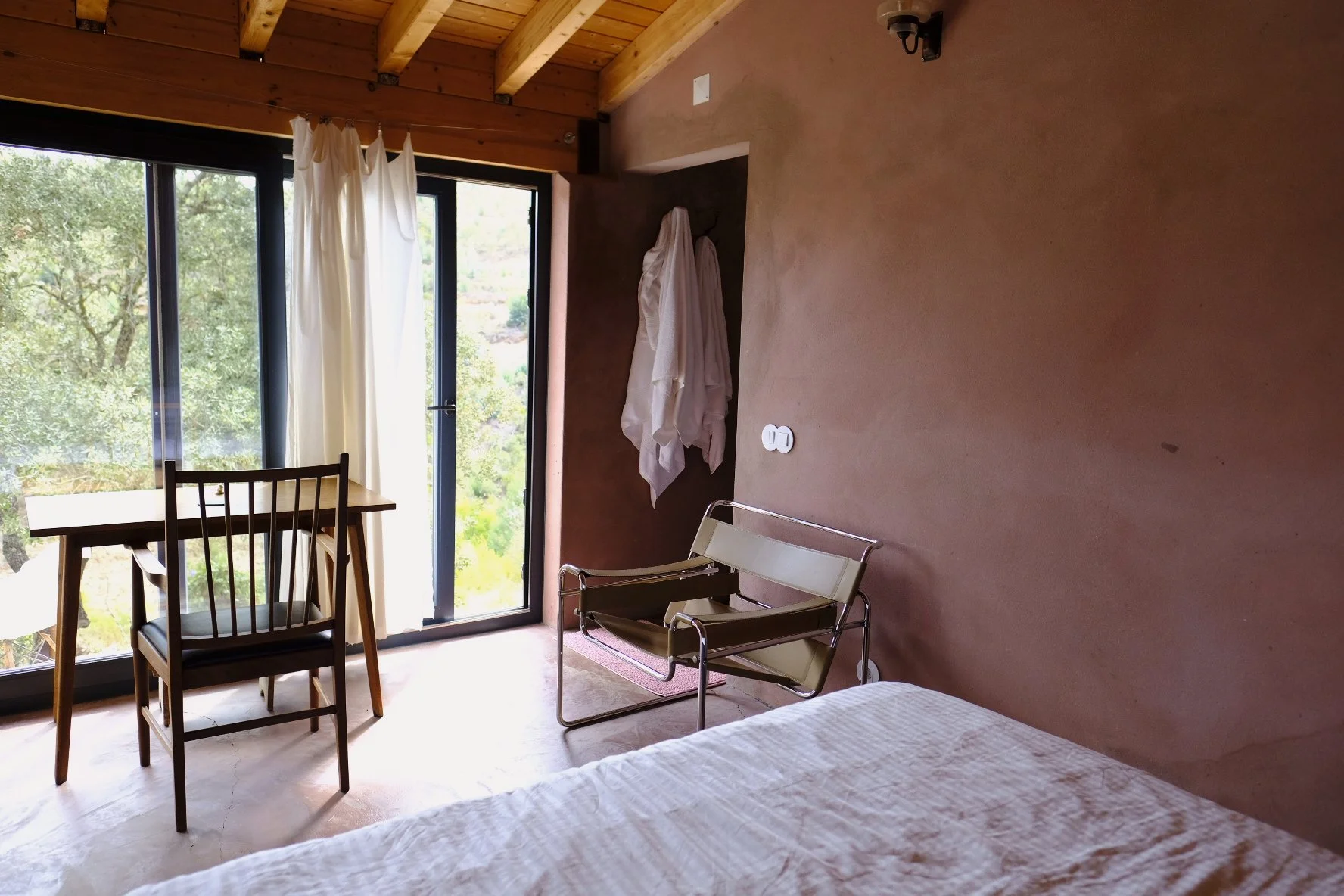
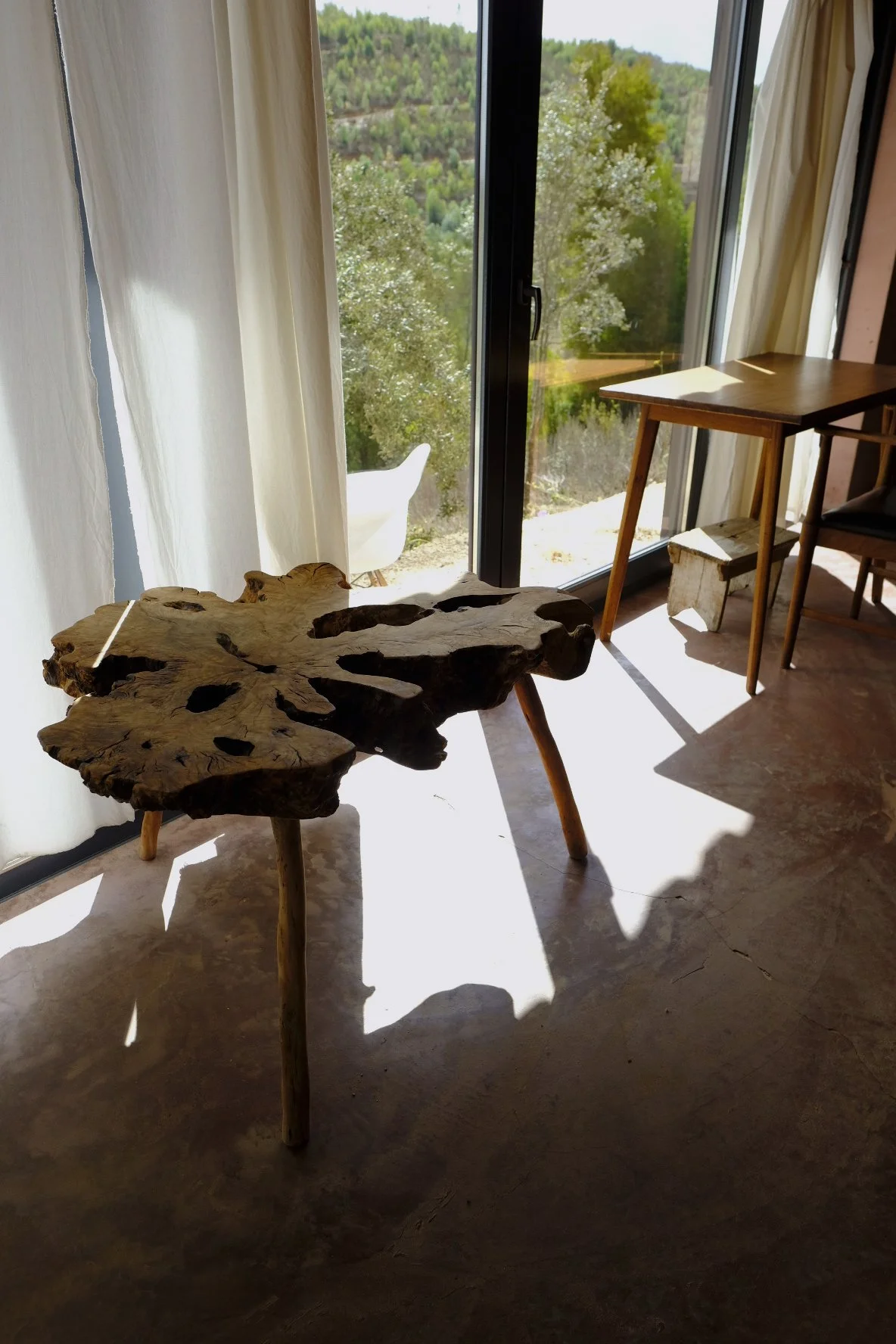
Within minutes of arriving Filipa and her husband Luis make you feel at home and like friends of the family. The wine and beer flows and Filipa prepares an amazing meal for us to all share together on the first night. This would very much be the theme of this stay, particularly in the evenings with us hanging out with Filipa and Luis into the late hours of the night, learning about life in Portugal and how they decided to relocate their family here from busy Lisbon a few years prior. As you might suspect, other guests we met here tended to be fairly like-minded travellers as well, and we enjoyed hearing each others stories and plans for what’s next. Most days and nights we cooked meals for ourselves in the communal kitchen area and enjoyed the relaxing surroundings, but did also make one excursion out for dinner to Casa Nirvana, about half an hour’s drive away, for a change of pace. Speaking of food, the little hamlet of Santa Clara a Velha sits near enough for quick grocery runs if needed and has a couple of restaurants as well.
A nice view with breakfast, Cabanas do Lago, Samsung S20FE, ISO40 1/1600 f1.8
Looking towards the main house from the garden, Cabanas do Lago, Ricoh GRiii ISO 400 1/8 f5
View from the main house patio, note the water line, Cabanas do Lago, Ricoh GRiii ISO250 1/100 f11
Like staying at a friends’ house, Cabanas do Lago, Portugal, Ricoh GRiii ISO4000 1/25 f2.8
The approach to the main house, Cabanas do Lago, Portugal, iPhone XR ISO25 1/400 f1.8 (Credit: Vicky Petriw)
Activities in the area are naturally lake-centric and I was a bit hesitant to take the camera out most days for fear of dropping it in the water. An excursion on a canoe allowed us to visit the dam and enjoy a designated swimming area near it’s base, as well as a lovely food truck (bus) parked next to it with a rooftop patio of it’s own. It was at a point about 4 meters from shore, however; that we realized our son does not like canoes and was instead seemingly prepared to jump out of it at the first moment of inattention from one of us. “He’ll get used to it” was followed by 90 minutes or so of yelling and crying. Luckily, stuffing him full of empanadas helped, and the trip back was more relaxed.
There was an interesting tower near the dam, standing starkly with it’s brutalist design against the more organic landscape. It sat high and dry as a forgotten sentinel of a time when the lake was full to the brim. Remarkable to see it has a scale for water depth painted on the side, the bottom of which is many meters above the waterline. Another favorite activity for me was getting out on a paddle-board a bit before sunset and just exploring across the lake at random. Our hosts provide a variety of options for getting on the water and you’ll definitely want to give them a try. Stargazers also take note, it’s properly dark here in the evenings, setting the stage for beautiful night skies. The highlight for our son, (definitely not the canoe), was trying to track down the loudly croaking frogs that occasionally hopped around the property in the evening.
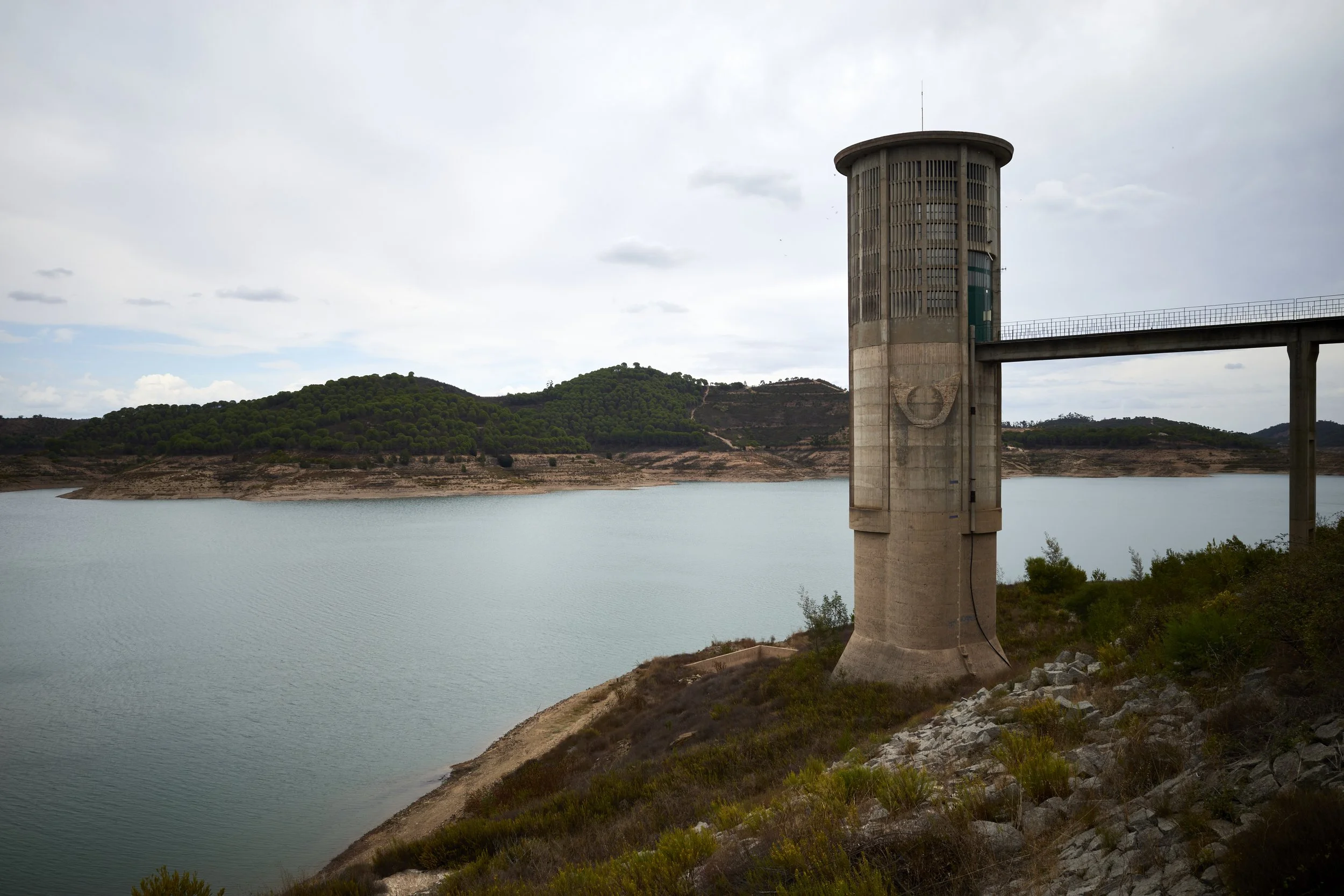
Tower on the Albufeira de Barragem da Santa Clara, Portugal, Ricoh GRiii
Back to Beaches
I definitely recommend this spot for those looking for a peaceful little detour and opportunity to meet and connect with some amazing people on your next visit to Portugal. Our hosts graciously shared an abundance of recommendations for the remainder of our journey, offering a multitude of dining options to explore, landmarks to see en route to Comporta, our upcoming stop, and activities to engage in within Lisbon and its vicinity during the later part of our travels. Our time at the lake ended all too quickly, but by the end we felt refreshed and ready for more exploration ahead.
Nice place for a sit, Cabanas do Lago, Portugal. Ricoh GRiii,
Portugal - Lagos
The Algarve seemed the logical choice for starting our trip to Portugal. It was well recommended by friends, and since we were arriving in early September, the timing gave us the best chance of experiencing some beach-worthy weather to kick off the relaxation.
The Algarve, Lagos, Portugal, Ricoh GRiii ISO 200 1/125 f16
Change
Setting off on our Portuguese adventure, we knew things would be a touch different this time around. Everyone raved about Portugal being family-friendly, charming, and warm – just what we needed with our little whirlwind in tow. With our child now a toddler, we knew this wouldn’t be as easy as the last the last trip, but were up for the challenge all the same. As per our usual modus operandi, we booked this trip last minute, just a couple of weeks before takeoff, leaving a few nights open for those spontaneous "let's figure it out as we go" moments. Some things never change, even with a two-year-old sidekick.
One thing that did change, by design, was my camera game. This Portugal series will mark a shift on the Yarko On The Go blog – my first trip captured primarily digitally. Say hello to the Ricoh GRiii, the latest addition to the Ricoh GR family of “point & shoot” cameras celebrated by photographers like Daido Moriyama. It's compact, practically weightless, and boasts a 24MP APS-C sensor in a magnesium body that's so small, you need to hold it to believe it. Paired with a crisp 28mm lens, it seemed like the perfect choice for on-the-go parents. I'll spill the beans on this little beast (the camera, not the kid) in a dedicated post after the Portugal series – and whether I think it was the right decision.
Ricoh GRiii with Peak Design Cuff Strap
Why the change? Well, for starters, I wanted more family photos both as we explored new places and in general at home, and doing that with a manual film camera in this day and age is an impractical and expensive proposition. I wanted more “keepers”, and I wanted to know I had them. Sure, I packed the Olympus XA with a few rolls of film out of habit (and I love that camera), but I didn't want to end up with a sore back from lugging around cameras and lenses when I already had a toddler and all the kid gear weighing me down. The goal is to return with memories, not back pain, right? Let’s see what happens.
Stroller & Shoot, Lagos, Portugal, Ricoh GRiii ISO 160 1/250 f8
Lagos
The Algarve seemed the logical choice for starting our trip to Portugal. It was well recommended by friends, and since we were arriving in early September, the timing gave us the best chance of experiencing some beach-worthy weather to kick off the relaxation. We flew into Faro, picked up our rental car and made the roughly 1 hour drive to Lagos. Once in Lagos, you’re reminded that driving in older European towns can take a bit of getting used to for those of us from North America. In the Lagos Old Town, where our accommodation was located, roads were narrow, with sharp blind turns, one way streets, and buildings just tall enough to throw off our phone’s GPS. It took two loops of Old Town (predominantly one way streets) to realize I’d have to stop on a sidewalk a few blocks over from the apartment and walk our things over, before finding parking elsewhere. Once I got used to the layout of the town, navigating it became a non-issue, and ultimately we were comfortable exploring the surrounding area both on foot and by car.
Our rental Citroen. Not exciting to drive, but just big enough to fit all our stuff, and still fit the roads! Ricoh GRiii ISO200 1/2000 f4.
In Lagos we stayed at the Salty Lodge, which is an apartment hotel located in the heart of the Old Town. We chose one of the smaller apartments and found the accommodations quaint and well appointed with a little kitchenette if you feel like cooking-in. It’s ideally located as a jumping off point to wander the town or surrounding beaches. It’s also in a relatively quiet corridor of the city, whereas many alternatives closer to the bars are likely rather noisy well into the night. There is a rooftop patio with panoramic views, and the staff are friendly, knowledgeable about the area and helpful. Toughest challenge here (and likely with most accommodations in the Old Town) is parking. There’s really no parking within the city walls, and the most reliable spot I found was about 700m & a 10 min walk away. Not a big deal normally, but on cobbled streets it can be a chore to roll your bags (or stroller) this distance. Of course the full onload/load only happened on arrival and departure, so ultimately it was manageable.
Looking east from the roof of the Salty Lodge, the canal and Duna Beach in the background. Lagos, Portugal, Ricoh GRiii ISO640 1/30 f4
View southward from the Salty Lodge roof. Lagos, Portugal, Ricoh GRiii ISO640 1/20 f5.6
Balcony/patio view (courtyard) from the Salty Lodge, Lagos, Portugal, Ricoh GRiii ISO400 1/400 f8
Roaming Lagos
Most of our exploration of Lagos was in the vicinity of the old town and adjacent canal promenade. It’s a characterful place, and while it has it’s share of venues catering to those who want the taste and sound of the familiar everywhere they go (read: Pubs, Thai massages, souvenir shops), there are more distinctly local options here as well which the staff at our accommodation were happy to tell us about. The old town is easy to walk with very few viable routes for cars, but pushing a stroller can be challenging on some lanes where the mosaic streets are rough. Despite being here in the early shoulder season (September), the town center was bustling with tourists and generally quite busy, but you could find quiet nooks if you ventured off the beaten path.
Making my way to the Salty Lodge, Lagos, Portugal, Ricoh GRiii ISO 100 1/200 f8
Plaza near the Salty Lodge, Lagos, Portugal, Ricoh GRiii ISO200 1/200 f4
Casa Mae, tempting place to stay next time. Lagos, Portugal, Ricoh GRiii ISO160 1/200 f8
Preparing for the lunch crowd, Lagos, Portugal, Ricoh GRiii ISO400 1/250 f8
Renault 4’s seem popular in Portugal, Lagos, Portugal. Ricoh GRiii ISO100 1/200 f8
Wandering around Lagos, Portugal, Ricoh GRiii ISO125 1/250 f8
Wall Hats, Lagos, Portugal, Ricoh GRiii ISO200 1/250 f8
A few places stood out as memorable for dinning in Lagos. The first, Abigail’s Cafe, is an absolutely delightful stop for breakfast and easily my favorite spot in town. The food is delicious -try the pancakes and thank me later- the atmosphere is relaxed and it’s a beautifully designed space inside as well as a quiet and quaint lane to enjoy if dining outside.
Studying the menu at Abigail’s. Lagos, Portugal, Ricoh GRiii ISO1600 1/400 f11
Another other favorite spot was Nah Nah Bah, a funky casual burger joint in the Old Town. It’s a popular spot, so you may find yourself waiting on the stoop for a little while if you haven’t made reservations. I seem to recall them making a claim to having one of the top rated burgers in the world, and as a self-professed burger aficionado, I had to confirm the assessment. (Confirmed)
Nah Nah Bah Burger Restaurant, Lagos, Portugal, Ricoh GRiii ISO4000 1/4 f11
Finally, The Green Room proved a lively and tasty option if you’re craving a bit of South American food, particularly Mexican. Hot Enchiladas and a cold Sagres? Yes, I’ll have another please.
Up way past bed time at The Green Room. Lagos, Portugal, Ricoh GRiii ISO3200 1/40 f2.8
Beaches - Praia da Luz
The first day or two in Lagos were a bit chilly for dedicated beach time, but eventually the warmth came and we took full advantage. Gauging the movements of the clouds from our rooftop patio, we decided to chase the sun and head west out of town a bit to Praia da Luz for our first beach day. It’s a quick and easy drive from Lagos, and relatively easy to find parking just before the main promenade through the village. We were greeted by a broad sandy beach with plenty of room to find a space to ourselves. Sunbeds are available for hire as usual, but it wasn’t quite hot enough to warrant it, so we grabbed some sand near the sea and setup our towels for a few hours of relaxing.
The waves here were fairly strong, and the water quite cool, so swimming was relatively brief but refreshing. Too rough though, for the little guy, who had to settle for getting his feet wet whenever a big wave washed further up the sandy shore. It was good for a giggle, as was digging a moat bellow our towels to defend against rogue waves. This proved useful as the tide was coming in and at least one wave surprised us and many other beach goers by making it’s way some distance and almost up to our feet. I’m not sure if the surf is always like this here, but worth checking if you’re planning on visiting for a swim.
Praia da Luz, Portugal, Ricoh GRiii ISO200 1/125 f8
Praia da Luz, Portugal, Ricoh GRiii ISO200 1/250 f8
Step this way senhor, Praia da Luz, Portugal, Ricoh GRiii ISO640 1/320 f11

Sunbeds on Praia da Luz, Portugal, Ricoh GRiii ISO320 1/320 f8
Going his own way, Praia da Luz, Portugal, Ricoh GRiii ISO320 1/800 f7.1
There’s a scenic promenade that parallels the eastern edge of the beach which we decided to explore once we’d had our fill of the sand for the morning. One side opens to the beach while the other is lined with shops, cafes and tapas bars with seating perfectly setup for enjoying the view as well as people-watching along the path.
Walking along the Praia da Luz promenade, Praia da Luz, Portugal, Ricoh GRiii ISO250 1/250 f8
Her patience wearing thin, Praia da Luz, Portugal, Ricoh GRiii ISO200 1/250 f8
Intricate tile-work pervades the entire country. Praia da Luz, Portugal, Ricoh GRiii ISO320 1/250 f8
Beaches - Praia Dona Ana, Camilo, & Ponta Piedade
If you draw a line due south from Lagos Old Town it’ll cross most of the more famous beaches in the area, terminating at Ponta de Piedade. The distances aren’t too great to walk, and indeed we did walk to a few of them from our apartment, but for the further points we drove just to make it easier on the little guy. This area is elevated a few hundred feet above the sea, so inevitably making your way to the beach will involve some stairs and in some cases a lot of very steep stairs. Not a deal breaker, but with a toddler on your arm you are going to get a workout!
These beaches all face east and are generally sheltered bays and coves meaning much calmer seas for swimming. The tall cliffs dramatically backstopping the beaches do however mean that you’ll loose the sunshine earlier in the afternoon than say at Praia da Luz or Praia do Porto Mos, so visit them in the morning if you can to maximise the sun. The rocky outcroppings and striated stone formations are the hallmark of the area and change character throughout the day as the sun moves across the sky. Some of the beaches connect to other coves and hidden spots by way of tunnels through the cliffs, so be sure to scout around a bit to find your ideal spot. The sand is soft and warm, but there seemed to be quite a bit of seaweed on some of the beaches which significantly limited useable area and access to the sea in some cases. I’m not sure if this is a seasonal phenomenon or more of a regular occurrence. Also of note, there are surprisingly few restaurants or kiosks in this area, and those that we found were typically lined up, so pack your snacks and drinks!
Praia do Camilo, Lagos, Portugal, Ricoh GRiii ISO100 1/2500 f2.8
Abundant seaweed on Praia Dona Ana, Lagos, Portugal, Ricoh GRiii ISO320 1/320 f8
Praia Dona Ana, Lagos, Portugal, Ricoh GRiii ISO640 1/200 f11
Views of the Algarve, Lagos, Portugal, Ricoh GRiii,
View northwest from the Ponte Piedade trail, Lagos, Portugal, Ricoh GRiii ISO100 1/400 f8
Ponte Piedade trail, Lagos, Portugal, Ricoh GRiii ISO125 1/125 f8
At the southernmost point, Ponte Piedade is less about beaches (there are some but the routes to them seemed a touch perilous) and more about views and light hiking for more views. No doubt a great spot to visit at dawn or dusk and enjoy capturing the light playing on the cliffs and beaches east and west of you. There are also kayaking tours that let you get to hidden beaches in the area as well as under natural stone arches and into tucked-away bays and coves.
Wooden walkway at Ponte Piedade, Lagos, Portugal, Ricoh GRiii ISO100 1/1000 f4.5
Natural arch near Ponte Piedade, Lagos, Portugal, Ricoh GRiii ISO320 1/125 f16
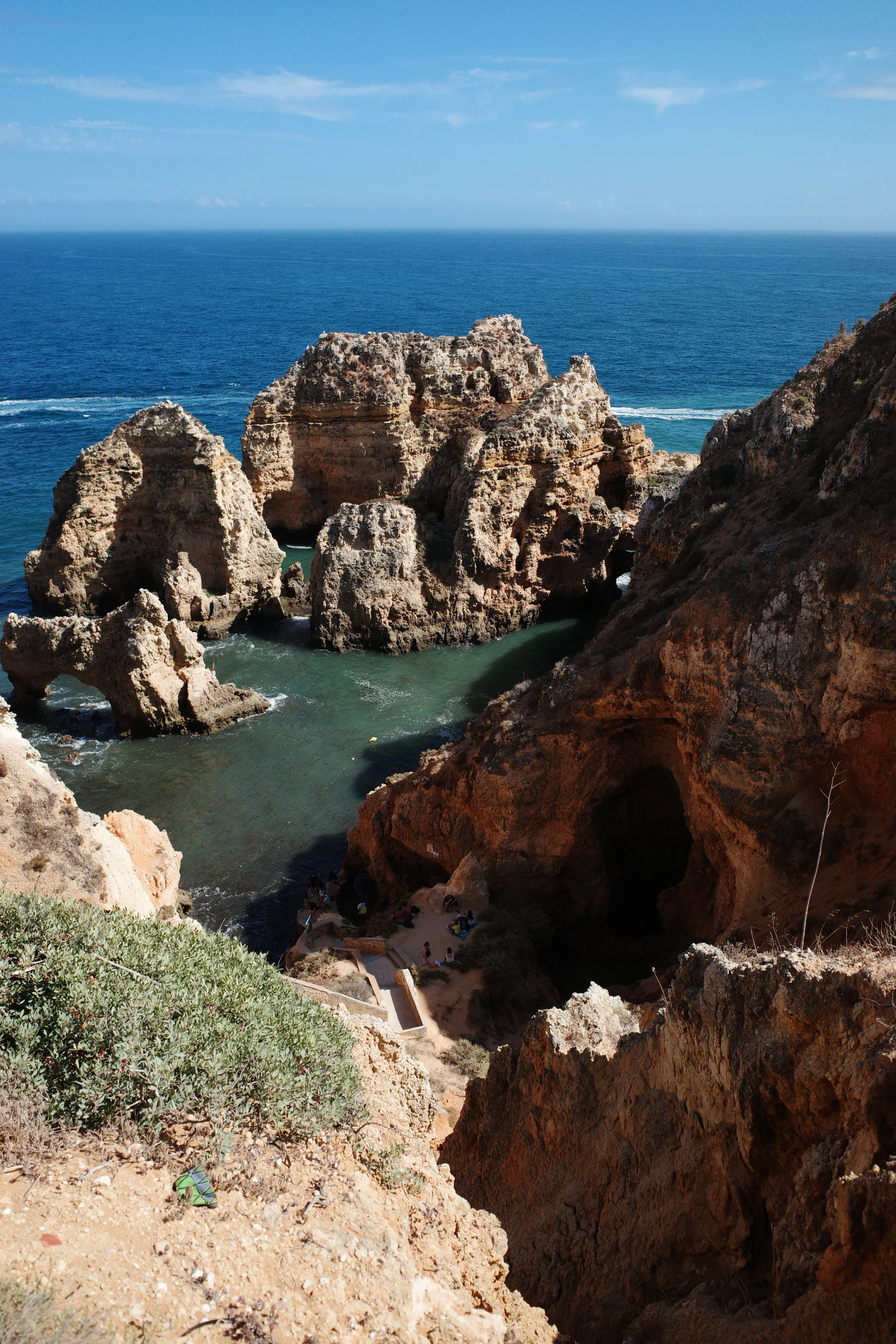
Near Ponte Piedade, Lagos, Portugal, Ricoh GRiii ISO200 1/1600 f3.2
Praia Canavial and Praia de Porto Mos in the distance. Lagos, Portugal, Ricoh GRiii ISO200 1/125 f16

It was a hot day. Lagos, Portugal, Ricoh GRiii ISO100 1/400 f8
The Ricoh - A Quick Note on Color
You’ve no doubt noticed in this post that there are some notable differences in saturation, white balance and color temperature between some photos. While the slightly variable weather had a hand in some, chalk it up to my learning curve working with the Ricoh GRiii and getting used to digital cameras in general once again. Prior to the trip I’d learned about “Ricoh Recipes”, an app that allows you to pre-program and save to user customizable settings various alterations to image parameters, not unlike the film simulations on Fuji cameras and others. What I didn’t realize at the time was that doing so actually permanently impacted the RAW files. Oops. I don’t mind the results, but in the future I’d much prefer to apply such changes of character (if I felt like it) in post processing. Lesson learned, get to know your gear! Now back to our regular programming.
Sailboat passing through the canal. Lagos, Portugal. Ricoh GRiii, ISO250, 1/250, f8.
Where to next?
We didn’t have anything booked for the 4-5 days between the Algarve and our stays further north, and so we spent a few evenings while in Lagos looking online for our next destination. We debated finding another seaside town versus something a little different, quieter and off the beaten path. The latter won, owing to a general desire for a change of pace after a fairly busy and tourist-heavy stay in Lagos. We booked an AirBnB with stellar reviews much further inland on Albufeira da Barragem Santa Clara, a man-made lake (Europe’s largest at the time it was created) in the rolling hills a couple of hours north of Lagos. We planned a route that took us to the western coast, with a few scenic stops along the way (and likely enough time for our son to nap), before cutting back eastward to arrive in the early afternoon at our next destination. Stay tuned for the next post on living with the locals in rural Portugal!
A relaxed Palm Springs getaway featuring mid-century architecture, great restaurants, boutique hotels, pool days, and desert sunshine.