
Blog
From cobblestoned Portuguese alleys navigated one-handed with a stroller to reef dives in Fiji, this is where the trips live. Told through words and whatever camera happened to be with me.
I shoot film and digital and travel with family in tow. These posts are part travel journal, part photography log, and part love letter to the places that made an impression. I hope they make you want to go see them for yourself.
Latest Articles




Little Viwa
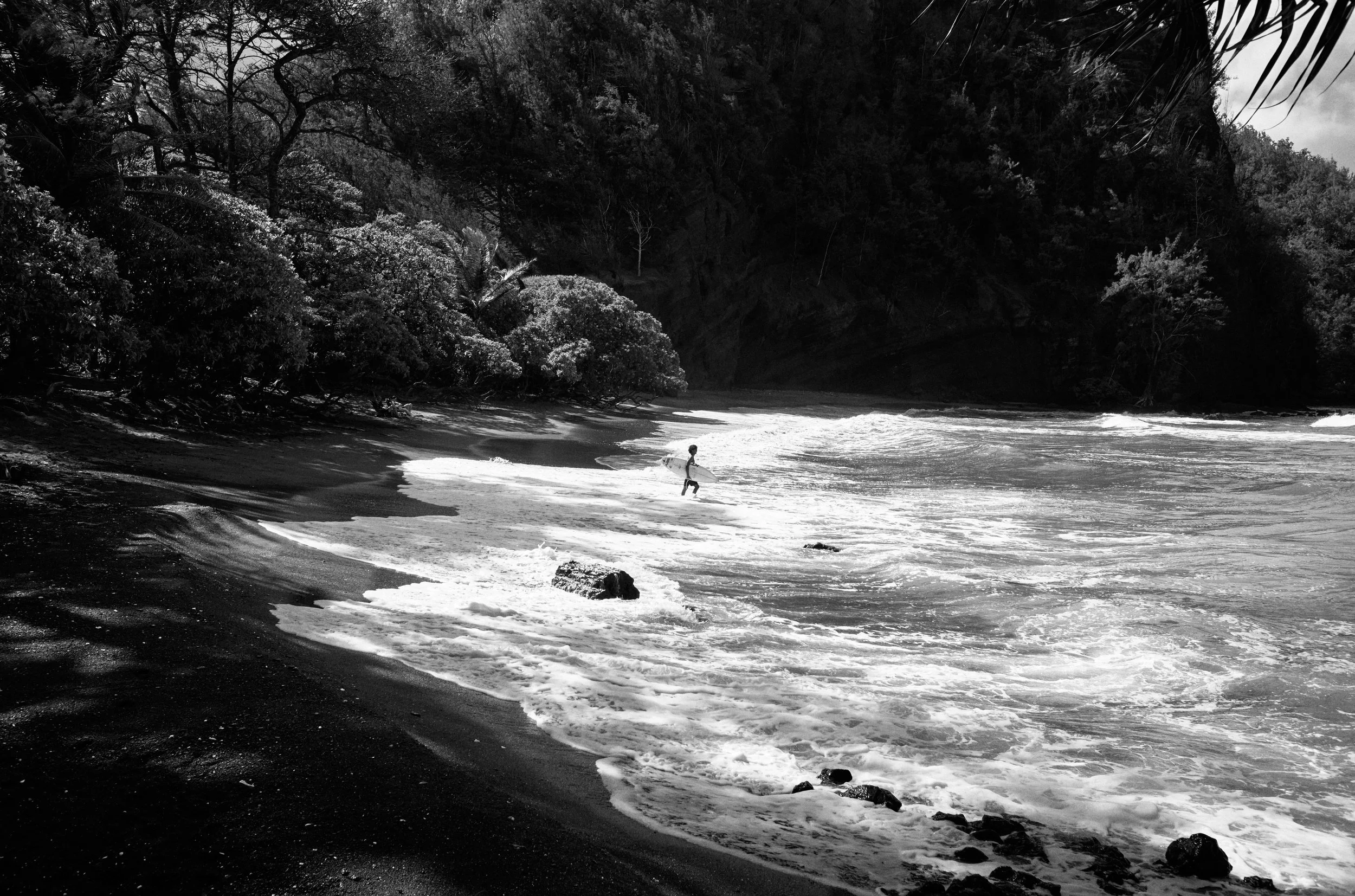
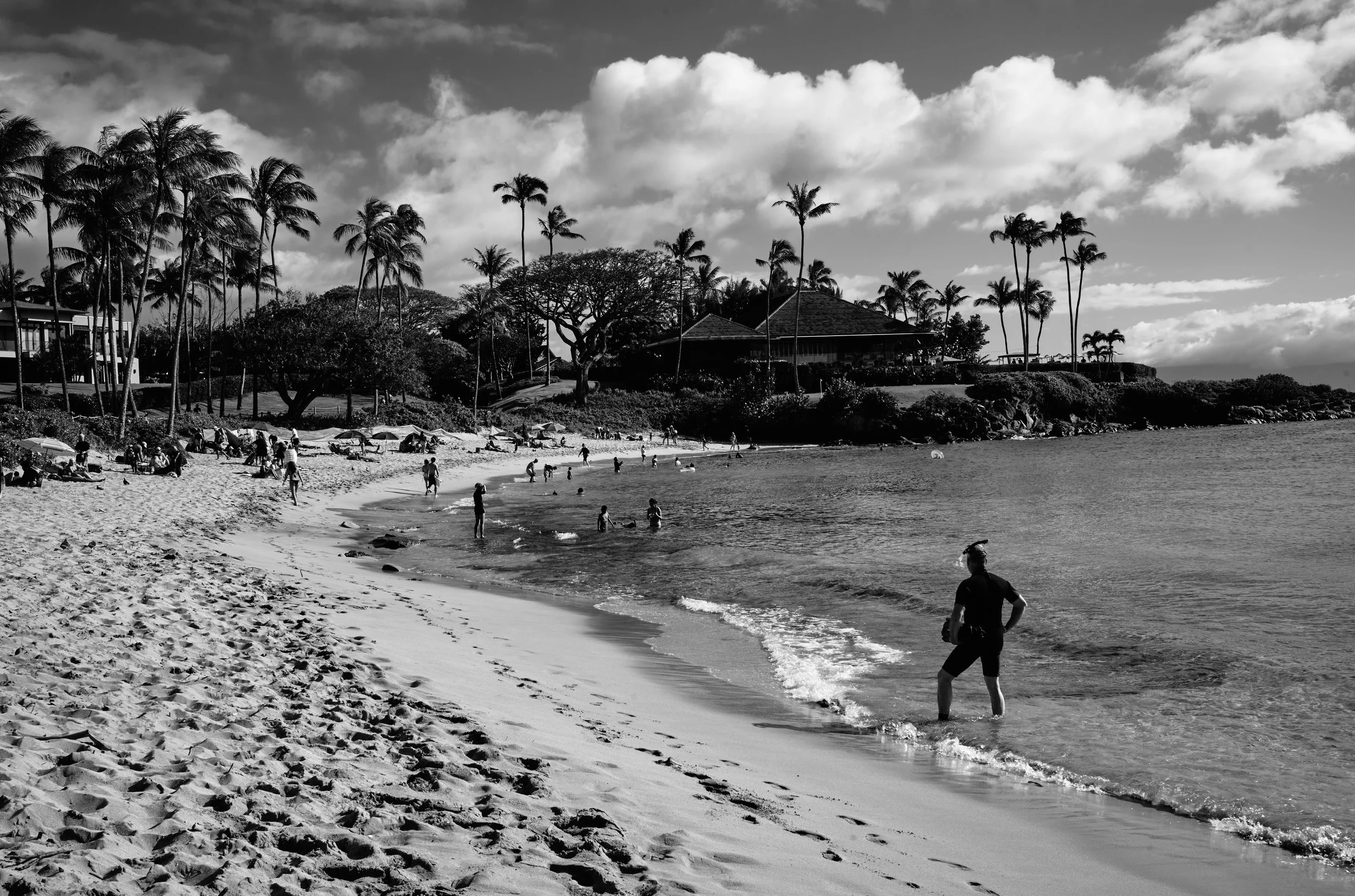
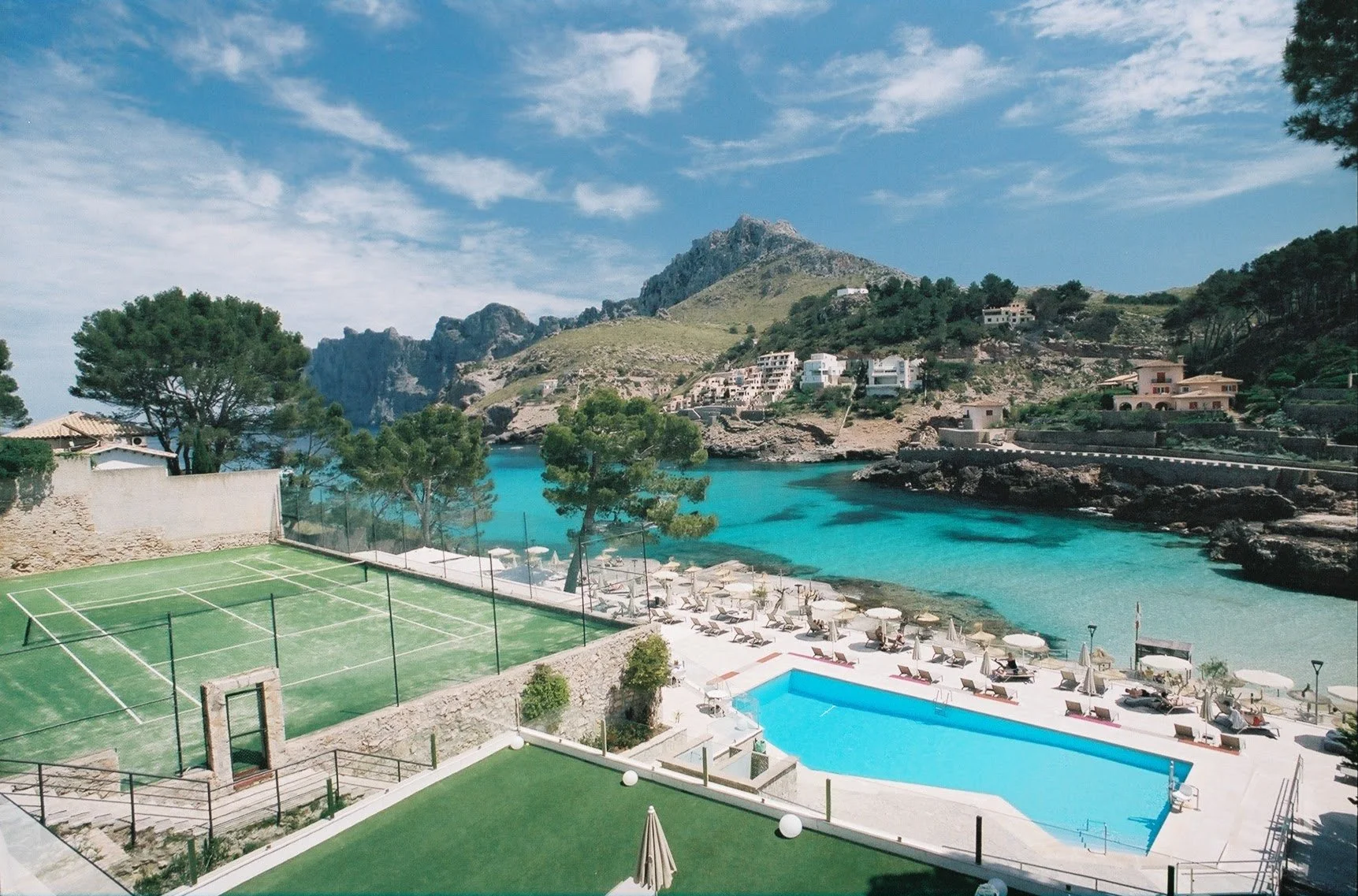
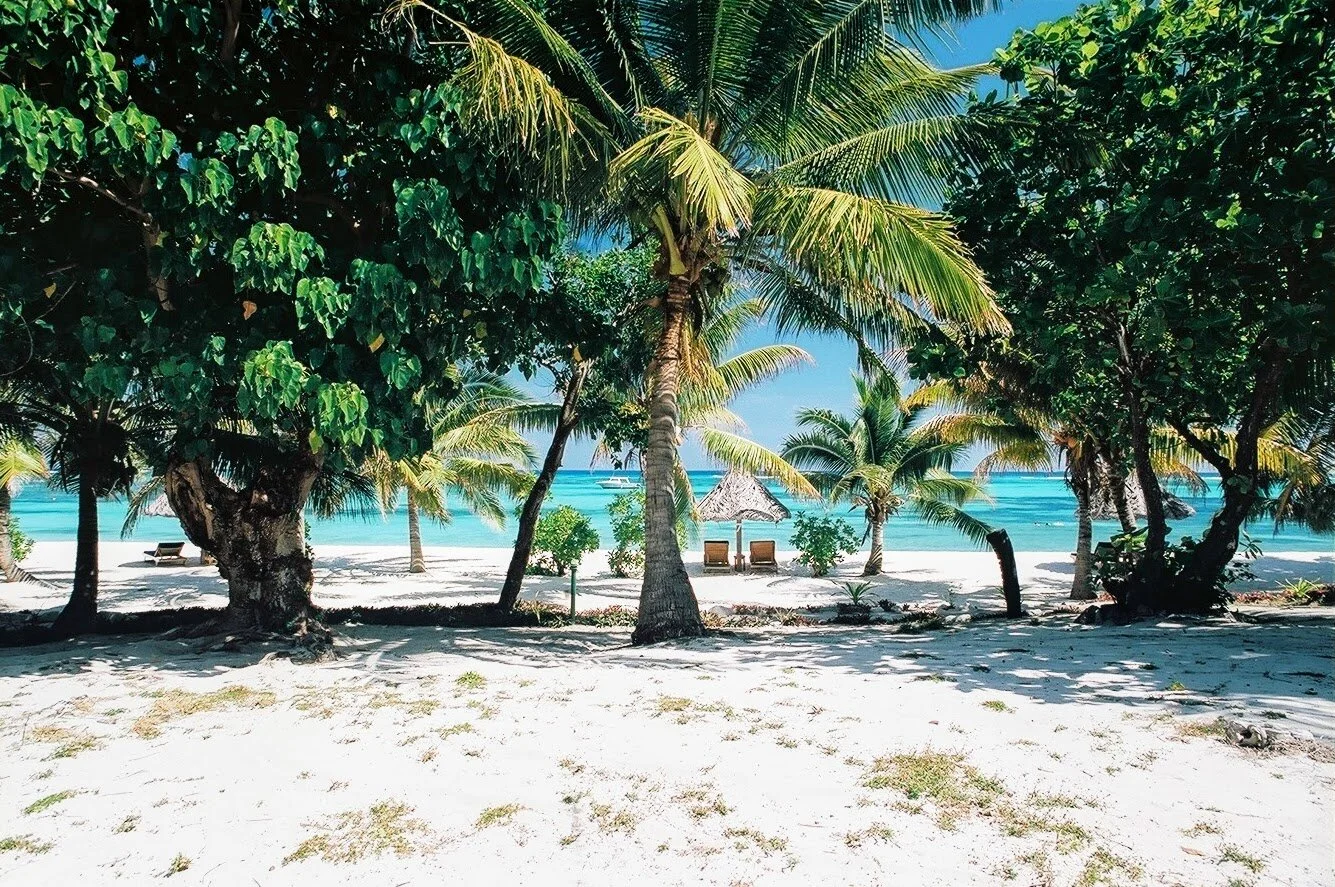
The sandy beach here is amazing and really the star of the show on Viwa. Soft-white and stretching the length of the resort, I could walk end to end all day long…

Viwa Island Resort, Viwa Fiji, DJI Mavic Air, Freewell Polarizing Filter
Read Part IV: Undersea Fiji - Rainbow Reef →
Viwa is the westernmost of Fiji’s 330 islands. Sitting 23 kilometers from it’s nearest neighbor and surrounded by it’s own barrier reef, you’d be forgiven for thinking you’re a long way from nowhere out here. Our original plan was to take a float plane over from Nadi, thus saving the half day boat trip over seas that can occasionally be a bit rough. Unfortunately, we received notice a few days before the trip that the plane was out of commission; luckily the airline had an alternative for us…

Flying over Waya on the way to Viwa, Fiji, Nikon FE, 20mm Nikkor lens, Kodak Ektar 100
With the float-plane out of commission and the airline committed to getting us to our destination, they offered us a ride over in their little helicopter. Talk about making a grand entrance to the resort! This was a first for me, and I loved the experience. On the way to Viwa you have to fly over the Mamanuca Island chain, famous for it’s picture-perfect tiny islands and the exclusive resorts tucked inside them. Our pilot was something of a hot-shot who loved getting low to the islands, and up close to the mountain tops and cliffs we passed along the way. From the water you wouldn’t see much more than the island shores, so this bonus sight-seeing again validated our decision to fly. In a short 25 minutes we were over Viwa and landing on the soft grass helipad behind the resort with smiles and waves from the staff greeting us to our home for the next week.

Tivua Island, Fiji, NIkon FE, 20mm Nikkor Lens, Kodak Ektar 100

Approach to Viwa, Fiji, DJI Mavic Air, Freewell Polarizing Filter
In stark contrast to the mountainous landscapes of eastern Vanua Levu, Viwa is flat as a pancake, rising just a few meters above sea level and nestled within an encircling barrier reef. Our home for this week would be the Viwa Island Resort, located on the eastern shore of the island. There are three villages on the island, which are home to most of the staff here. The resort itself is simple, with about a dozen small private villas just a few meters up from the beach, each with it’s own thatched umbrellas and sun-beds out front on the sand. The main pavilion serves as restaurant, bar and activity center. We quickly settled into a rhythm that was focused on relaxation, soaking up some sun, and (in my case) snorkeling and diving. Compared to The Remote Resort, I’d say the feel here was a bit more spartan and laissez-faire, with most of your time spent on the beach with a good book or drink (or both) in hand. There are a few guided activities, and aside from snorkeling I’d say fishing from a little boat by hand-reel (like the locals do) was one of my favorites. Turns out i’m no better at that than I am with a fishing rod in hand.
Divers take note: While the resort offers scuba diving, the dive leader is not a full time resident of the resort. Call or email in advance to ensure they’ve scheduled him to be there for your visit, thus avoiding disappointment! And yes it’s worth diving here, as you’ll see in this post!
Viwa Island Resort Beach from Cabin 7, Nikon FE, 20mm Nikkor Lens, Kodak Ektar 100

Viwa Island Resort Beach Walk, Nikon FE, 20mm Nikkor Lens, Kodak Ektar 100

A lovely place to read, Nikon FE, 20mm Nikkor Lens, Kodak Ektar 100
The reef here is not quite as healthy as those we experienced off Vanua Levu, but the snorkeling is still a treat, especially with the many turtles, parrot fish and trigger fish that call the waters right off the resort home. We even spotted a blacktip reef shark and a sleeping leopard shark while enjoying the guided snorkeling in the deeper waters further south on the island. The sandy beach here is amazing and really the star of the show on Viwa. Soft-white and stretching the length of the resort, I could walk end to end all day long (and did, when I wanted to get another drink or snack!) and just enjoy the feeling of it beneath my toes.

The food for the resort is harvested right on site for the most part, either from the sea or the extensive gardens tucked behind the villa area. I highly recommend asking for a quick tour of the facility as it’s really well thought-out, right down to the solar power cells that provide the power and heat for hot water. At a site like this, sustainability is survivability -both economically and environmentally- when considering the delicate ecosystems in play and the distances from alternative suppliers.

Visiting the vegetable growing fields behind the resort. Nikon FE, 20mm Nikkor Lens, Kodak Ektar 100.

Viwa Veggies, Nikon FE, 20mm Nikkor Lens, Kodak Ektar 100
Viwa was a lovely spot for a break. Perhaps not as adventurous in feel as I would normally seek-out (though the diving took care of that) but nonetheless a great place to just chill and take in the beauty of the sea and the warmth of the sand. As with many such places, the opportunity to make friends is there at meal time and happy hour, but the setup is really ideally suited for couples; and allows a sufficient feel of seclusion for you to enjoy each-others company without having to step through walls of tourists to find a spot to relax.
When it came time to leave Viwa, we received word that our float plane was still broken, and now so-to was the helicopter (yikes?). The boat trip back reaffirmed what a good idea it was to try to fly in and out of this little island paradise. A quick evening storm the night before and the ensuing winds whipped up waves that made the trip feel more like an obstacle course than anything else. That said, running the gauntlet of waves at the lone narrow break in the barrier reef is experience enough to get most thrill-seekers grinning ear to ear, so if you dig that then give it a go! You’ll have to anyway, if you’re going to reach the dives sites beyond.

Viwa and the Sea, Fiji, DJI Mavic Air, Freewell Polarizing Filter

Planning my dive with Bilo, DJI Mavic Air, Freewell Polarizing Filter.
Undersea Fiji - Rainbow Reef
The first time I dive a new area I find my focus starts out on the big picture - landscapes, colours, and the contours of the seafloor/reef. At the Rainbow Reef, that big picture immediately sends you into sensory overload.
Coral Garden, Rainbow Reef Fiji, Olympus Tough TG3, Dive Housing
Read Part II: A Glimpse of Village Life →
As a kid, I grew up idolizing Jacques Cousteau. Inventor, adventurer, owner of the fabled RV Calypso, and leader of a band of like-minded explorers ready to go at the drop of a starfish. Cliche? Sure but that doesn’t make it less true and so here I am, a grown-man diving while imagining myself a part of his crew. The imagination doesn’t have to stretch too far though, because The Calypso visited the Fijian Islands, and Captain Jacques himself discovered some of the reefs I would have the opportunity to dive on this trip.
As lush and beautiful as Fiji is on the surface, beneath the waves it can be even more spectacular. I was fortunate to complete 8 dives on our two week visit to the Fijian Islands, half on the Rainbow Reef in the East, and the other half in the waters surrounding Viwa in the far West. Surprisingly, the two areas couldn't be more different, but both have plenty to offer the undersea explorer. The Rainbow Reef is situated in the waters between Vanua Levu and Taveuni -known locally as “The Garden Island” for it’s lush jungles. The local dive companies operate off Taveuni, but most resorts will arrange for you to meet them via shuttle boat or a ride to their home base. Fun fact about Taveuni: the International Date Line runs right through it, cutting the island in two. The locals refer to each-other as the people from the future, or the people from the past, depending which side of the island one lives on - how fun is that?
Can’t see on the surface, what will we see down below? Olympus Tough TG3, Dive Housing.
Admittedly, I wasn’t expecting a storm, this was meant to be the dry season after-all, and yet a day after our arrival in Fiji the clouds ominously appeared and the wind started to blow. Oh well, I best dive then. One of the wonderful perks about being a diver is that a rainy day that might bum-out the sun tanners won’t dampen your spirits because you’re getting wet anyway. So when the skies darkened, I was on the resort shuttle boat to meet up with Taveuni Ocean Sports for my first two dives at the Rainbow Reef.
The scene above the waves wasn’t too inviting. Timing the leap from shuttle boat to dive boat was an adventure unto itself (you don't want to get pinned between the two), but the crew did a great job helping me aboard. After some brief introductions we reviewed the mornings' dive plan and quickly geared-up. The crew were confident that this squall would blow over soon, so after the usual final-check it was giant stride off the back and down we go...
Coral Spire, Rainbow Reef Fiji, Olympus Tough TG3, Dive Housing.
It’s busy down here, Rainbow Reef Fiji, Olympus Tough TG3, Dive Housing
The diversity is mind-blowing. Rainbow Reef Fiji, Olympus Tough TG3, Dive Housing
The first time I dive a new area I find my focus starts out on the big picture - landscapes, colours, and the contours of the seafloor/reef. At the Rainbow Reef, that big picture immediately sends you into sensory overload. The abundance and diversity of fish & corals packed into every square meter of reef is unbelievable. I was immediately relieved to see the corals healthy and unbleached. We quickly reach our target depth at around 20m and catch the slight current which will send us along one side of the reef. As we drift, I spend some time just observing and enjoying feeling a part of a scene equally hectic and serene.
As the initial “wow” factor settles down, it’s the little things, then the tiny things that start to capture our attention. Most dive masters and instructors I’ve met around the world seem captivated by the smallest denizens of the sea, and as they seek them out for us, so to my own lens sharpens in focus. Inevitably the little game begins (in my head) of who will spot the coolest creatures first.
Dive Master finds a Whip Coral Shrimp, Rainbow Reef Fiji, Olympus Tough TG3 on Macro Setting, Dive Housing, Integrated Flash
Nudibranch. The diversity of these “sea slugs” is utterly amazing. Rainbow Reef Fiji, Olympus Tough TG3 on Macro Setting, Dive Housing, Integrated Flash
I love finding these Christmas Tree Worms. Rainbow Reef Fiji, Olympus Tough TG3 on Macro Setting, Dive Housing, Integrated Flash
Blue Striped Nudibranch, Rainbow Reef Fiji, Olympus Tough TG3 on Macro Setting, Dive Housing, Integrated Flash
Another Whip Coral Shrimp held by the Dive Master, Rainbow Reef Fiji, Olympus Tough TG3 on Macro Setting, Dive Housing, Integrated Flash
This is a dive site that leaves you with a whole new appreciation for nature’s ingenuity. You think animals on land adapt well to their environments? How about a shrimp that perfectly matches the colour of the single whip of coral it lives on. And then there’s the Nudibranch’s, did they land on Earth following an asteroid collision? Probably one of the more wildly diverse and colourful species I’ve ever seen. Sure there were larger fish swimming with us here as well, blacktip reef sharks, humphead wrasse, barracuda and more, but I’ll leave those for you to find.
I would do 4 dives in total at the Rainbow Reef; but you could do 40 and still not see it all. While I rarely visit the same places in the world more than once (there’s too much to see in one lifetime!), I think if I were to book a dedicated dive trip in the future it would be on Taveuni so that I could dive these waters over and over. Due to the timing of my trip, I missed the Great White Wall altogether, meant to be the single best dive site here -that alone is meant to be worth a trip back. The next half of my Fiji trip would be in the far western side of the island group, on tiny Viwa. Will the experience be similar? Let’s find out!
Clownfish, Rainbow Reef Fiji, Olympus Tough TG3 on Macro Setting, Dive Housing, Integrated Flash
Sea Anemone waves good-bye, Rainbow Reef Fiji, Olympus Tough TG3 on Macro Setting, Dive Housing, Integrated Flash
A Glimpse of Village Life
While the villages’ appearance was spartan by Western standards, it’s integration with its environment and the sheer abundance therein is nothing sort of astounding. Everything the Vunikurans need grows all over the village grounds, on the mountain slope behind, or in the sea.

There’s no place like home, Vunikura village Fiji, Nikon FE, 20mm Nikkor Lens, Kodak Ektar 100
Read Part I: Let’s Get Remote →
We seized the opportunity to visit the traditional Fijian village of Vunikura as a morning excursion from The Remote Resort. Located on the same eastern peninsula of Vanua Levu as the resort itself, it’s a swift 20 minute boat ride to the village shore. As we arrived, the residents greeted us with song and dance -a ritual you’ll soon grow accustomed to in this country- and then went back to their daily lives while our host, Paul, introduced himself. Paul had returned to his village following his formal education to help his people find ways to reconnect with traditions, while boosting their local economy to enable a renaissance of the village infrastructure. Our tour also came with a little tag-a-long, in the form of 5 year-old Michael, a precocious child who clearly got a kick out of meeting and “guiding” visitors such as ourselves around his home turf.

Paul & Michael, Nikon FE, 20mm Nikkor Lens, Kodak Ektar 100
While the villages’ appearance was spartan by Western standards, it’s integration with its environment and the sheer abundance therein is nothing sort of astounding. Everything the Vunikurans need grows all over the village grounds, on the mountain slope behind, or in the sea. From breadfruit to bananas, I hardly think we passed a plant that wasn’t used for food, building material, textiles, medicines, or revenue (and in some cases several of these simultaneously). Nobody “owns” the trees or bushes, regardless of proximity to home, the abundance is managed, harvested and processed communally. Chief among these crops is the Fijian’s beloved Kava.

Kava root, chopped, sorted and drying in the sun. NIkon FE, 20mm Nikkor Lens, Kodak Ektar 100
Kava consumption by local Fijians follows the tradition laid down by countless generations past. Basically, where you and I might sit down over a beer (or 3) at the end of a long day, Fijian’s prefer the relaxing and euphoric properties of powdered Kava root. It’s served by a host from a large bowl wherein it’s steeped in ambient-temperature water. The taste and texture is close to a thin silty soup, but the effect is certainly enjoyable and people always seemed ready to share some with us. Almost every town and village grows it’s own, and in the case of Vunikura as with many others, the crops are tended and processed communally. The revenues are not insignificant, with 1kg of Kava fetching $10 when sold to local wholesalers, who go on to sell it both domestically (for it’s typical ceremonial and social uses) and abroad to hungry Pharmaceutical companies seeking to capitalize on it’s effects for anti-anxiety remedies. It’s the roots of older Kava plants that house the magic. The older the root, the more potent it’s effects. If your tongue and lips are tingling, you’ve got the good stuff. Give it a try when you visit here.

Collecting water from the cistern, NIkon FE, 20mm Nikkor Lens, Kodak Ektar 100
“Fijian families can grow quite large” notes Paul with a wink as some kids run by us, “there’s no birth control used here”. All members of the family contribute and live together in houses that have few if any separate rooms within. Instead, houses are sectioned thematically with guests and visiting relatives sticking to the front of the home, while space is dedicated to close family as you move towards the back. Homes stay in the family for generations and many built from local palm logs, leaves and other fibers can stand for 80 years or more. Paul hopes to return his people to the use of traditional building methods and materials, and away from the cheap and easy corrugated metal that adorns many of the village buildings.

A Vunikura home, Nikon FE, 20mm Nikkor Lens, Kodak Ektar 100
The village children, on a break from school, strategically played nearby wherever we wandered. It was refreshing, no screens in-hand, sticks for horses (or swords depending on the needs of the moment), and a lot of laughter. Sure there were some Batman pants and Lightning Mcqueen t-shirts in the mix, but you got the sense that these kids appreciated the playground that nature has given them and the freedom their parents allow. Kids are schooled in the village until they grow to middle-school age, at which point they enter a boarding school system typically far from home. Paul reassured us that the system worked quite well, providing plenty of opportunity for kids to learn about the histories of the many Fijian provinces as well as the world beyond their shores. As with anywhere, some come back home, while others carry on to post-secondary institutions and perhaps move to the larger cities to follow their career aspirations. Still, you quickly came to learn that the Fijian family unit is very strong with deep rooted traditions and sense of belonging. Many of the people we met and chatted with on our Fiji travels frequently visited home on their weeks off, helping their parents and siblings with the family farms and businesses.

Michael pushing his car along. Nikon FE, 20mm Nikkor Lens, Kodak Ektar 100

Checking us out, Nikon FE, 20mm Nikkor Lens, Kodak Ektar 100

Hanging out while mum’s work. Nikon FE, 20mm Nikkor Lens, Kodak Ektar 100
Paul’s aspiration is to put Vunikura on the map, both literally and figuratively. He’s begun working with his community to apply ancestral knowledge and techniques in the use of locally grown materials to restore their village to a more harmonious aesthetic with it’s surroundings. He joins them in the songs and dances that are their traditional methods for recording and retelling history, including the lovely concert they put on for us at the end of our visit. I loved the fact that they made it interactive, getting us to dance along as they explained the meaning of each song.
What’s next? Paul hopes to construct a purpose built cottage in the village for visitors such as ourselves to stay in. In fact, he’s hoping to list it on airbnb when it’s done, and what an experience that would be! A chance to truly immerse in the village life, rather than catch just a fleeting glimpse.

‘till next time, Vunikura Fiji, Nikon FE, 20mm Nikkor Lens, Kodak Ektar 100
Let's Get Remote
They don’t call it remote for nothing. Located on the far Eastern shore of Vanua Levu, in a bay that was once home to a palm tree plantation, The Remote Resort forms a wonderfully secluded oasis.
The Pier at The Remote Resort. Nikon FE, 20mm Nikkor Lens, Kodak Ektar 100,
The decision to visit Fiji was made quickly. Unusual for us, where months of analysis paralysis typically precedes any trip abroad. It had been a typically soggy Vancouver winter and spring, and we wanted to visit someplace a little off the beaten path (for us Canadians at least) with warm waters, palm trees and few expectations beyond that. We booked our flights in April for September, and promptly forgot to do anything else until the warm sunshine of July reminded us that we had a trip to plan out. While the Fijian islands are rife with beautiful mega-resorts our temperament has been to seek the quieter spots in the places we visit. Fiji did not disappoint with our options in this regard.
The Pier from above. DJI Mavic Air, Freewell Polarizing Filter.
The Remote Resort
They don’t call it remote for nothing. Located on the far Eastern shore of Vanua Levu, in a bay that was once home to a palm tree plantation, The Remote Resort forms a wonderfully secluded oasis. It took some effort to get here, a small plane ride from Nadi to Taveuni and then a 45min boat trip to the resort, but this just added to the sense that you were truly getting away from everything. There are 8 villas to choose from, all with spectacular ocean views, and a main pavilion that serves as bar, restaurant and meeting place. Other than that your backstop is a lush tropical jungle and your front yard is the crystal clear South Pacific -not bad.
Our Villa at Remote Resort. NIkon FE, 20mm Nikkor Lens, Kodak Ektar 100.
Coffee and breakfast at the main pavilion. Nikon FE, 20mm Nikkor Lens, Kodak Ektar 100.
We swapped to an unbooked villa at the end of our trip so we could stay a bit longer. Nikon FE, 20mm Nikkor Lens, Kodak Ektar 100.
The staff make you feel welcome right away, with a greeting song as your boat approaches the resorts’ lone pier. They’ve already taken the time to memorize your names, and use them throughout your stay. This quickly makes you feel like part of the family, and encourages you to try the same! You quickly learn that the Fijian’s are an extremely musical people, everyone sings and it seems no-one is bashful! From the pier our host, Katoni, takes us to our welcoming kava ceremony. We knew nothing about kava before that morning, but came to quickly enjoy the relaxing effect it has on the body and mind. And hey, we were here to relax, right? Well yes and no, see I’m a diver and one that’s well aware that just a few kilometers off-shore rests The Rainbow Reef, purportedly first documented by Jacques Cousteau himself, and considered one of the worlds great dive sites. While Remote lacks a dive shop of it’s own, they’re well set-up to connect you with one of the dive co.’s on Taveuni, and even provide a shuttle boat ride to meet them at the reef. Even if you aren’t comfortable with tanks on your back, the snorkeling right off the beach at Remote is second to none and ensures you don’t miss out on Fiji’s amazing undersea treasures. (More on the diving to follow in a subsequent blog post!)
The first day at Remote goes by in a blur and the deep dark of the true night sky quickly lulls us to sleep. In fact, we slept an average of 10 hours per night during our week-long stay here. A combination of the lack of light pollution and the soothing soft crash of waves against the shore forming the perfect sleep aid -assisted by a few sips of kava, of course.
Beachside torches being lit at dusk. Nikon FE, 135mm Nikkor-Q Lens, Kodak Ektar 100.
Excursions and Activities
If you wanted to spend your entire visit somewhere between your villa, the beach and the main pavilion for food and drinks you’d easily have a wonderful time. But if you’re the restless type like us, there’s plenty to do outside the confines of the resort, and the staff are happy to accommodate. The “Hidden Beach Castaway Day” is a must for couples, a way to get even more remote than the resort itself. Dropped off with a picnic lunch and drinks, the rest is up to your imagination. Honeymooners take note.
The Hidden Beach at dawn. DJI Mavic Air, Freewell Polarizing Filter.
The Hidden Beach, Nikon FE, 20mm Nikkor Lens, Kodak Ektar 100.
If you’re feeling particularly adventurous, the Manta Snorkeling experience might be right up your alley. Easily one of my favorite sights under the sea, I jump at any chance to see them up close. The site is all the way up near Rabi Island, so it’s a decent boat ride but the scenery along the way is lovely as you’d expect. Gather up your courage before jumping in because the water is deep and in our case quite wavy. My wife Victoria -who is a fan of neither of those scenarios, nor large sea creatures- drew inspiration from the 76 year old Venetian couple who were the first to jump in, to then leap in after us and join the search for these majestic creatures. The Mantas didn’t disappoint. With 5 meter wing-spans and the grace of ballerinas, they swam straight at us in an undersea game of chicken before tilting just slightly downward and passing beneath in formation. On their second pass (me being me…) I decided to try and join their formation, taking a deep breath and diving down, kicking hard with my fins to keep up. Approaching from the side, they saw me coming and remarkably one let me get close enough to gently pet the side of its wing. I can tell you there is nothing smoother feeling than a Manta’s skin. Well out of breath, I dashed for the surface excited to share my story. In total we experienced 5 passes by the Manta group, and when it was time to say goodbye they swam to the surface and waved at us. I kid you not. We all stared awestruck at the experience, and eagerly chatted about it as we munched our snacks on the ride back to the Resort.
The “Leader” of the 5 Mantas. Olympus TG-3 with Dive Housing.
For a taste of traditional Fijian living, the morning visit to the nearby village of Vunikura is a must. We almost skipped the opportunity due to some kava-induced laziness but I’m glad we gathered up the energy to go. I enjoyed it so much I wrote a piece just on that brief but beautiful little trip.

Vunikura Village, FIji. Nikon FE, 20mm Nikkor lens, Kodak Ektar 100
Just Relax
Our modus operandi is usually to explore the living daylights out of the places we travel to, and inevitably come home somewhat more burned-out than when we left. With this venue we were quite happy to depart from that approach, and just take each day as it came. All I wanted to do was soak in the energy of my surroundings, whether that meant sitting on the beach, or strolling the short jungle path behind the resort to catch a view. I used my stomach to tell the time for me. Hungry? It’s probably time to head up to the pavilion for a bite of lunch. Here I’ll add my one note of caution for would-be visitors to the Fijian Isles: food and drink is heavily taxed, and of course the remoteness of many of the resorts just adds to the cost of getting that food to your plate. Luckily, portion sizes are large, so within a couple of days Victoria and I were comfortable sharing dishes for some of our meals just to ensure we didn’t come home to an over-full credit card. That said if the opportunity to enjoy an entire open-flame cooked snapper for dinner on the beach presents itself, say yes!
I’d be remiss not to make note of the optional daily massage package. You can enjoy a different treatment each day (and we did), with the most memorable being a full-body palm leaf wrap to soak-in the moisturizing oils! I’ll admit I just enjoyed the laugh at looking like a human Zongzi in that case. Of course, you can opt to take as many or few treatments as you like, but given this was the start of our trip we decided to dive into the relaxation head-first.
Victoria enjoying the sunrise. Nikon FE, 20mm Nikkor Lens, Kodak Ektar 100
Palms lean as the sea pokes through, Nikon FE, 20mm Nikkor Lens, Kodak Ektar 100
Parting Thoughts
The Remote Resort is a wonderful place to pause and enjoy an unspoiled corner of our world. I didn’t see a single contrail in the sky the week I was there. Think about that for a moment, when was the last time you could say the same? The staff that are delightful to interact with, the nature is ready to stun the senses and accommodations are carefully designed to augment your enjoyment of it all. The dark nights without light pollution, and gentle waves lapping the shore allow you to really sleep deeply. Catching up on sleep has magic powers as far as your health and energy is concerned (If you don’t believe me, read this.), so I think that in itself really helped me enjoy my time there to the fullest. With all this, the Remote Resort becomes a very difficult place to leave. Have we set the bar too high right at the beginning?
Sunrise. Nikon FE, 20mm Nikkor Lens, Kodak Ektar 100
A relaxed Palm Springs getaway featuring mid-century architecture, great restaurants, boutique hotels, pool days, and desert sunshine.