
Blog
From cobblestoned Portuguese alleys navigated one-handed with a stroller to reef dives in Fiji, this is where the trips live. Told through words and whatever camera happened to be with me.
I shoot film and digital and travel with family in tow. These posts are part travel journal, part photography log, and part love letter to the places that made an impression. I hope they make you want to go see them for yourself.
Latest Articles
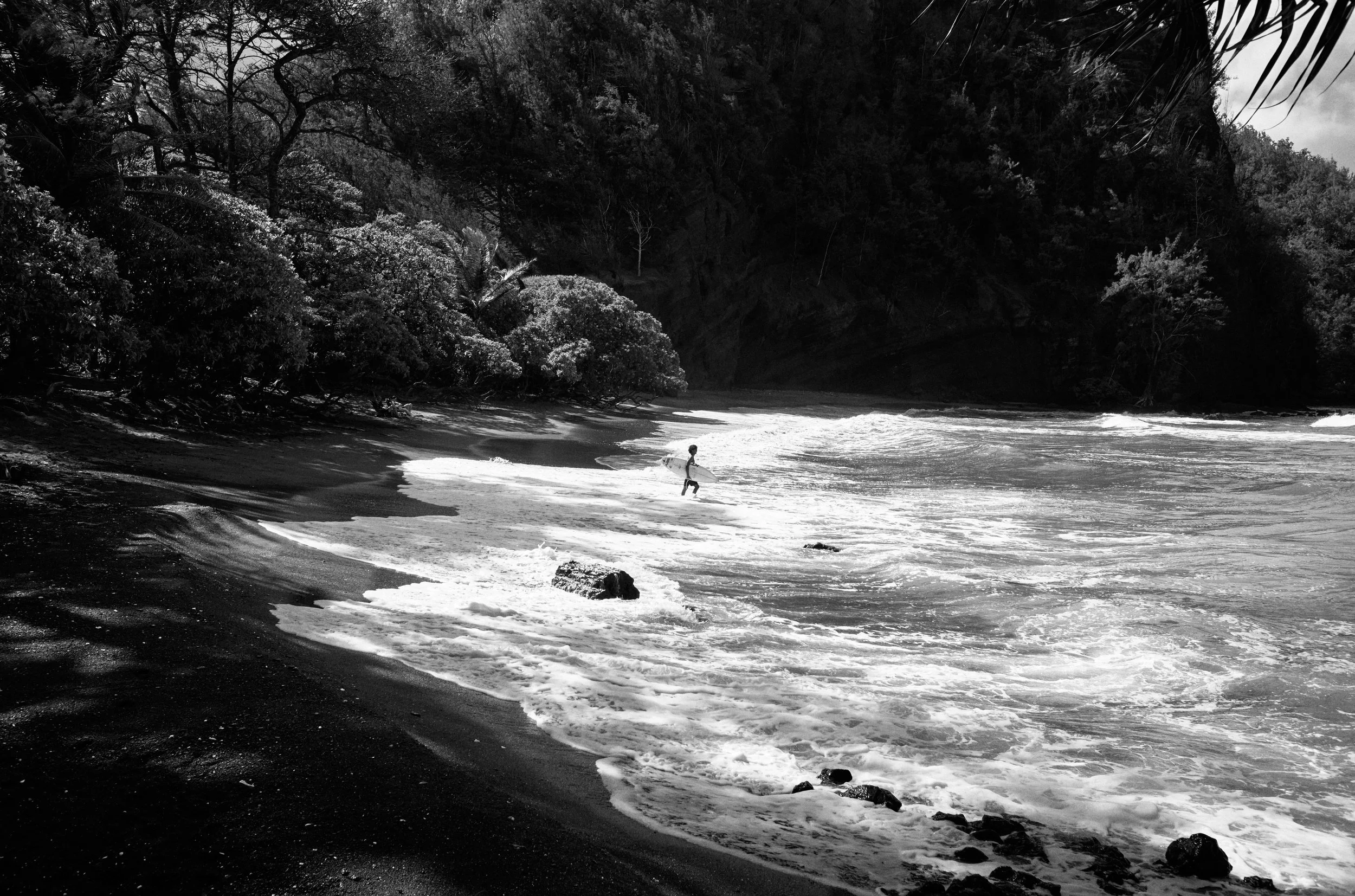
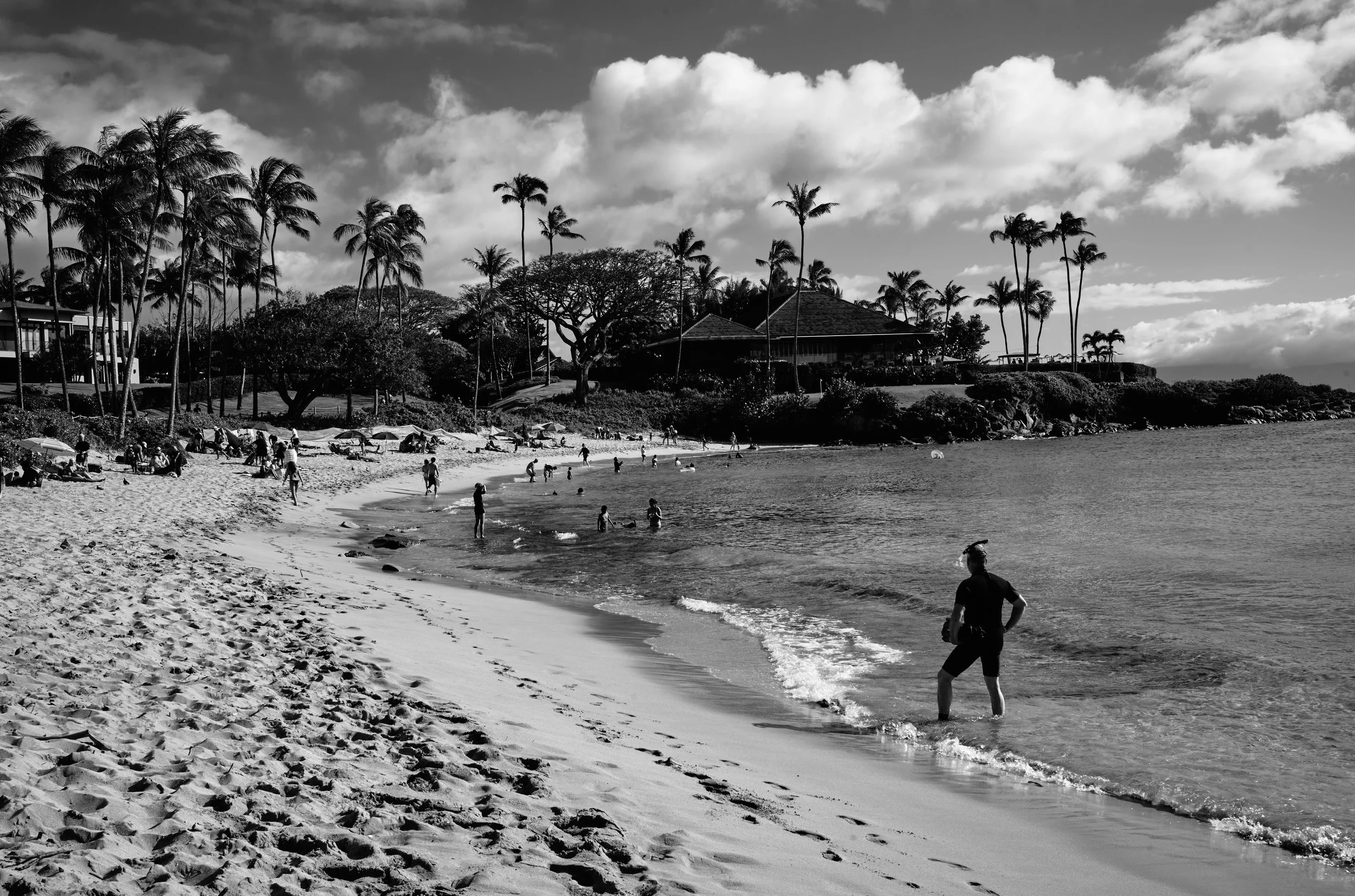


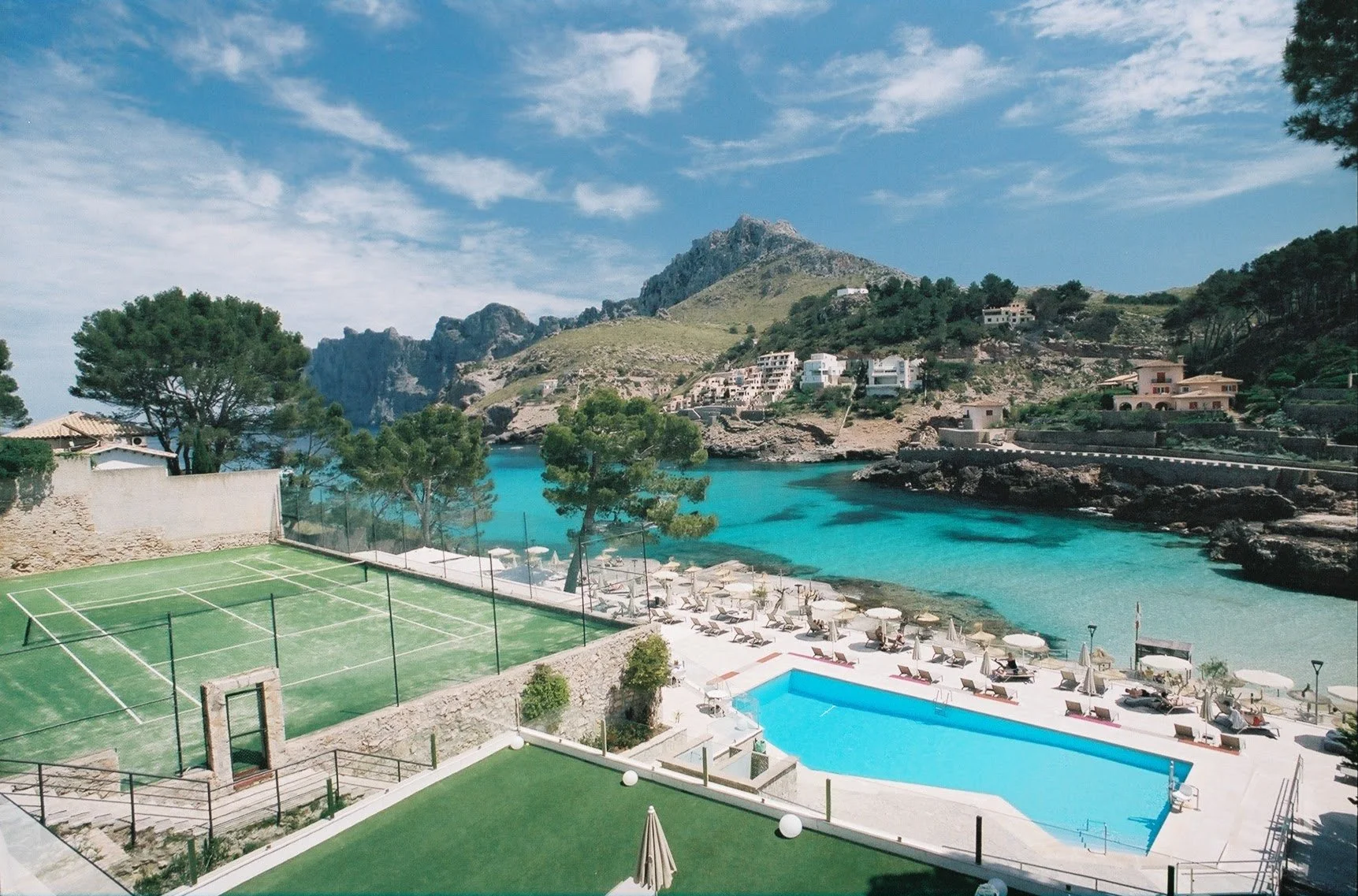


Portugal - Sintra
The last leg of our trip was here in Lisbon. We had several days to explore the city and the idea was to do so on foot, rambling the narrow and hilly cobbled streets with one hand on the stroller and the other with the camera. No plan of action here, so let’s see what the city decides to show us!
National Palace of Pena, Sintra, Portugal, Ricoh GRiii ISO160 1/125 f8
Train to a Fairy-tale Land
Read Part V: Portugal - Lisbon →
After a few days wandering Lisbon, and with the end of our trip in sight, we decided on one last change of pace and place. I hadn’t heard of Sintra prior to our planning for this trip, but it sounded like quite a unique place to visit with and array of spectacular palaces and castles all clustered in one small municipality in the Portuguese countryside. We had not spent much time up to this point visiting historical sights, so the appetite was there to dive into a bit of the region’s architecture and history. Besides, the best way to get there is by train, which suited our little guy just fine given he’s perpetually enamoured therewith!
Comboios de Portugal. Lisbon, Portugal, Ricoh GRiii ISO250 1/30 f2.8
It was going to be a hot day, so we started out early, opting to grab some pastries for breakfast from any stores we passed along the 1.5 kilometer walk from our apartment to Rossio Train Station where our adventure for the day would truly begin. There are many trains per day between Sintra and Lisbon, and they’re quite inexpensive, so even if you have a rental car in town the rail route should likely be your preferred option. That said, our attempt to get tickets wasn’t without some excitement. It turned out we got to the station just minutes before the next train was leaving, and what followed was a bit of a mad dash around the station trying to find out where exactly to get our tickets. We got a bit of bad advice from one person we asked which sent us to the wrong floor, but eventually we got up to the correct platform level only to find a gigantic line for one of the few windows with operators. There appeared to be automated ticket machines available as well, but these were also lined up. Here’s the pro-tip for travelling parents: If you have young children, it’s customary and accepted to jump to the front of the line to get tickets. Unfortunately we didn’t know this until it was too late, but at least there’s a cafe on the platform to help you kill time waiting for the next train.
Train! Lisbon, Portugal, Ricoh GRiii ISO250 1/30 f2.9
Peeking into the [cockpit]?, Lisbon, Portugal, Ricoh GRiii ISO 250 1/30 f16
The train trip starts underground until it’s out of the city core and then pops up and into the dense suburbs of Lisbon. This was our first proper glimpse of how most Lisboan’s live and it’s not an unfamiliar site for those used to travelling Europe. Density is king with many apartment blocks, colorfully accentuated by graffiti, whizzing by our windows. The train makes many stops on the way to Sintra, but the overall trip felt short, perhaps just over 30minutes. Eventually, towers give way to more open spaces and villages tucked into valleys begin to signal that the urban expanse is behind us.
The train to Sintra, Lisbon, Portugal, Ricoh GRiii ISO250 1/40 f8

Graffiti from the train, Lisbon, Portugal, Ricoh GRiii ISO250 1/250 f8
Sintra Station, Portugal, Ricoh GRiii ISO250 1/250 f8
Sintra
Hopping off the train at Sintra station you don’t see much, really. The small station sits adjacent a tree-shaded street with a few cafe’s and restaurants lining it. No palaces in sight yet. Some vendors are trying to entice tourists to rent a scooter or take a tuk-tuk to go see the sights, but us being us, we begin to walk where the signs seem to indicate we should go. A small free map at the tourist office proved helpful and I recommend you grab one to help orientate yourself and learn about the sights you want to see.
The first palace you see, Sintra National Palace, Sintra, Portugal, Ricoh GRiii ISO400 1/250 f8
The Sintra National Palace with its distinct twin white chimneys is likely the first palace you’ll see, but when you do you’ll realize you’re nowhere near it. Sintra lays at the base of a mountain and winds it’s away along the valley bellow it, so you have to loop around the valley to make your way to the National Palace.
Grand structures of Sintra, Portugal, Ricoh GRiii ISO2000 1/250 f8
Sintra, Portugal, Ricoh GRiii ISO200 1/60 f11
Sintra, Portugal, Ricoh GRiii ISO200 1/160 f11
While most of the palaces here seem to contain museums, we opted to simply tour the grounds and observe the beautiful exteriors, intricate gardens and stunning viewpoints. This would allow us to take advantage of the beautiful weather we had that day as well, and minimize the chance of the little guy getting too bored and fussy.
Sintra National Palace, Sintra, Portugal, Ricoh GRiii ISO200 1/160 f11
Sintra National Palace, Sintra, Portugal, Ricoh GRiii ISO200 1/160 f11
Fountain at the Sintra National Palace, Sintra, Portugal Ricoh GRiii ISO125 1/160 f8
Sintra National Palace, Sintra, Portugal, Ricoh GRiii ISO200 1/160 f11
Little travel buddy exploring the Sintra National Palace, Sintra, Portugal, Ricoh GRiii ISO125 1/160 f11
Next we made our way to the Quinta de Regaleira palace, to see it’s more gothic structures and expansive grounds and gardens. It’s a bit of a walk to get here from the Sintra National Palace, but well worth it! A surprise lay in store for us here (largely because we did no homework on Sintra before visiting), and the lane leading here was shaded by lovely tall trees and large stone walls. There are a couple of shops along the way where you can grab a snack, or restaurants is you prefer to sit. We did the former on the way to this palace, and the latter on the way back.
Tourists wandering Sintra, Portugal, Ricoh GRiii ISO1600 1/160 f8
Making our way to Quinta Da Regaleira, Sintra, Portugal, Ricoh GRiii ISO 400 1/160 f8
Quinta Da Regaleira, Sintra, Portugal, Ricoh GRiii ISO 320 1/160 f8
Quinta Da Regaleira, Sintra, Portugal, Ricoh GRiii ISO320 1/160 f8
The grounds of this palace are impressive. Winding paths lead you up, down and around a steep hillside, with views across the valley and back at the palace itself. There are ponds, flora of every sort and plenty of hidden secrets too. The cost and effort to have built-out this lavish property must have been immense.
Views from the paths around Quinta da Regaleira, Sintra, Portugal, Ricoh GRiii ISO200 1/100 f16

Gardens of Quinta da Regaleira, Sintra, Portugal, Ricoh GRiii ISO200 1/160 f8
One of the biggest draws to this property is the well located at the top of the hill. Here, a bit of the mystery began. You see, we saw people lined up to enter the well at the top, but no exit…so where were they going? Unfortunately only one of us was able to find out in person. They don’t allow kids with strollers into the spiral staircase. Sort of makes sense in retrospect, but in the moment our attempts to negotiate a way for us all to visit this unique feature were frustratingly denied. Especially given we found this out after a good 15minute wait in line to get to the entrance. My wife drew the short straw, so it was I that descended into this seemingly inside-out tower. What was the point of it? How do I get out? Where do I find my family after?

Quinta da Regaleira Well, Sintra, Portugal, Ricoh GRiii ISO320 1/45 f4.5
Quinta da Regaleira Well, Sintra, Portugal, Ricoh GRiii ISO3200 1/30 f3.2
A cave! More than a cave, lot’s of caves! It seems the cheeky owners of this palace decided to build some catacombs beneath the well, used apparently as a hideaway, underground concert venue, occasional orgy spot and solid hide and seek venue.

Quinta da Regaleira Well, Sintra, Portugal, Ricoh GRiii ISO5000 1/30 f2.8
Quinta da Regaleira Well, Sintra, Portugal, Ricoh GRiii ISO800 1/30 f8
Quinta da Regaleira Well, Sintra, Portugal, Ricoh GRiii ISO100 1/30 f2.8
Eventually reunited at the bottom, we decide to make our way up the mountain that towers over Sintra’s landscape. All along our wanderings so far I’d been noticing parapets of a castle near it’s peak and I was intrigued. The walk up the hill is fairly long, so pack some water and snacks, especially if it’s a hot day. It’s probably worth mentioning here that some of the locations in Sintra require tickets/reservations in advance to visit. We didn’t know that, given the spur of the moment nature of this day trip, and were caught out once or twice having made our way to spot only to find ourselves unable to enter. We had some concerns we may face a similar scenario at the top of this mountain, but decided to chance it anyway. Besides, you can get away with a lot when you need to when you have a baby stroller in front of you.
Imposing entrance of the National Palace of Pena, Sintra Portugal, Ricoh GRiii ISO320 1/125 f8
We were not disappointed. The Palacio National da Pena is simply stunning. You first spot it’s defensive walls after the last of countless switchbacks making your way up the mountain and your eyes are immediately assaulted with color. Disneyland ain’t got nothing on this, the magic kingdom was in Portugal all along, folks. The might and opulence of this place is felt immediately. you could just imagine being some sort of foreign dignitary, sweating after a lengthy trip to the castle only to be faced with a candy-colored impregnable fortress. What sort of a person must rule this place? -you ask yourself as yours eyes wander the parapets for archers.

Palacio National da Pena, Sintra, Portugal, Ricoh GRiii ISO320 1/80 f8
Palacio National da Pena, Sintra, Portugal, Ricoh GRiii ISO200 1/250 f2.8
This quickly became my favorite part of the Sintra excursion. This castle in the sky, painted in wild primary colors, was like something out of a dream and no-doubt the inspiration for so many stories, fairy-tales and films. There are museums and a restaurant within, but we were content to walk around the areas open to the air imagining what it would have been like to reside here some time long ago.
Palacio National da Pena, Sintra, Portugal, Ricoh GRiii ISO250 1/125 f8
Palacio National da Pena, Sintra, Portugal, Ricoh GRiii ISO200 1/125 f8
Palacio National da Pena, Sintra, Portugal, Ricoh GRiii ISO320 1/125 f8
Adeus, Portugal
Literally capping our trip with a castle in the sky felt like a fairy-tale ending to a trip that took us through so many delightful places. From beaches and cafes to cabanas on a lake, winding lanes and the home of monstrous waves, Portugal has a lot to offer a traveller. We only scratched the surface, I’m sure. While we couldn’t hope to cover it all in two weeks, we were happy with the experience we had with this delightfully unique country, it’s friendly people, and delicious food. Our apartment host even helped us track down a taxi with a car seat so that we could catch our early morning flight stress free. Maybe not so tough with a kiddo in tow after all.
Palacio National da Pena, Sintra, Portugal, Ricoh GRiii ISO125 1/125 f8
Portugal - Lisbon
The last leg of our trip was here in Lisbon. We had several days to explore the city and the idea was to do so on foot, rambling the narrow and hilly cobbled streets with one hand on the stroller and the other with the camera. No plan of action here, so let’s see what the city decides to show us!
Our place was tucked up behind that castle, Lisbon, Portugal, Ricoh GRiii ISO100 1/100 f11
Lisbon
Read Part IV: Portugal - Nazare →
The GPS was spot-on for our first foray into Lisbon, which is great because it’s easy to get turned around until you have your bearings. We had four nights here to explore, and (with one exception) we knew we’d be covering it by foot (and that parking was near impossible where we were staying) so after dropping off the family to sort out the apartment, I drove to the airport to drop the car off and took a rideshare back. We’d have to figure out how we’d get back to the airport for our eventual departure (not so simple with a 2-year-old as rideshares don’t typically have car-seats!) but left that as a problem for future-us to figure out.
Not entirely sure our tour-guide knows where he’s taking us. Lisbon, Portugal, Ricoh GRiii ISO800 1/200 f4.5
Navigating Alfama, Lisbon, Portugal ISO125 1/160 f5.6
Old & New, park where you can in a tightly spaced city! Lisbon, Portugal, Ricoh GRiii ISO100 1/25 f16
Entrance to our apartment on the right, Lisbon, Portugal, Ricoh GRiii ISO 100 1/25 f16
Our stay was an apartment on the fourth floor of an old building in Alfama. Almost all of the buildings here are hundreds of years old if not more, of course, and that often means no elevator, (or handrails on the stairs) which was the case for our accommodation. So, not toddler friendly let’s say, and our calves and sanity got a bit of a workout whenever entering or leaving, but the apartment itself was spacious and clean. If you’re used to old European cities, you are likely used to some of the less pleasant odours than can emanate from ancient plumbing and sewers and that was unfortunately a bit of the case in this building, but overall a non-issue in the city. The location was excellent, sitting near the top of the hill beside the walls of the Castello de Sao Jorge. This meant more steep workouts were guaranteed as we wandered, but we quickly found out that this is common feature of Lisbon’s natural topography anyway.
That’s a tight squeeze, Lisbon, Portugal, Ricoh GRiii ISO160 1/125 f8
Walks, Meltdowns and Burgers
We didn’t have much of a plan for Lisbon, rather, content to ramble the varied neighbourhoods, sample the food, take photos and see what there is to see. The architecture and character of the classic heart of the city is fascinating. There are historical influences here from many cultures, a classic defensive layout, occasional modern touches and stunning tilework harkening back to the Moorish period, all making for an eclectic atmosphere. It also makes for a bit of a maze, and despite what many others have said, is not exactly ideal if you have a toddler in tow.
Wandering Alfama, Lisbon, Portugal ISO400 1/125 f8
The streets are narrow, often steep, and largely cobbled which can make them a bit tricky to navigate while pushing a stroller, and I imagine rather treacherous in the rain as the stones are worn slick over centuries of use. Many parts of town don’t really have sidewalks and where they occasionally do, they’re about half the width of the stroller. So, when a car, scooter, or trolley does zip by it’s a bit of a squeeze. That isn’t too challenging, but when your toddler decides he’s had enough of the ride and wants to walk, you’re on heightened vigilance. Even more so when dashing across the street, vehicles be damned, appears to be his new favorite pursuit.
Pro-tip for the parent traveller; when buying a travel stroller, get one with the largest wheels possible that still allows it to fit in an airplanes overhead bin. This will help it navigate uneven surfaces and make it exponentially easier to push around than the small-wheeled, albeit lightweight, variant we used.
Gotta make use of the alcoves, Lisbon, Portugal ISO160 1/125 f8
At this point I regretted not having a neck strap for my Ricoh GRiii, because it was increasingly difficult to get a hand free to remove it from my pocket, and when the wrist strap was on, it took too long to free my hand in a moment when I needed to (and with little kids, speed can be of the essence). I’ll admit, at a certain point I had to stop and have a bit of a tantrum of my own. Maybe it was the heat and a bit of travel fatigue, or “missing the shot” for the nth time, but your author was losing his patience with the situation and possibly a bit hangry as well. Let’s find some food.
Luckily, there’s no lack of places to eat, and many of them were delightful and that always works to shed some stress. Among our favorites were;
Copenhagen Coffee Lab in Alfama. Amazing coffee, excellent pastries, sandwiches and baked treats. They have a very cool vibe, being seemingly tucked away in a basement, but with a large atrium open to the sky should you prefer. Augusto Lisboa was also a hit, absolutely unreal French Toast, but get there early or be prepared to wait in line a while.


Time Out Market is a must visit location and foodie’s delight. Easily 20 restaurants organized in what appears to be a repurposed fish market/warehouse with seating in the middle. Cocktails, seafood, donuts, burgers, pasta, traditional Portuguese from various regions, how about wine tasting? It’s all here. I think we came back here three times, and you could honestly just eat here every day and not get bored. Try “Ground Burger” for salty, cheesy, burger deliciousness that will make you question why you don’t fry your cheese before putting it on the burger every single time.
Time-out at Time Out Market. Best burger I’ve ever had. There, I said it. Lisbon, Portugal, Ricoh GRiii ISO3200 1/100 f6.3
Precarious patio at Clara’s em Castello, Lisbon, Portugal, Ricoh GRiii ISO2500 1/60 f4
LX Factory was another neat spot for food and a bit of the arts scene. There were numerous options here in this gentrified factory district from Mexican food to gelato. I suspect this area livens-up in the evenings, but it was plenty busy mid-day as well.
LX Factory, Lisbon, Portugal, Ricoh GRiii ISO100 1/125 f8
In the neighbourhoods of Chiado and Bairro Alto, you’ll see a number of ‘old fashioned’ looking cars roaming the streets carting tourists about. These are actually new builds that are entirely electric, and can be helpful when wandering the town given its hilly topography can wear you down quickly in the heat. Negotiating rates with the drivers is doable, but getting a toddler on is a bit of a challenge. While a couple of drivers didn’t seem to mind, it seems it’s not entirely legal to do so and in one case we were asked to hide-out a bit before climbing on board when a traffic cop wandered by! These cars aren’t quick, but the suspension is really tight so prepare for a jarring ride. If you had limited time in Lisbon, I reckon they’re worth a try and most offer something of a guided tour as well. There are also tuk-tuks that seemed a bit cheaper for those not needing the faux-vintage vibe.
Tourist cars in Lisbon, Portugal, Ricoh GRiii ISO160 1/125 f16
Are we on the roof?
Given it’s undulating nature, Lisbon has a few tricks up it’s sleeve for the uninitiated. One night, having made our way quite far from our accommodation and well into the evening, we decided to walk back drawing a relatively straight line from the hilltop we stood upon to the one opposite us in the distance where our apartment was. Seemed easy enough, the little guy would more than likely fall asleep in the stroller, and we could enjoy a peaceful wander home. All true, except for when, after a kilometer or so of twists and turns, we found ourselves looking down six or more storeys to the street we thought we were about to intersect (no heads-up from google maps either). We were walking on the roof of a building for the last little while and had no idea! It so happens that Lisbons’ famous elevator was adjacent us but closed for the night, so we’d have to double back and make a big loop to get back on track.
Oops, no way down from there. Lisbon, Portugal ISO 1600 1/20 f2.8
Lisbon by Night
At this stage of the trip we were quite content to let our kiddo fall asleep in the stroller as we wandered, allowing us to stay out a bit later and see how the city evolved at night. The Portuguese seem to start dinner late (not unlike many European cultures I’ve encountered) regardless whether it was mid-week or a weekend, so the streets come alive as the sun goes down, particularly where there’s an abundance of restaurants. Occasionally you’d come across a Fado musician playing their characteristic melancholy songs, a genre I knew nothing about before this trip and found to be a delightful addition to the character of these streets.
I hadn’t used the Ricoh GRiii much in the evenings before this trip, so was learning on the run as we explored Lisbon after dark. The IBIS in general seems very good allowing handheld shots down to 1/4 without much blur, complimenting the lens thats decently sharp wide open. A handy evolution compared to the GRii, which lacked it (and largely pre-dated that tech I think). Low-light autofocus is not great (even interior shots with ambient daylight can challenge this cameras’ AF), but what I’ve learned since is to shoot in Snap-Focus mode and make the best of zone focusing rather than waiting for the AF to catch-up. I think a tripod or monopod would go a long way to aid in image quality in the evenings, but sometimes you’ve got to make do with what you have -which occasionally is the handle of a stroller.
Still need to make our way up to that castle to find our apartment, Lisbon, Portugal, Ricoh GRiii ISO640 1/20 f2.8
Fado Musician sings a melancholy tune outside a tavern, Lisbon, Portugal, ISO1000 1/13 f2.8
Lisbon by night, Portugal, Ricoh GRiii ISO6400 1/50 f4
Quieter streets as we got closer to our place, Lisbon, Portugal, Ricoh GRiii ISO2500 1/20 f2.8
Lisbon by night, Portugal, Ricoh GRiii ISO3200 1/20 f2.8
Scratching the Surface
Our visit largely covered just three neighbourhoods in this expansive city, namely Alfama, Chiado and Bairro Alto. These are likely the most tourist-centric areas in Lisbon, but we’re tourists, so that’s ok! Looking at the map it’s evident we barely scratched the surface of Lisbon even despite covering upwards of 15km a day just walking. I don’t think we walked into a single museum, gallery, or even the castle next door for that matter. You’re never going to see it all of course, and we enjoyed our care-free approach to getting a taste of the town.

Lisbon street art, Portugal, Ricoh GRiii ISO160 1/160 f8
Lisbon Street Art, Portugal, Ricoh GRiii ISO100 1/160 f8

Obligatory church shot, Lisbon, Portugal, Ricoh GRiii ISO320 1/100 f8
One more Stop
After a few days of wandering Lisbon, we decided to conclude our visit to Portugal with yet another impromptu side-trip to somewhere special. We’d be departing the capital by train (much to a certain two-year-old’s delight) for a day-trip in search of a picturesque and ancient town of stunning palaces, hidden tunnels, and natural beauty. Learn about Sintra in the final installment of the Portugal story coming up next!
Light and shadow, Lisbon, Portugal. Ricoh GRiii, ISO100 1/125 f8
Portugal - Nazare
Nazare sits on a steeply sloping hillside terminating at a broad crescent beach adjacent the ocean. The beach you see in front of the bulk of the town is not in fact where the world-famous big-wave surfing takes place. That area rather, is on the opposite side of a steep rocky outcrop that extends 500m or so into the sea on the north end of town. But for starters we thought we’d tour the city and see what it has to offer.
Nazare Beachfront, Portugal, Ricoh GRiii ISO200 1/200 f5.6
Detour to a surf mecca
Read Part III: Portugal - Comporta →
At some point you’ve probably heard of Nazare and its big-wave surfing competition. And if you haven’t, well here you go. Where is Nazare? The town sits on the coast approximately 130 km north of Lisbon, meaning we drove past Lisbon to visit here for the day before heading back. We’d be ditching the rental car as we arrived in Lisbon, so opted to make this last-minute extension of the road trip to one extra destination before we became more bound within the city.
Looking down upon Nazare, Portugal, Ricoh GRiii ISO125 1/200 f16
Looking down at Nazare from the promontory, Portugal, Ricoh GRiii ISO125 1/200 f16
Nazare sits on a steeply sloping hillside terminating at a broad crescent beach adjacent the ocean. The beach you see in front of the bulk of the town is not in fact where the world-famous big-wave surfing takes place. That area rather, is on the opposite side of a steep rocky outcrop that extends 500m or so into the sea on the north end of town. But for starters we thought we’d tour the city and see what it has to offer. The town was busy, easily the busiest we’d seen yet with tourists. This made finding parking challenging, but eventually we prevailed tucking into a curbside spot about a third of the way down the hill towards the main beach. Narrow lanes and alleys, and steep roads are the theme here, and we definitely got a bit of a workout with the stroller wandering the town between laundry lines and smoky grilles cooking up fish and meat. It’s a fun bit of a maze the way it’s laid-out and feels characterful. Approaching the bottom of the hill, the beachfront area is of course very pretty, but thick with kiosks and shops selling the standard tourist items.
Wandering Nazare, Portugal, Ricoh GRiii ISO100 1/125 f7.1
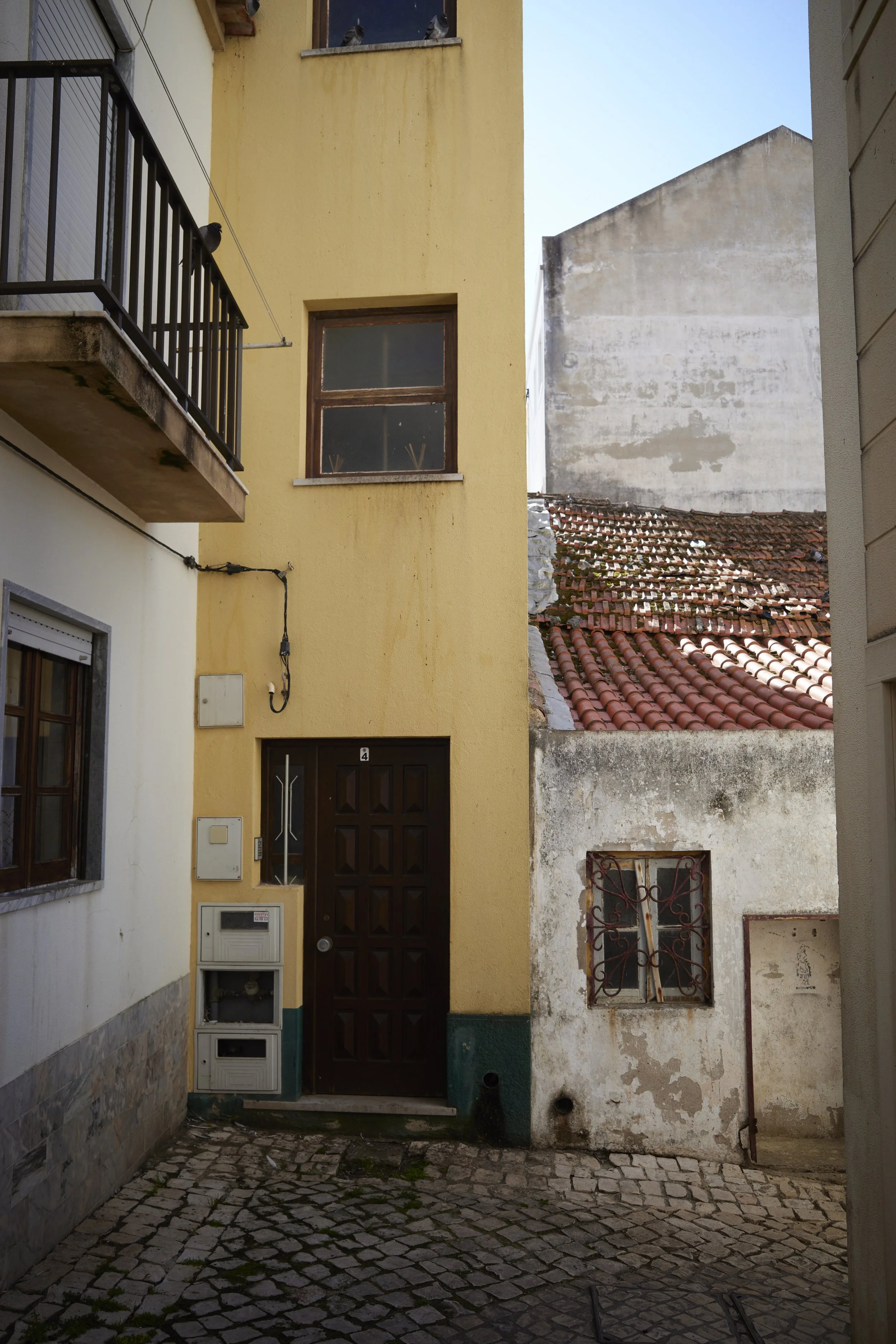
Lots of twists and turns in Nazare’s tiny lanes. Portugal, Ricoh GRiii ISO200 1/1000 f3.2
Laundry, or a Muppet looking out the window? Nazare, Portugal, Ricoh GRiii IS200 1/2500 f3.2
Have a seat and people-watch, Nazare, Portugal, Ricoh GRiii ISO200 1/250 f5.6
Hung out to dry, Nazare, Portugal, Ricoh GRiii ISO100 1/200 f5.6
Almost at Nazare Beach, Portugal, Ricoh GRiii ISO100 1/200 f5
The Nazare beachfront was busy! Portugal, Ricoh GRiii ISO200 1/125 f16
Guided by our stomachs as usual, we searched for a spot a bit back from the beach that was hopefully likely to serve more local fare than pure crowd pleasers. We stepped into a restaurant just before they were closed for their afternoon break and ate a huge fish, which they advertised as the local thing to do. It was tasty, and the ambience nice, if once again a bit more posh than we were aiming for. But hey, when in Nazare…
Fishing boats on display in Nazare, Portugal, Ricoh GRiii ISO400 1/200 f13
We stopped at a local playground to give our little buddy a chance to burn off some energy, then made our way back up, up, up to the car (burning off mum and dad’s energy) to then head over to the promontory to see the world famous surfing area that put Nazare on the map. It was early in the season yet for the truly big waves which begin forming around October and peak mid-winter, but they weren’t too shabby this day either. One can drive most of the way up the the hill and it was a bit easier finding parking up on the headland. From there you can walk to various viewpoints, often surrounded by kiosks selling tourist goodies and snacks.
The views of Nazare and the surrounding area are breathtaking. A visit up here isn’t complete without walking or taking a tuk-tuk-like tourist buggy down to the Forte de São Miguel Arcanjo, a fortress standing vigil over the sea and surfers. This is the structure often seen in the foreground of photos of the big-wave surfing competitions held here and there’s an exhibit within it displaying surfboards and famous names and faces of those that have come to conquer these mountains of water. It’s actually a longer and steeper walk than we anticipated, so if it’s a hot day getting a lift may well be worth it. Rumor has it the likes of Rip Curl and other big surfing brands have bases of operation in the area for R&D as their riders compete for glory tackling waves in excess of 24m in height.
Making our way to the Forte de São Miguel Arcanjo, famous viewpoint of the surf competitions, Nazare, Portugal, Ricoh GRiii ISO200 1/2500 f3.5
Lookin south from the promontory, Nazare, Portugal, Ricoh GRiii ISO250 1/200 f16
The waves are still decent this time of year, but nowhere near their peak. Nazare, Portugal, Ricoh GRiii ISO200 1/200 f16
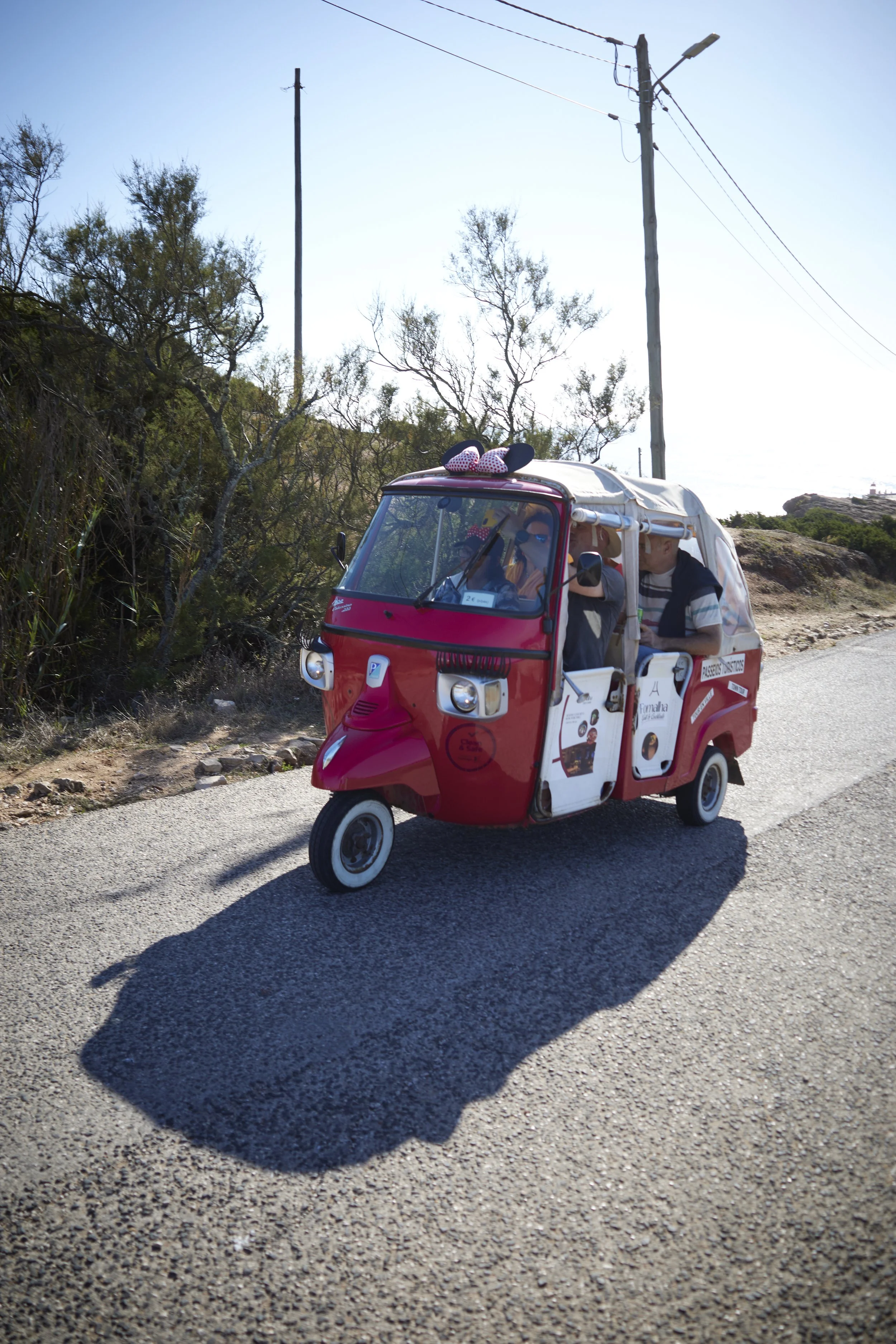
Probably worth the 2EUR for a ride in this heat! Nazare, Portugal, Ricoh GRiii ISO200 1/1250 f2.8
Colorful building up on the promontory in Nazare, Portugal, Ricoh GRiii ISO250 1/160 f8
After a brief pause for some gelato to beat the midday sun, we made our way back to our car, passing a few brightly colored buildings along the way. The propensity to liven a town up with color (rather uncommon at home) is one of the characterful features of places such as this that always brings a smile to my face and helps cement memories of how it felt to visit. Nazare was a fun detour and I’m sure it’s a pretty wild place to be when the surfing competitions roll into town. I’m sure we could have found plenty more to do here, but with the day growing late we thought it best to make our way back to Lisbon before dark to ease navigating our way to the apartment and getting settled in.
Playing with reflections in Nazare, Portugal, Ricoh GRiii ISO160 1/160 f4.5
Portugal - Comporta
It's a bit of a tricky beach. And what I mean by that is, on the first day one could wade out through the surf quite some distance before it got above thigh height. The waves were of a decent size and surf-board rentals and lessons are available here which certainly suits the character and conditions of the waters. On the second day, I tried the same wade into the ocean and got a bit of a surprise…

Family on the Praia do Carvalhal near Comporta, Portugal, Ricoh Griii
Back on the Road
Read Part II: Portugal - Cabanas do Lago →
With some helpful guidance from our hosts at the Cabanas do Lago, we depart in the morning and make our way back to the coastal road heading north. It’s a decent distance to Comporta (160km), so we planned to stop at a few scenic spots along the way for photos, food and some sight seeing. Once again the road was largely empty, and generally contoured in such a way to allow for a spirited pace. Coming back to this part of the world with a motorcycle or a sports car starts to enter my mind as a must-do some day.
First stop was for lunch at a seaside restaurant overlooking a rocky cove. We got a table immediately, but this proved to be a challenging meal as our little guy wasn’t into sitting still for too long. We took turns eating our seafood whilst the other chased him as he dashed through and out the restaurant and back, stopping at tables to see what folks were eating and have a chat. I remember the chasing more than the food, sadly, but at least it tired him out a bit for a nap in the car on the next stretch of the drive.

Beaches near Vila Nova do Milfontes, Portugal, Ricoh GRiii
Vila Nova de Milfontes
This town was the next recommended stop on our route, another seaside town, known for beaches, festivals and gelato. The unique feature here is a beach formed as part of an estuary at the mouth of the Mira river as it enters the Atlantic. With our restaurant runner asleep in the back, and a long road yet ahead we chose to stop briefly for some photos and a bit of excellent gelato from Mabi (the pistachio was phenomenal) but not linger too much before hitting the road again.

Beaches near Vila Nova de Milfontes, Portugal, Ricoh GRiii

Vila Nova do Milfontes, Portugal, Ricoh Griii

Surfer near Vila Nova do Milfontes, Portugal, Ricoh GRiii
As the day progressed we opted to shortcut our route a bit, hopping onto a main highway to cover some ground more quickly. Here again the road was relatively quiet and drivers quick and attentive – it felt more like Germany than I was expecting in this way, but given we were in the shoulder season perhaps there were fewer tourists on the road. Pulling off for our exit we found ourselves on a long, straight, tree-lined B-road that seemed to go on forever before finally arriving at our destination.
Comporta
Our stay was located in a small village in the vicinity of Comporta, though we find people generally refer to this entire area as Comporta. Adding to my list of Iberian Peninsula Google Map fails, we very nearly found ourselves driving through a farmers field, before figuring out that the address for our accommodation was somehow misaligned with Google’s reality, and by a factor of about 6km at that.
The B-Hostel was built with a clear vision of thoughtful design and detail, plenty of privacy as far as the rooms are concerned, and comfortable common areas that encourage interaction with fellow guests. Breakfast is included here and served up to your liking by friendly and helpful staff. The pool is a small pseudo-infinity setup, but given the main attraction is the beaches, it’s not likely to get a ton of use anyway. There’s a bistro next door and another restaurant in the vicinity, but for the most part you need to head further afield here to find food options.

Courtyard by the B Hostel in Comporta, Portugal, Ricoh GRiii

Little guy playing in the B Hostel in Comporta, Portugal, Ricoh GRiii

Courtyard by the B Hostel in Comporta, Portugal, Ricoh GRiii
Once a sleepy fishing a farming-focused collection of villages, this is now one of the hot, up-and-coming areas of the Portuguese coast. Rumors that Brad Pitt and Madonna, among others, have invested in properties here no-doubt fuel the attraction to visit and the fencing and dust of new resorts under construction were a common sight. The beach is breathtaking though, supporting the draw of tourists to the area. On approach you first cross an area of dunes and shrubs and once crested the full expanse of the Atlantic lays before you, with a fine sandy beach sloping steadily towards it. At Praia do Carvalhal your entry to the beach is also gated by a pair of seafood restaurants and a small kiosk serving up drinks for beachgoers.
It's a bit of a tricky beach. And what I mean by that is, on the first day one could wade out through the surf quite some distance before it got above thigh height. The waves were of a decent size and surf-board rentals and lessons are available here which certainly suits the character and conditions of the waters. On the second day, I tried the same wade into the ocean and got a bit of a surprise. Overnight the changing tides must have carved a deep trench just beyond where the ocean meets the beach, and I sank immediately to my shoulders before getting a tumble by an incoming wave. Oops. No kiddo going in here today. The sun was warm though, and we were happy to spend the day sitting and relaxing in the warmth whilst digging in the sand and finding shells. That said, I’d love to have a go at the waves here, and this could be a solid destination for a trip with some surfing buddies one day.

Praia do Carvalhal, Portugal, Ricoh GRiii
The sunset looked set to be a stunner, so we decided to have dinner at Restaurante Sal, one of the two restaurants on the beach. This clearly being a bit posher of a spot than most we’ve visited so far, we decided to zombie the little guy with some screen time so that we could enjoy the meal together without any wild chases. The cuttlefish on ink-colored rice was delightful and a surprisingly large portion. Once the sun dipped bellow the waves though the temperature dropped rapidly, so we didn’t linger too long, and it was bedtime anyway.


Praia do Carvalhal, Portugal, Ricoh GRiii
The village of Comporta itself was not far up the road from our accommodation, and we opted to visit it on one of our cloudier days here, with an option to pop over to another beach if it warmed up. Comporta appears to be the older/original town in the area, and while quaint with a smattering of shops and restaurants, there really isn’t much going on. The nearby beach is a mirror image of Praia Carvalhal though, and likely the draw here as well. We parked the car at the entrance to town, walked a lap or so popping into a few shops before stopping for lunch. The weather improved just as we finished our meal, and we decided to head back to Carvalhal to enjoy the afternoon sun on the sand and one more sunset here.

Be Comporta, Portugal, Ricoh GRiii
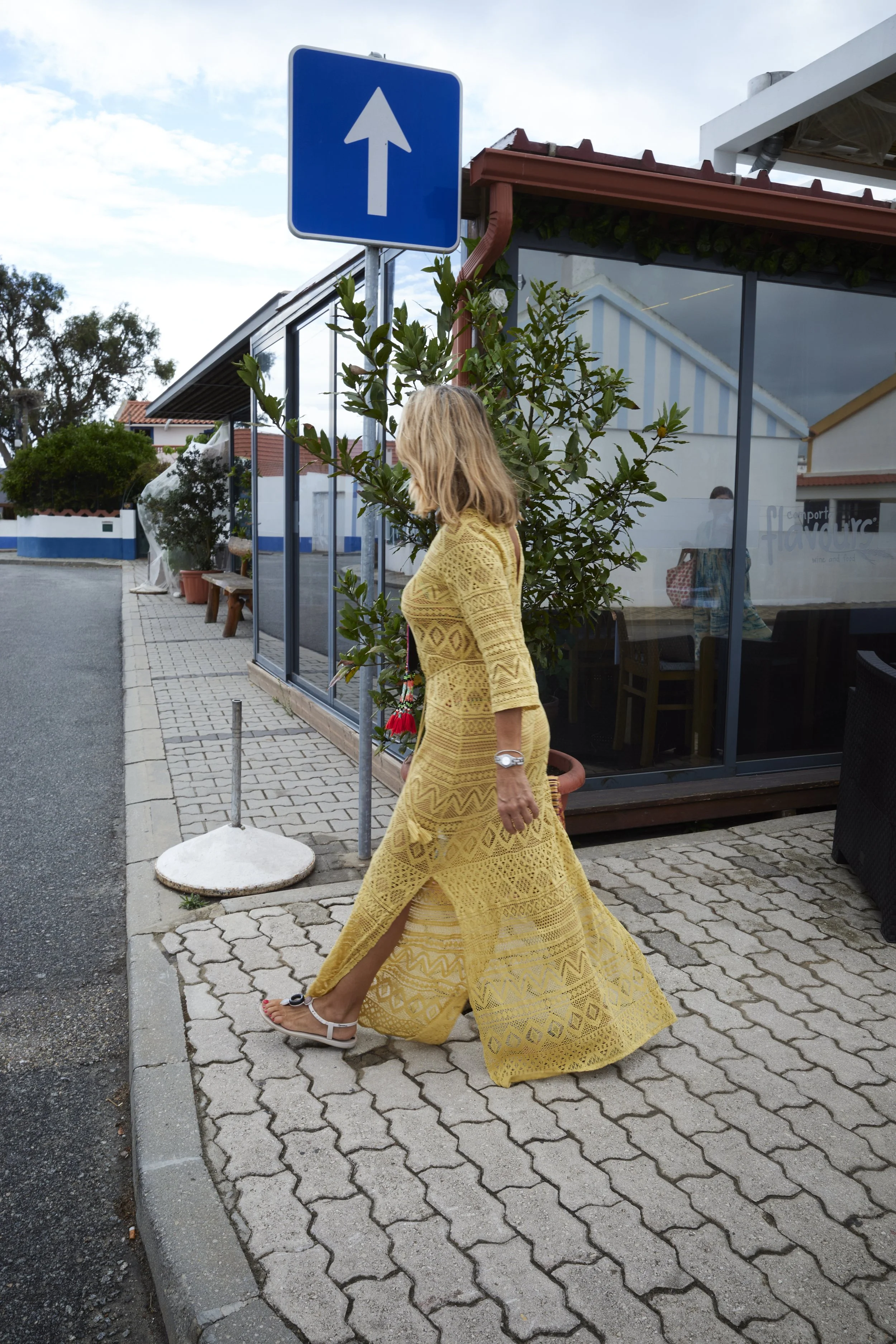
Woman crosses the road in Comporta, Portugal, Ricoh GRiii

Comporta, Portugal, Ricoh GRiii

Defender in Comporta, Portugal, Ricoh GRiii
The Comporta area will evolve rapidly as investment and development increase, chasing/fueling the rising popularity of this as a vacation destination of it’s own. I enjoyed it in this quiet and peaceful state, but think a thoughtful approach to investment in accommodation, restaurants and activities can make this a world-class destination. It’s reasonable proximity to Lisbon (just 120km) makes it that much more attractive. Speaking of, Lisbon was the next and final stay for this trip, but not without a bit of a detour to see the home of the largest waves in the world. To be continued!

On the Beach, Comporta, Portugal, Ricoh GRiii
Portugal - Cabanas do Lago
As we approach the area the dam becomes visible towering over a small valley. The road soon changes from paved to dirt, but nothing most cars can’t handle. We snake along it’s winding path and turn off onto a steep sided valley that surrounds one of the hundreds of coves around the perimeter of the lake. At the end of the road we see the large main house appear through the trees and are immediately greeted by one of the smiling hosts, Filipa, as we arrive.
Albufeira da Barragem de Santa Clara, Portugal, Ricoh GRiii ISO100 1/100 f11
Change of Pace
Read Part I: Portugal - Lagos →
Back home, it’s quite common for us to book a few weekend getaways out of the city in a quiet cabin by a lake or the ocean and just relax in peace enjoying the views and explore the surrounding nature. We’re not typically doing quite the same abroad, and yet somehow this location called to us, and I’m glad it did. A bit of tourist overload in Lagos drive us to seek out our next stay a little off the beaten path. When we found the Cabanas do Lago on airbnb it immediately stood out with its 4.99 star rating and promise of simple and quiet serenity. It happened to have a pocket of availability for a few nights so we booked it as the next stop on our trip.
We had plenty of time to get there ahead of check-in, so decided to take a scenic route up along the west coast then cut back inland towards our destination. We knew we’d pass through some small towns along the way, so figured it easy enough to sort out lunch on the road, and perhaps stop at any destinations that caught our eye while we were at it. The hope was that our son would at some point nap in the car, leaving us an afternoon to settle-in to the cabin before having dinner. If you enjoy driving/riding, the roads in this area are sublime. We avoided the major highways and A roads and stuck to the windy roads that weave their way through the rolling hills. The roads are largely empty, generally cambered in your favour, and a delight of corners and short straights connecting them. A short squeeze on my arm reminded me that our econo-box Citroen was probably not at it’s best at my preferred pace, but even at a decent canter it kept the drive interesting. So would Google Maps, it turns out, as once again relying on it in this corner of Europe was not without it’s problems -read on and see why!
Approaching Praia da Amoreira (sort of), Portugal, Ricoh GRiii ISO160 1/200 f16
Praia da Amoreira
The weather was lovely on this travel day, so we decided to make a bit of a detour to stop at a beach to enjoy our first peek at Portugal’s west coast. It differs significantly from the south-facing Algarve, with broad white sand beaches, rather than the more secluded cliff-lined coves. It also faces the full brunt of the Atlantic ocean with larger waves and steady breezes. Amoreira sits where the mouth of a river meets the Ocean and we’d read that it was among the more beautiful beaches to visit in the area and was also flanked by a restaurant. Our map showed the beach as roughly 9km off our main route of travel, so not a big deal. We faithfully made our way along the revised route until we came to stop by a cliffside restaurant overlooking a beach. Our beach. Uh oh. Wrong side of the river.
While the route certainly took us to a place we could view the beach, there was no way to safely reach it from this spot, with a cliff and river between us and our beach destination. I checked my inputs into Google Maps and indeed the app thought we could access the beach from here, but no such luck. I would take 18km of driving to bring us to the beach just a couple hundred meters away. Fortunately, this little detour passed some stunning views, and with the little guy asleep in his car seat ahead of schedule, we decided to stop at a few spots on our way back to take a few photos where we wouldn’t otherwise be comfortable with him running about.
Aren’t we supposed to be over there? Lagos, Portugal, Ricoh GRiii ISO320 1/200 f16
Looking down upon Praia de Monte Clergio, Portugal, Ricoh GRiii ISO125 1/200 f16
Praia de Monte Clergio, Portugal, Ricoh GRiii ISO250 1/200 f16
Praia de Monte Clergio, Portugal, Ricoh GRiii ISO160 1/200 f16
Praia de Monte Clergio, Portugal, Ricoh GRiii ISO200 1/2500 f3.5
Eventually we made our way to the beach we intended to visit, and just in time for the weather to start to turn. We spent a scant few minutes on the beach before the clouds rolled in and the temperature dropped. Oh well, time for lunch anyway and time to get back on the road. As the detour set our schedule back a bit, we decided to skip the beachside restaurant in favour of picking something up at a shop or bakery along out main route.
Rocky formation on Praia da Amoreira, Portugal, Ricoh GRiii ISO400 1/100 f16
Praia da Amoreira, Portugal, Ricoh GRiii ISO125 1/200 f8.
Waiting while Vicky finds us some food, somewhere in southern Portugal, Ricoh GRiii ISO100 1/1250 f4
Cabanas do Lago
The Albufeira da Barragem de Santa Clara is an enormous man-made reservoir supported by a concrete dam at it’s west end. As we approach the area the dam becomes visible towering over a small valley. The road soon changes from paved to dirt, but nothing most cars can’t handle. We snake along it’s winding path and turn off onto a steep sided valley that surrounds one of the hundreds of coves around the perimeter of the lake. At the end of the road we see the large main house appear through the trees and are immediately greeted by one of the smiling hosts, Filipa, as we arrive.
The Cabanas do Lago property consists of a two storey main house and a pair of smaller cabins, all nestled into the side of a steeply sloped terraced hillside. The ground floor of the main house is communal and contains the kitchen and a living/dining area as well as a patio dining area with a view towards the lake. The family that owns and operates the property lives on the second floor. Our cabin was just the right size for the two of us essentially two rooms; a large bedroom, and a bathroom with shower. Glass doors making up the west wall give us a view onto the valley from our bed and ensures it’s nice and bright inside. (Cabin Photo Credit: Victoria Petriw on the XPro2)
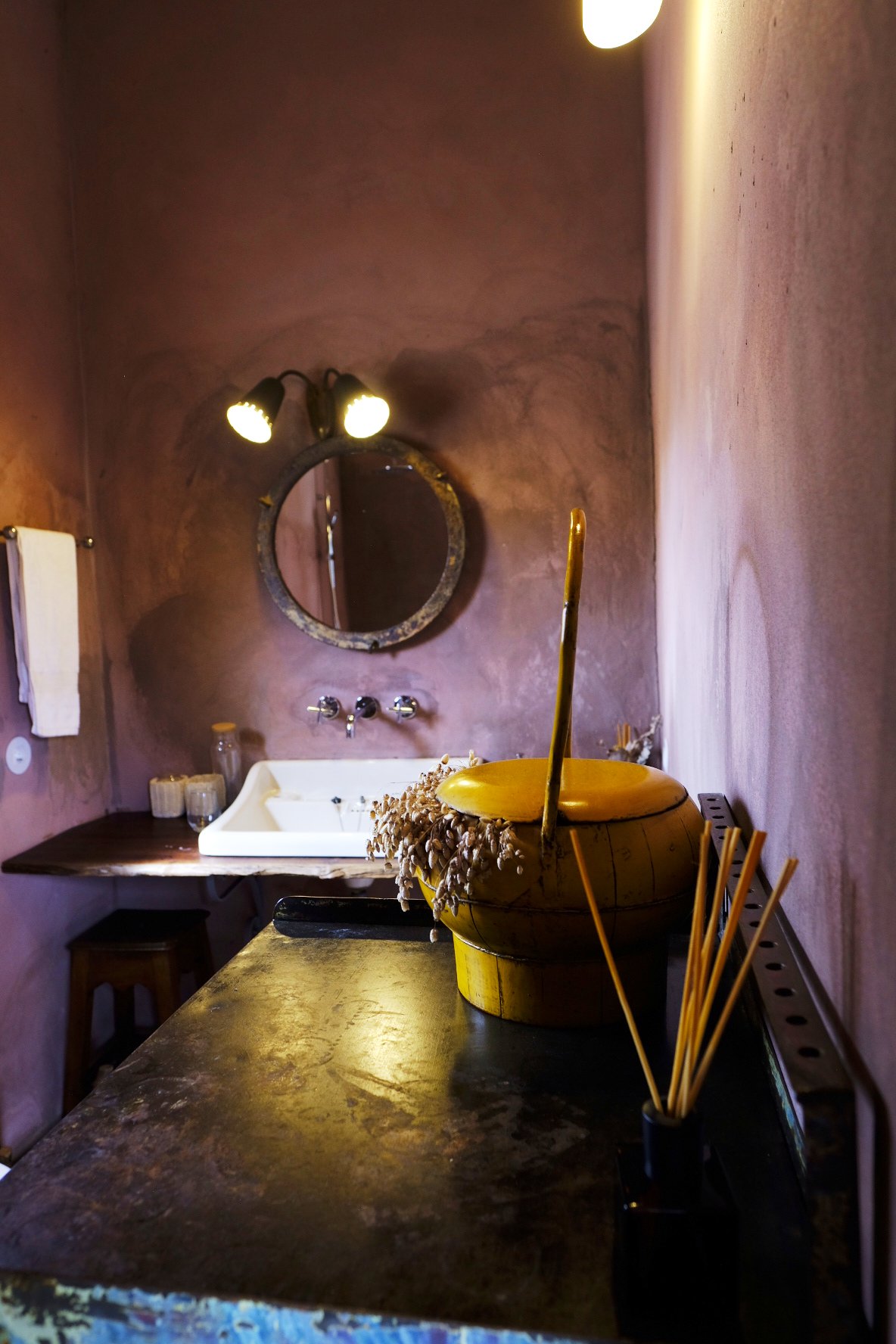
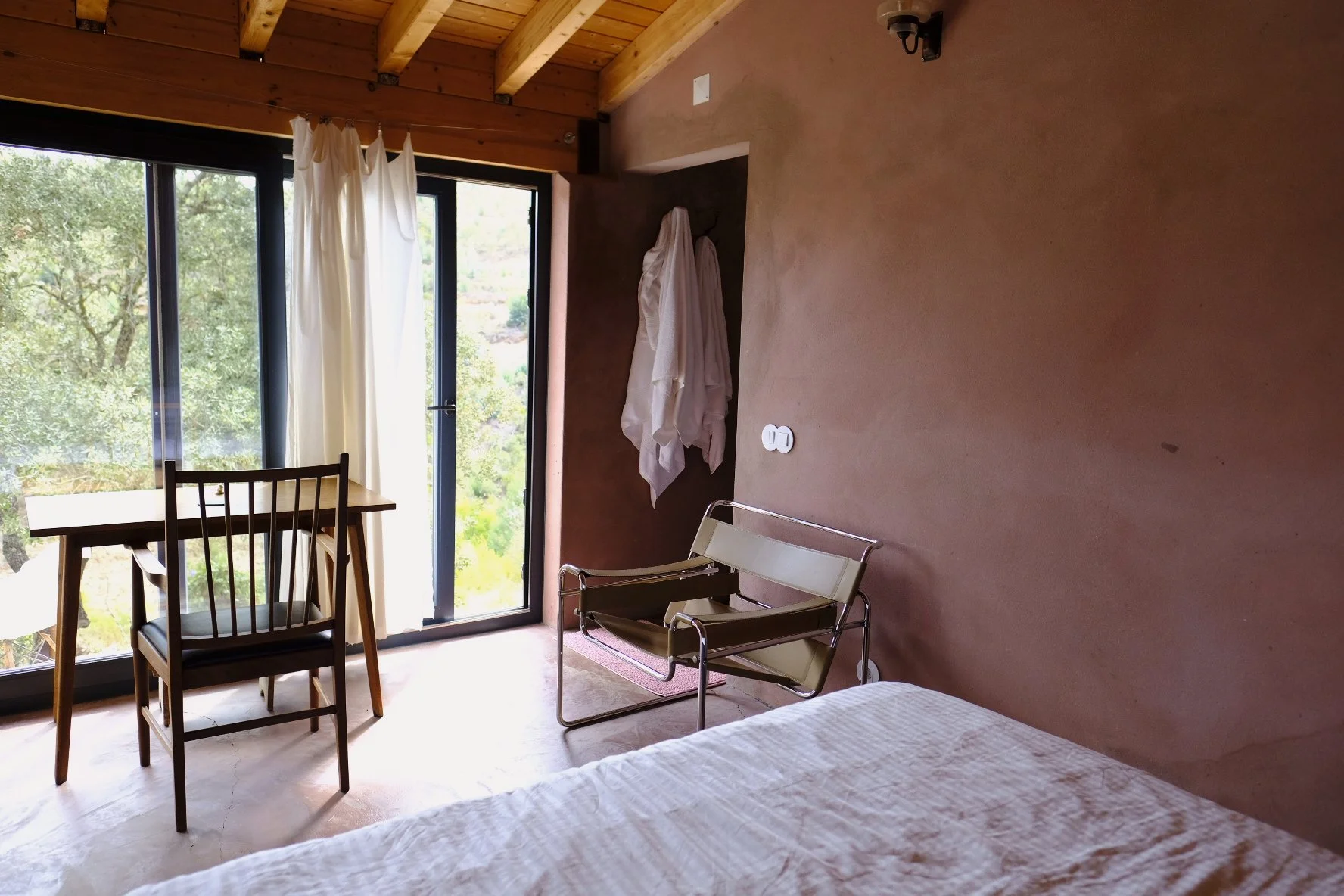
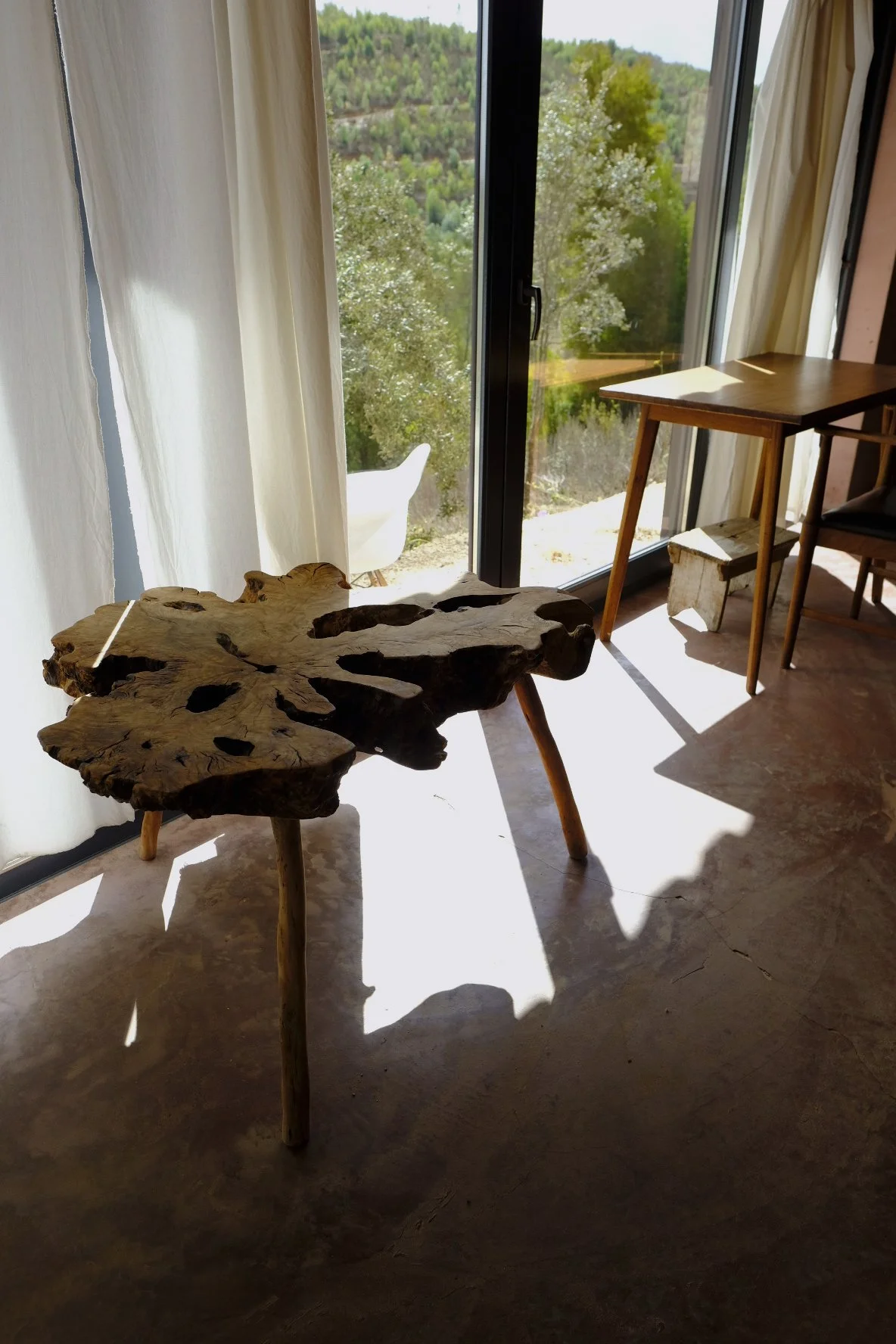
Within minutes of arriving Filipa and her husband Luis make you feel at home and like friends of the family. The wine and beer flows and Filipa prepares an amazing meal for us to all share together on the first night. This would very much be the theme of this stay, particularly in the evenings with us hanging out with Filipa and Luis into the late hours of the night, learning about life in Portugal and how they decided to relocate their family here from busy Lisbon a few years prior. As you might suspect, other guests we met here tended to be fairly like-minded travellers as well, and we enjoyed hearing each others stories and plans for what’s next. Most days and nights we cooked meals for ourselves in the communal kitchen area and enjoyed the relaxing surroundings, but did also make one excursion out for dinner to Casa Nirvana, about half an hour’s drive away, for a change of pace. Speaking of food, the little hamlet of Santa Clara a Velha sits near enough for quick grocery runs if needed and has a couple of restaurants as well.
A nice view with breakfast, Cabanas do Lago, Samsung S20FE, ISO40 1/1600 f1.8
Looking towards the main house from the garden, Cabanas do Lago, Ricoh GRiii ISO 400 1/8 f5
View from the main house patio, note the water line, Cabanas do Lago, Ricoh GRiii ISO250 1/100 f11
Like staying at a friends’ house, Cabanas do Lago, Portugal, Ricoh GRiii ISO4000 1/25 f2.8
The approach to the main house, Cabanas do Lago, Portugal, iPhone XR ISO25 1/400 f1.8 (Credit: Vicky Petriw)
Activities in the area are naturally lake-centric and I was a bit hesitant to take the camera out most days for fear of dropping it in the water. An excursion on a canoe allowed us to visit the dam and enjoy a designated swimming area near it’s base, as well as a lovely food truck (bus) parked next to it with a rooftop patio of it’s own. It was at a point about 4 meters from shore, however; that we realized our son does not like canoes and was instead seemingly prepared to jump out of it at the first moment of inattention from one of us. “He’ll get used to it” was followed by 90 minutes or so of yelling and crying. Luckily, stuffing him full of empanadas helped, and the trip back was more relaxed.
There was an interesting tower near the dam, standing starkly with it’s brutalist design against the more organic landscape. It sat high and dry as a forgotten sentinel of a time when the lake was full to the brim. Remarkable to see it has a scale for water depth painted on the side, the bottom of which is many meters above the waterline. Another favorite activity for me was getting out on a paddle-board a bit before sunset and just exploring across the lake at random. Our hosts provide a variety of options for getting on the water and you’ll definitely want to give them a try. Stargazers also take note, it’s properly dark here in the evenings, setting the stage for beautiful night skies. The highlight for our son, (definitely not the canoe), was trying to track down the loudly croaking frogs that occasionally hopped around the property in the evening.
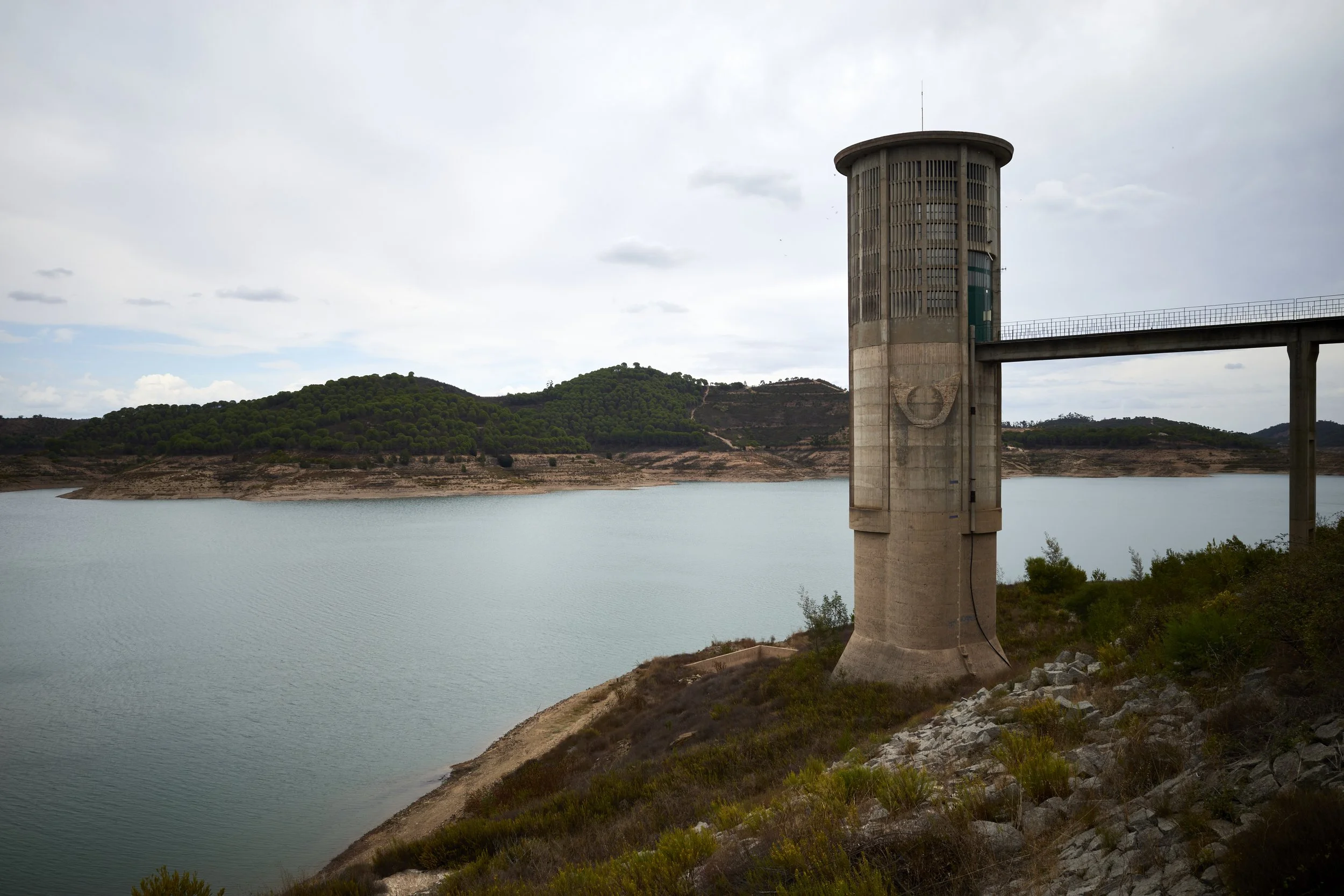
Tower on the Albufeira de Barragem da Santa Clara, Portugal, Ricoh GRiii
Back to Beaches
I definitely recommend this spot for those looking for a peaceful little detour and opportunity to meet and connect with some amazing people on your next visit to Portugal. Our hosts graciously shared an abundance of recommendations for the remainder of our journey, offering a multitude of dining options to explore, landmarks to see en route to Comporta, our upcoming stop, and activities to engage in within Lisbon and its vicinity during the later part of our travels. Our time at the lake ended all too quickly, but by the end we felt refreshed and ready for more exploration ahead.
Nice place for a sit, Cabanas do Lago, Portugal. Ricoh GRiii,
Portugal - Lagos
The Algarve seemed the logical choice for starting our trip to Portugal. It was well recommended by friends, and since we were arriving in early September, the timing gave us the best chance of experiencing some beach-worthy weather to kick off the relaxation.
The Algarve, Lagos, Portugal, Ricoh GRiii ISO 200 1/125 f16
Change
Setting off on our Portuguese adventure, we knew things would be a touch different this time around. Everyone raved about Portugal being family-friendly, charming, and warm – just what we needed with our little whirlwind in tow. With our child now a toddler, we knew this wouldn’t be as easy as the last the last trip, but were up for the challenge all the same. As per our usual modus operandi, we booked this trip last minute, just a couple of weeks before takeoff, leaving a few nights open for those spontaneous "let's figure it out as we go" moments. Some things never change, even with a two-year-old sidekick.
One thing that did change, by design, was my camera game. This Portugal series will mark a shift on the Yarko On The Go blog – my first trip captured primarily digitally. Say hello to the Ricoh GRiii, the latest addition to the Ricoh GR family of “point & shoot” cameras celebrated by photographers like Daido Moriyama. It's compact, practically weightless, and boasts a 24MP APS-C sensor in a magnesium body that's so small, you need to hold it to believe it. Paired with a crisp 28mm lens, it seemed like the perfect choice for on-the-go parents. I'll spill the beans on this little beast (the camera, not the kid) in a dedicated post after the Portugal series – and whether I think it was the right decision.
Ricoh GRiii with Peak Design Cuff Strap
Why the change? Well, for starters, I wanted more family photos both as we explored new places and in general at home, and doing that with a manual film camera in this day and age is an impractical and expensive proposition. I wanted more “keepers”, and I wanted to know I had them. Sure, I packed the Olympus XA with a few rolls of film out of habit (and I love that camera), but I didn't want to end up with a sore back from lugging around cameras and lenses when I already had a toddler and all the kid gear weighing me down. The goal is to return with memories, not back pain, right? Let’s see what happens.
Stroller & Shoot, Lagos, Portugal, Ricoh GRiii ISO 160 1/250 f8
Lagos
The Algarve seemed the logical choice for starting our trip to Portugal. It was well recommended by friends, and since we were arriving in early September, the timing gave us the best chance of experiencing some beach-worthy weather to kick off the relaxation. We flew into Faro, picked up our rental car and made the roughly 1 hour drive to Lagos. Once in Lagos, you’re reminded that driving in older European towns can take a bit of getting used to for those of us from North America. In the Lagos Old Town, where our accommodation was located, roads were narrow, with sharp blind turns, one way streets, and buildings just tall enough to throw off our phone’s GPS. It took two loops of Old Town (predominantly one way streets) to realize I’d have to stop on a sidewalk a few blocks over from the apartment and walk our things over, before finding parking elsewhere. Once I got used to the layout of the town, navigating it became a non-issue, and ultimately we were comfortable exploring the surrounding area both on foot and by car.
Our rental Citroen. Not exciting to drive, but just big enough to fit all our stuff, and still fit the roads! Ricoh GRiii ISO200 1/2000 f4.
In Lagos we stayed at the Salty Lodge, which is an apartment hotel located in the heart of the Old Town. We chose one of the smaller apartments and found the accommodations quaint and well appointed with a little kitchenette if you feel like cooking-in. It’s ideally located as a jumping off point to wander the town or surrounding beaches. It’s also in a relatively quiet corridor of the city, whereas many alternatives closer to the bars are likely rather noisy well into the night. There is a rooftop patio with panoramic views, and the staff are friendly, knowledgeable about the area and helpful. Toughest challenge here (and likely with most accommodations in the Old Town) is parking. There’s really no parking within the city walls, and the most reliable spot I found was about 700m & a 10 min walk away. Not a big deal normally, but on cobbled streets it can be a chore to roll your bags (or stroller) this distance. Of course the full onload/load only happened on arrival and departure, so ultimately it was manageable.
Looking east from the roof of the Salty Lodge, the canal and Duna Beach in the background. Lagos, Portugal, Ricoh GRiii ISO640 1/30 f4
View southward from the Salty Lodge roof. Lagos, Portugal, Ricoh GRiii ISO640 1/20 f5.6
Balcony/patio view (courtyard) from the Salty Lodge, Lagos, Portugal, Ricoh GRiii ISO400 1/400 f8
Roaming Lagos
Most of our exploration of Lagos was in the vicinity of the old town and adjacent canal promenade. It’s a characterful place, and while it has it’s share of venues catering to those who want the taste and sound of the familiar everywhere they go (read: Pubs, Thai massages, souvenir shops), there are more distinctly local options here as well which the staff at our accommodation were happy to tell us about. The old town is easy to walk with very few viable routes for cars, but pushing a stroller can be challenging on some lanes where the mosaic streets are rough. Despite being here in the early shoulder season (September), the town center was bustling with tourists and generally quite busy, but you could find quiet nooks if you ventured off the beaten path.
Making my way to the Salty Lodge, Lagos, Portugal, Ricoh GRiii ISO 100 1/200 f8
Plaza near the Salty Lodge, Lagos, Portugal, Ricoh GRiii ISO200 1/200 f4
Casa Mae, tempting place to stay next time. Lagos, Portugal, Ricoh GRiii ISO160 1/200 f8
Preparing for the lunch crowd, Lagos, Portugal, Ricoh GRiii ISO400 1/250 f8
Renault 4’s seem popular in Portugal, Lagos, Portugal. Ricoh GRiii ISO100 1/200 f8
Wandering around Lagos, Portugal, Ricoh GRiii ISO125 1/250 f8
Wall Hats, Lagos, Portugal, Ricoh GRiii ISO200 1/250 f8
A few places stood out as memorable for dinning in Lagos. The first, Abigail’s Cafe, is an absolutely delightful stop for breakfast and easily my favorite spot in town. The food is delicious -try the pancakes and thank me later- the atmosphere is relaxed and it’s a beautifully designed space inside as well as a quiet and quaint lane to enjoy if dining outside.
Studying the menu at Abigail’s. Lagos, Portugal, Ricoh GRiii ISO1600 1/400 f11
Another other favorite spot was Nah Nah Bah, a funky casual burger joint in the Old Town. It’s a popular spot, so you may find yourself waiting on the stoop for a little while if you haven’t made reservations. I seem to recall them making a claim to having one of the top rated burgers in the world, and as a self-professed burger aficionado, I had to confirm the assessment. (Confirmed)
Nah Nah Bah Burger Restaurant, Lagos, Portugal, Ricoh GRiii ISO4000 1/4 f11
Finally, The Green Room proved a lively and tasty option if you’re craving a bit of South American food, particularly Mexican. Hot Enchiladas and a cold Sagres? Yes, I’ll have another please.
Up way past bed time at The Green Room. Lagos, Portugal, Ricoh GRiii ISO3200 1/40 f2.8
Beaches - Praia da Luz
The first day or two in Lagos were a bit chilly for dedicated beach time, but eventually the warmth came and we took full advantage. Gauging the movements of the clouds from our rooftop patio, we decided to chase the sun and head west out of town a bit to Praia da Luz for our first beach day. It’s a quick and easy drive from Lagos, and relatively easy to find parking just before the main promenade through the village. We were greeted by a broad sandy beach with plenty of room to find a space to ourselves. Sunbeds are available for hire as usual, but it wasn’t quite hot enough to warrant it, so we grabbed some sand near the sea and setup our towels for a few hours of relaxing.
The waves here were fairly strong, and the water quite cool, so swimming was relatively brief but refreshing. Too rough though, for the little guy, who had to settle for getting his feet wet whenever a big wave washed further up the sandy shore. It was good for a giggle, as was digging a moat bellow our towels to defend against rogue waves. This proved useful as the tide was coming in and at least one wave surprised us and many other beach goers by making it’s way some distance and almost up to our feet. I’m not sure if the surf is always like this here, but worth checking if you’re planning on visiting for a swim.
Praia da Luz, Portugal, Ricoh GRiii ISO200 1/125 f8
Praia da Luz, Portugal, Ricoh GRiii ISO200 1/250 f8
Step this way senhor, Praia da Luz, Portugal, Ricoh GRiii ISO640 1/320 f11

Sunbeds on Praia da Luz, Portugal, Ricoh GRiii ISO320 1/320 f8
Going his own way, Praia da Luz, Portugal, Ricoh GRiii ISO320 1/800 f7.1
There’s a scenic promenade that parallels the eastern edge of the beach which we decided to explore once we’d had our fill of the sand for the morning. One side opens to the beach while the other is lined with shops, cafes and tapas bars with seating perfectly setup for enjoying the view as well as people-watching along the path.
Walking along the Praia da Luz promenade, Praia da Luz, Portugal, Ricoh GRiii ISO250 1/250 f8
Her patience wearing thin, Praia da Luz, Portugal, Ricoh GRiii ISO200 1/250 f8
Intricate tile-work pervades the entire country. Praia da Luz, Portugal, Ricoh GRiii ISO320 1/250 f8
Beaches - Praia Dona Ana, Camilo, & Ponta Piedade
If you draw a line due south from Lagos Old Town it’ll cross most of the more famous beaches in the area, terminating at Ponta de Piedade. The distances aren’t too great to walk, and indeed we did walk to a few of them from our apartment, but for the further points we drove just to make it easier on the little guy. This area is elevated a few hundred feet above the sea, so inevitably making your way to the beach will involve some stairs and in some cases a lot of very steep stairs. Not a deal breaker, but with a toddler on your arm you are going to get a workout!
These beaches all face east and are generally sheltered bays and coves meaning much calmer seas for swimming. The tall cliffs dramatically backstopping the beaches do however mean that you’ll loose the sunshine earlier in the afternoon than say at Praia da Luz or Praia do Porto Mos, so visit them in the morning if you can to maximise the sun. The rocky outcroppings and striated stone formations are the hallmark of the area and change character throughout the day as the sun moves across the sky. Some of the beaches connect to other coves and hidden spots by way of tunnels through the cliffs, so be sure to scout around a bit to find your ideal spot. The sand is soft and warm, but there seemed to be quite a bit of seaweed on some of the beaches which significantly limited useable area and access to the sea in some cases. I’m not sure if this is a seasonal phenomenon or more of a regular occurrence. Also of note, there are surprisingly few restaurants or kiosks in this area, and those that we found were typically lined up, so pack your snacks and drinks!
Praia do Camilo, Lagos, Portugal, Ricoh GRiii ISO100 1/2500 f2.8
Abundant seaweed on Praia Dona Ana, Lagos, Portugal, Ricoh GRiii ISO320 1/320 f8
Praia Dona Ana, Lagos, Portugal, Ricoh GRiii ISO640 1/200 f11
Views of the Algarve, Lagos, Portugal, Ricoh GRiii,
View northwest from the Ponte Piedade trail, Lagos, Portugal, Ricoh GRiii ISO100 1/400 f8
Ponte Piedade trail, Lagos, Portugal, Ricoh GRiii ISO125 1/125 f8
At the southernmost point, Ponte Piedade is less about beaches (there are some but the routes to them seemed a touch perilous) and more about views and light hiking for more views. No doubt a great spot to visit at dawn or dusk and enjoy capturing the light playing on the cliffs and beaches east and west of you. There are also kayaking tours that let you get to hidden beaches in the area as well as under natural stone arches and into tucked-away bays and coves.
Wooden walkway at Ponte Piedade, Lagos, Portugal, Ricoh GRiii ISO100 1/1000 f4.5
Natural arch near Ponte Piedade, Lagos, Portugal, Ricoh GRiii ISO320 1/125 f16
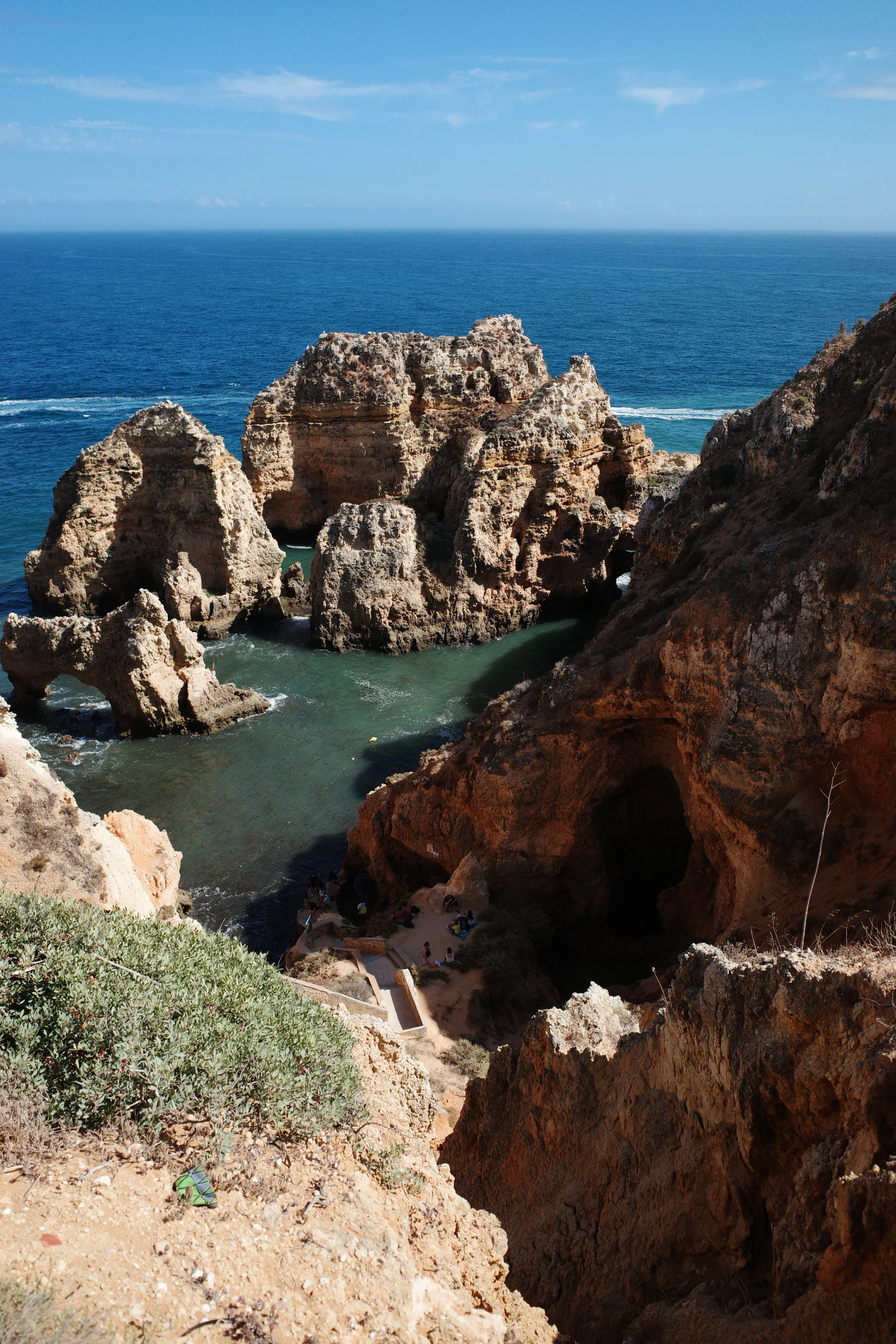
Near Ponte Piedade, Lagos, Portugal, Ricoh GRiii ISO200 1/1600 f3.2
Praia Canavial and Praia de Porto Mos in the distance. Lagos, Portugal, Ricoh GRiii ISO200 1/125 f16

It was a hot day. Lagos, Portugal, Ricoh GRiii ISO100 1/400 f8
The Ricoh - A Quick Note on Color
You’ve no doubt noticed in this post that there are some notable differences in saturation, white balance and color temperature between some photos. While the slightly variable weather had a hand in some, chalk it up to my learning curve working with the Ricoh GRiii and getting used to digital cameras in general once again. Prior to the trip I’d learned about “Ricoh Recipes”, an app that allows you to pre-program and save to user customizable settings various alterations to image parameters, not unlike the film simulations on Fuji cameras and others. What I didn’t realize at the time was that doing so actually permanently impacted the RAW files. Oops. I don’t mind the results, but in the future I’d much prefer to apply such changes of character (if I felt like it) in post processing. Lesson learned, get to know your gear! Now back to our regular programming.
Sailboat passing through the canal. Lagos, Portugal. Ricoh GRiii, ISO250, 1/250, f8.
Where to next?
We didn’t have anything booked for the 4-5 days between the Algarve and our stays further north, and so we spent a few evenings while in Lagos looking online for our next destination. We debated finding another seaside town versus something a little different, quieter and off the beaten path. The latter won, owing to a general desire for a change of pace after a fairly busy and tourist-heavy stay in Lagos. We booked an AirBnB with stellar reviews much further inland on Albufeira da Barragem Santa Clara, a man-made lake (Europe’s largest at the time it was created) in the rolling hills a couple of hours north of Lagos. We planned a route that took us to the western coast, with a few scenic stops along the way (and likely enough time for our son to nap), before cutting back eastward to arrive in the early afternoon at our next destination. Stay tuned for the next post on living with the locals in rural Portugal!
A relaxed Palm Springs getaway featuring mid-century architecture, great restaurants, boutique hotels, pool days, and desert sunshine.